


Since coming to power in 2022, the Albanese Labor Government has pledged to be a “consultative government” and aim for achieving consensus positions where possible.
And for much of the flexuous (and at times farcical) process to reform the law to expand access to financial advice, it could reasonably be said to have at least attempted to keep this promise.
Over the long five years of the Quality of Advice Review and subsequent Delivering Better Financial Outcomes (DBFO) reform agenda, the government held at least five official consultations, received more than 350 submissions received and countless closed-door meetings and roundtables with stakeholders.
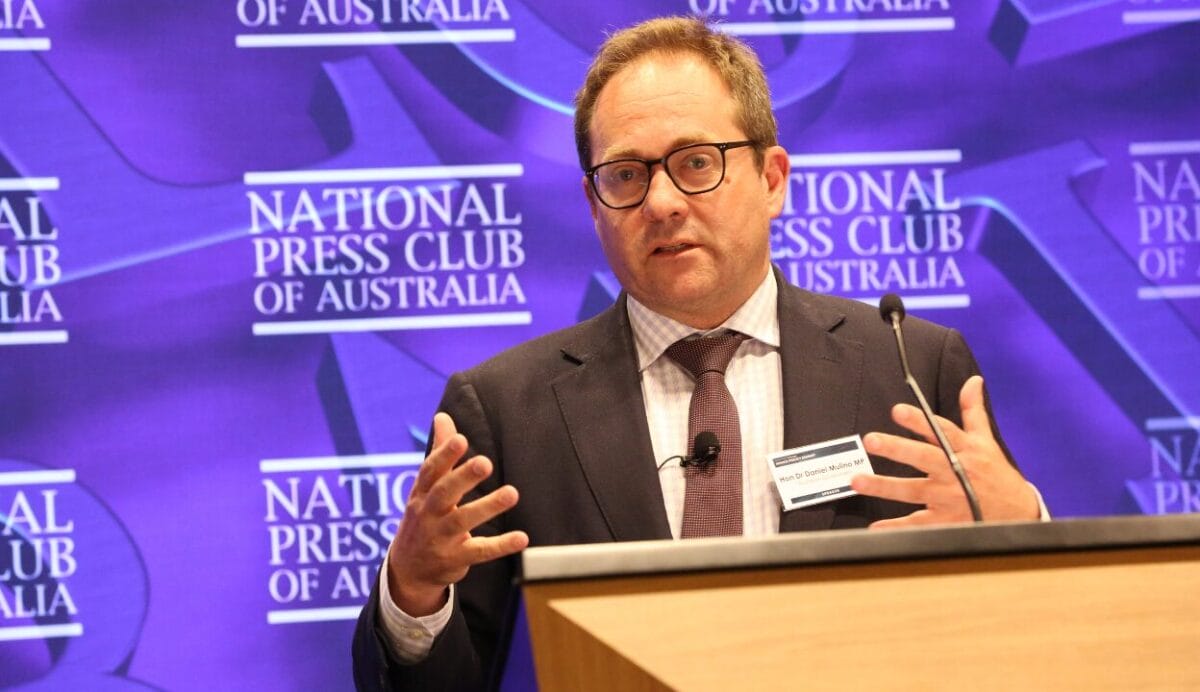
The process has outlived at least one Assistant Treasurer and Minister for Financial Services – with Stephen Jones now enjoying his office views of the Eiffel Tower as Australia’s Ambassador to the OECD in Paris – and has dogged the tenure of another in Daniel Mulino.
For their part, the industry’s leaders and lobbyists also spent much of the past half-decade trying to make life easier for both ministers by attempting to come to unified positions, much of it under the auspices of the now-defunct and in-hindsight-likely-doomed Joint Associations Working Group (JAWG).
But make no mistake, Assistant Minister for Productivity, Competition, Charities and Treasury Andrew Leigh’s tabling in Parliament on Thursday of the Treasury Laws Amendment (Better Financial Frameworks and Other Measures) Bill 2026 has shattered the fragile facade for consensus on advice reform.
The law as introduced would allow funds to collectively charge all members for advice received by any member pertaining to the interests in their fund. More controversially, it extends this logic (long the status quo in so-called intra-fund advice) to the retirement phase and even potentially to the take-up of a retirement product owned or operated by the fund.
The bill was warmly welcomed by the Super Members Council, which represents industry super funds and other not-for-profit investors. “This crucial reform will help to make retirement planning simpler, cheaper and safer for millions of everyday Australians of modest means,” said Misha Schubert, the lobby group’s chief executive.
But it was rejected outright by her counterpart Blake Briggs of the Financial Services Council, which represents retail funds, alongside platforms, licensees and fund managers.
“The Government is ignoring the lessons of the [Hayne] Royal Commission and is placing consumers at risk of harm from conflicted advice models,” Briggs said.
“Superannuation funds have a commercial incentive to recommend their own retirement products to consumers, even where that product does not suit a member’s needs, creating significant risk of consumer harm at scale.”
Similarly, Financial Advice Association chief executive Sarah Abood told Professional Planner that retirement advice is far from simple – and far more complex than advice that relates to accumulation – and incomplete or narrow advice delivered at the point of retirement can be not only be impossible to remedy later but also set back the member and potentially their family members for the rest of their lives.
Presumably Mulino had a clear sense that the bill – which, notably, was not subject to an exposure draft or consultation of its own – would divide opinion among the stakeholders.
That might explain why he told the national conference of militant financial planning association, the AIOFP, that he was earmarking adviser-friendly reform items such as the expanded education pathways as priorities for 2027, but conveniently left out that he was expediting the super fund collective charging elements this side of Christmas.
Instead, the minister saved that nugget of information for the Association of Super Funds of Australia (ASFA) conference the week after. ASFA issued a welcoming media release following his remarks.
Hayne heraldry
It perhaps goes without saying that the bill drew contempt from the government’s official opponents.
“The Banking Royal Commission showed what can go wrong when the people giving the advice are also selling their own products. We’ve been here before,” said Shadow Assistant Treasurer Kevin Hogan, who worked on both sides of the super industry in a financial services career before entering politics.
“Independent financial advisers have spent years lifting their professional standards. The Government should be making it easier to see one. Instead, they just keep hitting them with more levies and more red tape. Now they’re being asked to compete against super funds collectively charging for advice.”
The topic of collective charging has also split seemingly more independent observers of the industry. While acknowledging the possibility that conflicted advice may be an outcome, Dr David Bell of think-tank The Conexus Institute* refuted claims that the bill would result in widespread consumer harm, arguing that on balance, this kind of subsidised retirement advice would be well-suited to many consumers, especially those with lower balances.
Meanwhile, in a sign of the think-tank’s independence, the institute’s patron and philanthropic funder Colin Tate AM, founder of Professional Planner publisher Conexus Financial, has argued against the return of vertical integration by stealth under the guise of expanding access to advice. (Full disclosure, the author is a non-executive director of The Conexus Institute and employed by Conexus Financial).
In some ways, the polarisation caused by this issue is perhaps not new but more a reversion to norm. For decades, stakeholder relations in this industry was characterised by the so-called “super wars” between industry and retail funds or tensions between labour and capital.
It is also not without merit that the government has shown some decisiveness – the request that industry reach a consensus position was partly responsible for the slow pace of reform. By adopting a more partisan standpoint, it has belatedly provided some certainty to the market and potentially sped up the legislative path, in an environment in which Labor dominates the House of Representatives.
However, it is regrettable that the industry has invested so much energy into the project of consensus public policy, only for the most contentious issue to be decided along predictably partisan lines.
A cynic might speculate that the government’s position on collective charging was pre-ordained, putting a serious question mark over the taxpayer and private sector money wasted on consultations, submissions and air and road miles to Canberra over a five-year period.
Combined with the government’s suddenly sceptical view of so-called “pension boost” or IRIS products, alongside the governance crackdowns on platforms in the aftermath of the Shield and First Guardian collapse, it is difficult not to conclude objectively that it has sided with one side of the super wars over the other.
And it is telling that it has belatedly shown its hand amid growing political pressure on the government (and Mulino’s boss, Treasurer Jim Chalmers in particular) and growing competitive tension in the super industry.
Perhaps, as Dr Bell concludes, its position is in the public interest, and therefore perhaps its motivations are far less Machiavellian.
Then again, as Hogan reminds us, we’ve been here before.
* The Conexus Institute is a not-for-profit think-tank philanthropically funded by Conexus Financial, publisher of Professional Planner.












Leave a Comment
You must be logged in to post a comment.
Login via LinkedIn