


The Compensation Scheme of Last Resort (CSLR) released its initial levy estimate of $215.1 million for FY28, and a special levy on the financial advice subsector of almost $175 million, on Wednesday.
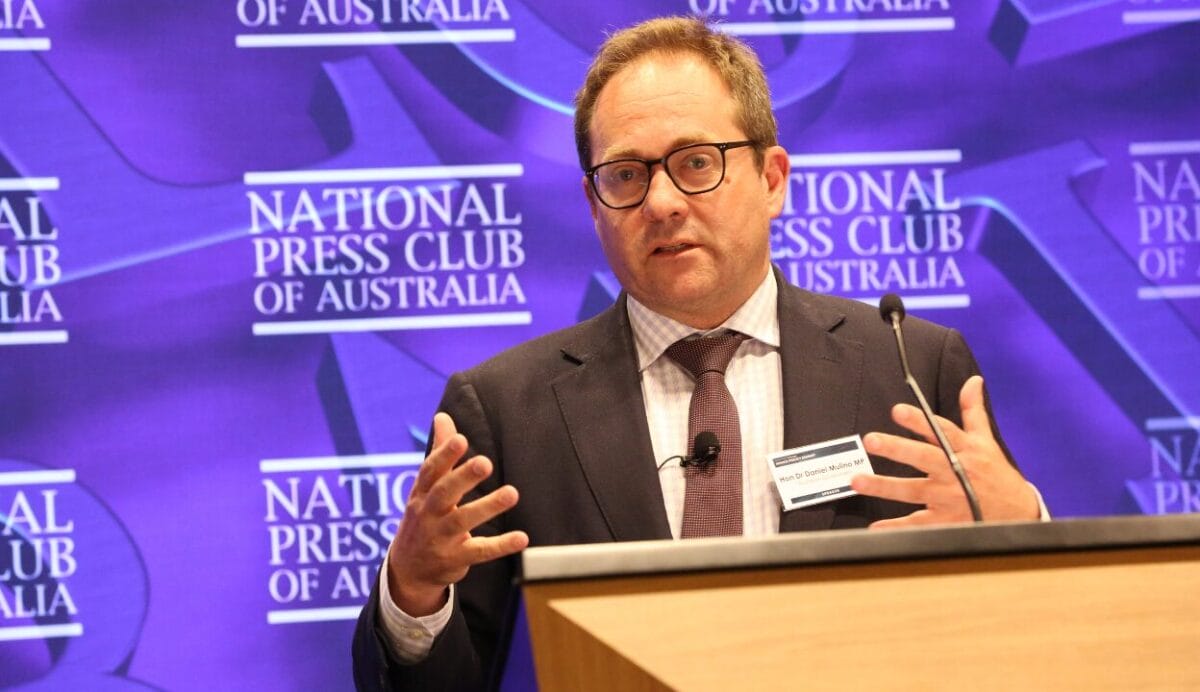
The levy illustrates clearly the urgency of enacting reforms proposed by the Minister for Financial Services Daniel Mulino to ensure the sustainability of the scheme, and to recognise the escalating impost on a financial advice community the vast majority of whom have had nothing at all to do with the losses being compensated.
The special levy calculation assumes there are no changes to how the CSLR is funded, and that reforms proposed by Mulino to introduce a “waterfall” funding structure do not come into effect (or into effect in time).
But even if they do, there’s still one major wildcard which could blow everything out of the water anyway.
Page 41 of a 64-page document prepared for the CSLR by actuaries Finity Consulting, setting out the methodology underlying the estimate, says that if there were to be additional claims “from a failure that becomes in-scope for CSLR” then another 500 claims would become payable, totalling $44.4 million.
It’s talking about InterPrac, whose clients’ losses remain outside the scope of the CSLR for as long as the licensee remains solvent. Finity turned its attention to what might happen if it doesn’t, and if InterPrac clients’ claims make it to the CSLR in time to be included in a final FY28 levy calculation.
The answer is: they’d push the total levy to $259.5 million, a figure which exceeds the $250 million hard cap on how much the CSLR can levy the industry in any financial year.
And that’s a problem. It would mean there would be claimants whose duly owed compensation could not be paid, because the CSLR can’t raise enough money from the industry. Claimants would have to wait until the next levy period, in addition to the interminable wait many have already endured and exacerbating their uncertainty and stress.
That’s an intolerable situation for claimants, the industry, the government and the CSLR itself, and for the scheme’s chief executive officer David Berry, whose duty and over-arching motivation in his role is to ensure compensation is paid to those owed it in a timely manner.
Berry tells Professional Planner that according to AFCA’s website, the proceedings brought by InterPrac against AFCA will be heard on 15 and 16 February 2027.
“We don’t know when a judgement is likely to be made. So, if they do become insolvent, then they may feature in the revised estimate if we know with sufficient time to include them,” he says.
Berry says it takes about six to eight weeks to prepare a levy estimate.
“So, if we find out in a timely manner we can include it. If not, it’s unlikely to be included in the assumptions that would go into the revised estimate for FY28,” he says.
“The base assumption is that there’ll be 1847 claims paid, and that will come to $215.1 million. Under the ‘high scenario’, an additional 500 claims are paid, that is, in the event that InterPrac becomes insolvent, that’s an additional $44.4 million, which would put [the levy] over the $250 million cap.
“There’s a lot of things that have got to be true for that to happen. One is InterPrac needs to be unable to pay any AFCA determinations. The other is AFCA needs to get through the work, on top of their already projected workload.”
Berry says the legislation covering the CSLR imposes “a hard stop at $250 million” as the most that can be levied in any levy period. Once it goes over that, claims get held over until the next levy period.
“The first claim that’s in and ready to be paid is the first claim that’s paid,” he says.
“We also have a hardship provision, so if hardship circumstances are such that they need to be prioritised, then then we can bring those forward.
“That said, pretty much every case we’re dealing with, there is some form of hardship, so we’re talking extreme hardship cases that would be brought forward.”














Leave a Comment
You must be logged in to post a comment.
Login via LinkedIn