

ASIC will likely be instructed to monitor managed investment scheme (MIS) flows via platform data collection after reaping $17.8 million in this week’s budget for oversight over the next four years.
Budget papers revealed earlier this week that there was a provision for $17.8 million over four years from FY27, and $1.4 million a year ongoing after that to strengthen MIS governance requirements, supervision and enforcement.
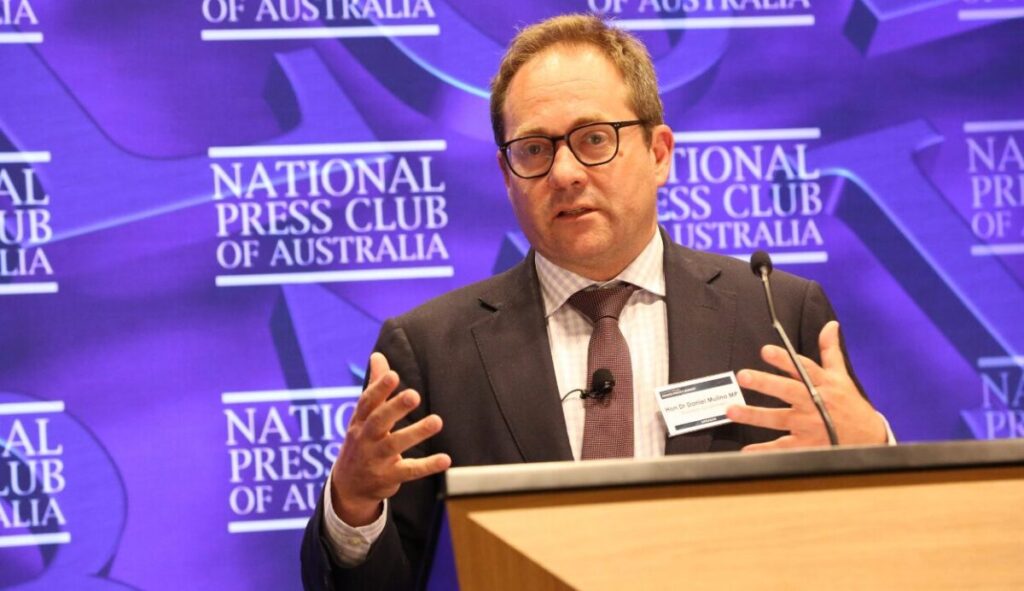
The government is still consulting with industry on its most recent MIS review, but Minister for Financial Services Daniel Mulino revealed in a post-budget webinar briefing hosted by the Financial Services Council on Thursday morning he was “pleased” ASIC secured the funding.
“There’s a lot of detail for us to work through because yes, ASIC will build up capabilities, but it’s going to have to be a process where we do that in a way where we’re consulting heavily with the sector, with consumer groups and all interested parties,” Mulino said.
Mulino said that based on existing information, he believes there are low-cost ways for ASIC to have oversight of where risks are arising based on shared data from platforms.
“If we can have better real-time reporting of flows of investors, it might be that some basic flags like flows of large numbers out of heavily regulated super products into MISs, for example, but on low balances,” Mulino said.
“It might be that if there’s quite a lot of those occurring in a particular way, ASIC would have a look early on.”
Mulino said there will be “devil in the detail” about what data gets shared with whom, but he’s been received with “openness” by parts of the sector for sharing that information.
“The next layer would be trying to figure out is there a way we can look at the riskiness of where the flows are going. If there were a whole bunch of people going into MISs, but the MIS was a very diversified, very safe set of products, you probably wouldn’t be too worried about that,” Mulino said.
“If it was going into a MIS where it was highly concentrated, risky products that was being managed by people without a lot of track record, then that would incline you to have a look more quickly.”
Along with a review into MISs, the government has also been reviewing the sustainability of the Compensation Scheme of Last Resort.
The minister said changes to the CSLR cap for investors of $150,000 was off the table, but “but for” claims would be excluded from the scheme, a position held by his predecessor Stephen Jones and even the CSLR.
“But for” determinations gained notoriety after the launch of the CSLR when the Financial Advice Association Australia pointed to a Dixon Advisory determination where the client was awarded compensation despite not suffering a capital loss.
It led AFCA to have to defend the provision, arguing it was a legally tested mechanism that compensated investors for investment gains they missed out on as they would have been better off without receiving the advice.
However, the minister signalled that “but for” losses would remain part of AFCA claims, just not part of the CSLR.
“When I think of the CSLR… the best outcome is prevention,” Mulino said.
“We’re not trying to reduce losses because of the CSLR, we’re trying to reduce losses because we want the best outcomes for investors.”
The CSLR levy surpassed the $20 million subsector cap for the first time in FY26, with a further $47 million being levied across a broader cross-section of financial services sectors.
The FY27 subsector levy is expected to surpass $120 million, and possibly even $250 million depending on the progress of Shield and First Guardian claims, with another special levy due.
The FAAA released the results of a member survey suggesting that 79 per cent of advisers say they will be forced to increase client fees to offset the CSLR cost.





















Leave a Comment
You must be logged in to post a comment.