
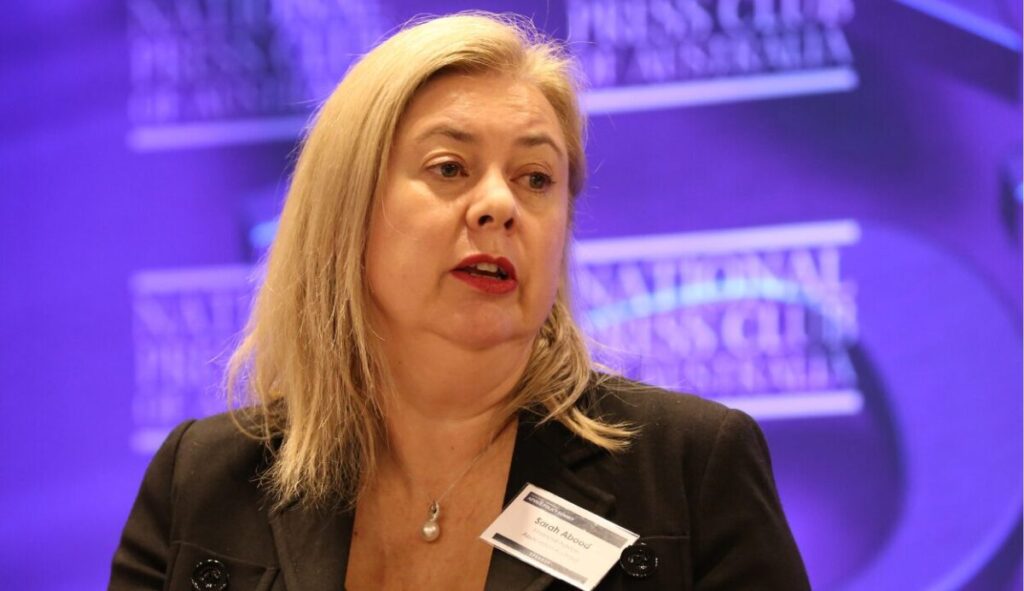

The Financial Advice Association Australia has called for an investigation into the involvement of social media platforms in the $1 billion Shield and First Guardian collapse.
The FAAA made the call in its submission on lead generators, one of three simultaneous consultations launched by the government which also covered the Compensation Scheme of Last Resort and super trustee obligations. The consultations closed on Friday.
“We understand that a number of social media platforms were involved in advertisements in the Shield and First Guardian matters,” the FAAA submission, signed by CEO Sarah Abood, said.
“These platforms have made substantial amounts of money pushing predatory ‘clickbait’ ads to consumers, and have not as yet made any contribution to helping those consumers – who in many cases have lost their entire super balance as a direct result of this advertising.”
The FAAA pushed back on recommendations to ban advice fee deductions for super switching (requiring superannuants to pay fees out of pocket) or adding cooling-off periods for switches, and found support from the Association of Superannuation Funds of Australia on both positions.
The FAAA said there is no basis for banning advice fees from super accounts for switching advice and that this would only hurt consumers by giving them fewer options.
“When it comes to financial advice, the process is already reasonably long as a result of the fact-find exercise that needs to be undertaken, and often the need to contact product providers to obtain additional information,” the FAAA submission says.
“Clients are carefully stepped through the process, and educated on the key considerations along the way. They typically have plenty of time to consider the appropriateness of the decision that they need to make. They need to provide informed consent for the advice to commence to the point of implementation and action.”
ASFA, which represents industry and retail funds, argued waiting periods for switching would lead to a significantly increased administrative burden on funds to implement with no consumer benefit as they would switch anyway.
As part of the consultation into lifting trustee standards, Treasury was assessing the viability of either doubling the maximum penalties for trustee misconduct under the Superannuation Industry (Supervision) Act or bringing them in line with the Corporations Act.
These potential changes received support from the FAAA, but ASFA opposed any increases to penalties under the SIS Act as it would cost more to members in the long run and because the maximum penalty would disproportionately increase from $792,000 to $825 million.
Both the FAAA and ASFA supported excluding ‘but for’ claims from the CSLR, leaving the last resort scheme to remediate capital loss.
The FAAA said financial advice is dominated by small businesses that don’t have the capacity to pay beyond the $20 million collective subsector levy.
Furthermore, the FAAA said AFCA rules need to change to better allow consumers to make complaints about managed investment schemes (MISs) and super funds, and to allow the apportionment of loss to other contributing entities.
ASFA opposed a CSLR funding model that requires ongoing contribution from APRA-regulated superannuation funds, arguing most members will receive no benefit from the scheme.
In the event that SMSFs are subject to a special levy, ASFA said their eligibility to claim under the scheme should be retained.
In addition to targeting social media companies, the FAAA said the current exemption from the anti-hawking laws for financial advisers is essential to enable them to contact their clients in times of need and should not be removed, but that other measures in the consultation including requiring lead generators to be licensed would suffice.
Furthermore, the adviser association supported more restrictions and limitations on advertising financial products through social media but recommended that the anti-hawking laws are modified to ensure that responding to social media posts does not get treated as unsolicited contact.
The consultation on lead generation also suggested tighter restrictions on super advertising by giving ASIC intervention powers when the regulator believes an ad could result in consumer harm.
ASFA said any additional regulation on superannuation communication should be targeted at lead generators, pushing back against any scope that could see institutions swept into the new rules.













Leave a Comment
You must be logged in to post a comment.