
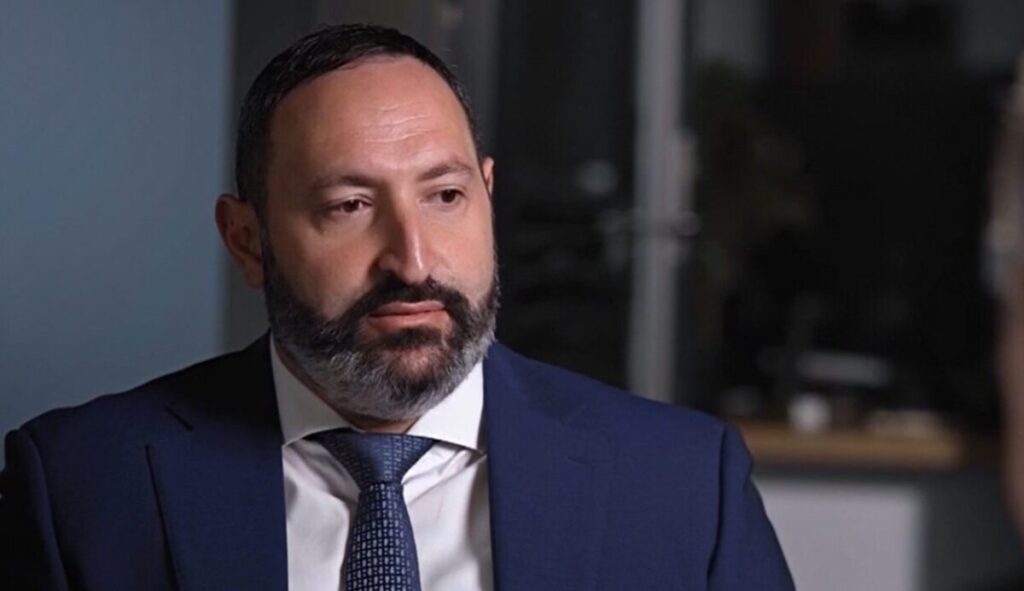

The financial adviser central to ASIC’s investigation into the $1 billion Shield and First Guardian collapse has had his travel ban lifted by the court.
The ban on Ferras Mehri had been in place since February 2025. The Federal Court ordered it lifted on Thursday.
ASIC declined to comment beyond saying it opposed the application to have the ban lifted.
Merhi told Professional Planner that he remained committed to clearing his name and looked forward to presenting his case in full.
“For more than a year I have lived under significant restrictions while defending allegations that remain unproven,” Merhi said in a statement to Professional Planner.
“I have consistently maintained that I will cooperate fully with the court process and continue to defend the substantive proceedings through the proper legal channels. This decision does not determine the underlying case, and I fully respect that those issues remain to be decided by the court.”
The regulator had won multiple of extensions of Mehri’s banning order as it continued its investigation.
Merhi was an authorised representative of InterPrac Financial Planning, as well as the head of self-licensed firm Financial Services Group Australia.
FSGA, along with MWL Financial Services, Next Generation Advice and United Global Capital, is in liquidation, while InterPrac has remained solvent despite concerns over its solvency raised during a failed sales process earlier this year.
Merhi’s Venture Egg firm, which was a corporate authorised representative of InterPrac, is also in liquidation.
Investments in Shield and First Guardian grew rapidly due to a sophisticated network of lead generators that contacted people who used online “superannuation health check” advertisements. They then applied high-pressure sales tactics to refer them to financial advisers.
ASIC acted against the Shield and First Guardian funds over concerns that investor money was being misused on high-risk investments, pet projects of directors and personal expenses, and court proceedings against both funds are ongoing.
ASIC has alleged Merhi used marketing companies to push potential clients to his financial advice businesses while receiving nearly $18 million in upfront advice fees and $19 million from entities associated with the funds to market them.
Furthermore, the regulator alleged Merhi signed 6000 Statements of Advice within a three-year period, under InterPrac’s oversight.
ASIC’s court filings in its actions against InterPrac allege the licensee failed to step in when misconduct became apparent and provided template responses that dismissed even legitimate complaints.
ASIC has since banned several advisers for misattribution on SOAs, which was uncovered by an investigation by Professional Planner, as well as breaches of the best interests duty. Merhi’s former business partner Rhys Reilly received a 10-year ban for failing to properly investigate the suitability of First Guardian for clients and accepting conflicted remuneration.
In an interview in April, Merhi told Professional Planner he believed ASIC misunderstood how his business model operated and that he would be vindicated in court.
“If a judge got to hear how I went about things, you would find there were no breaches in the law,” Merhi said. “I’ve been maintaining that from the get-go.”
While ASIC has taken action against the advisers, licensees, fund managers and lead it has also acted against the “gatekeepers” through enforcement action taken against the four trustees that onboarded the funds (Netwealth, Macquarie, Equity Trustees and Diversa Trustees), as well as SQM Research.
Netwealth and Macquarie have remediated investors on their respective platforms, while Diversa and Equity Trustees and SQM are fighting allegations of wrongdoing in court.
Liquidators have been appointed to Shield and First Guardian; the former is expected to return around two-thirds of assets back to investors while the latter is expected to generate only a few million dollars despite $446 million invested in total.
FTI Consulting, the liquidators for First Guardian responsible entity Falcon Capital, delivered an update in May stating total recoveries have reached $6.2 million, but there is only an estimated net cash position of $326,000 after expenses.
This includes 8 cents in the dollar back on a loan the fund made to a property developer in western Melbourne.
The collapse of the funds has led to another round of law reform in financial advice and superannuation, and has scuttled attempts at deregulation following of the Quality of Advice Review.
After a more than a decade of reform that included the Future of Financial Advice reforms, the introduction of professional standards for financial advisers and the Hayne royal commission, the QAR produced a template for deregulation of financial advice laws that aimed to eliminate redundant layers of consumer protections, create a principles-based regime for advisers and allow super funds greater flexibility to serve members with advice.
Instead, the same Labor government that was expected to usher in these changes has since had to change course, with the new class of adviser, that would aid super funds giving advice, likely dead in the water.
The government has since launched policy reform consultations on managed investment schemes (MISs), lead generators, trustee obligations and the Compensation Scheme of Last Resort in response to the collapse.
Those consultations have proposed that advice fee deductions for super switching be banned – instead requiring any fees to be paid out of the client’s pocket rather than their super fund; waiting periods for inter-fund switches to be added; and stricter holding limits for MISs.
The government has since allocated funding for ASIC for better monitoring of MISs.




















Leave a Comment
You must be logged in to post a comment.