


This roundtable was sponsored by HUB24.
Industry and corporate funds are experiencing “large competitive outflows” with more money leaving than coming in as a result of member movement, based on research by The Conexus Institute, a thinktank philanthropically funded by Professional Planner publisher Conexus Financial.
Competitive outflows are dominated by one major theme: flows to retail super solutions on advice platforms away from other funds. While industry funds have just delivered strong outcomes at scale during the accumulation phase, the demographic shift towards retirement is bringing different member needs into focus, particularly around personalisation, choice and advice.
The roundtable held in May interrogated the social, economic and technological trends underpinning the confluence of superannuation and advice.
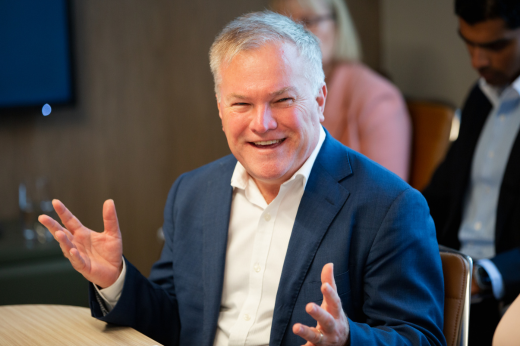
According to Andrew Alcock, HUB24 managing director and CEO, members are moving for legitimate reasons, and the super industry should focus on understanding and addressing those reasons.
He dismissed suggestions by organisations including the Super Members Council that advisers are switching members into more expensive and potentially riskier products.
“Advisers have a fiduciary responsibility to act in their clients’ best interests, so they don’t move clients lightly,” he said.
“If they do, there’s a rationale for it.”

There was agreement in the room that movement is increasingly being driven by member needs in retirement, rather than any single product or provider dynamic.
Ian Fryer, general manager of superannuation research and data firm, Chant West, agreed that moving activity partly reflected on industry and corporate super funds, not necessarily advisers.
“We need to ask, why are these things happening, and once we get to the bottom of that question, the super industry probably has to do things differently, especially around retirement,” he said. “That will be the biggest lesson from all this because members are moving because they’re not getting what they need.”
Yvonne Chu, head of technical and paraplanning at Australia’s largest licensing and business services provider, Entireti, said the group’s compliance framework was designed to discourage unnecessary moving.
“Advisers have to demonstrate a recommendation is in the client’s best interests and that the benefits of moving outweigh the costs and disadvantages,” she said.
“If it’s neck and neck, the incumbent still comes out on top because there’s often a cost to moving.”

The need for regulation to enable accessible advice
In the aftermath of the $1 billion Shield and First Guardian collapse, Alcock observed a spike in the number of consultation papers and urged regulators and policymakers to focus on supporting advisers to deliver good advice to more Australians.
“The reform agenda seems focused on things that happened in the past, and I think it’s important and appropriate to address the past, but it also needs to focus on what’s happening now and what we’re trying to do, which is deliver a value proposition that’s needed for superannuation to achieve its national objectives,” he said.
WT Financial Group chief operating officer and head of risk, Frank Paul said the collapse of Shield and First Guardian pointed to systemic failures but urged regulators not to “overreact” by restricting super choice and putting more hurdles in place for members to move.
“The government has a duty to protect consumers, but it also has a duty to protect the freedom and rights of consumers to choose what they do with their money,” he said.
Peter Richards, partner at accounting and advisory firm, People and Partners, said that over-regulation often had unintended consequences and led to inefficiencies.
An exciting, albeit challenging, opportunity
Fresh from covering the May Federal Budget, Chu described the retirement advice opportunity as exciting, albeit challenging.
“Superannuation was one of the big winners out of the budget and it remains the best vehicle to save for retirement,” she said.
“Advice is not about recommending products, it’s about helping clients meet their goals. Anyone who understands the advice process and the grunt work that advisers and their teams do to produce advice and implement it from beginning to end, knows it’s hard. It’s also clunky, which is why we need efficient systems and technology.”
Richards said some of the government’s proposed budget measures, namely changes that will roll back capital gains tax and negative gearing concessions, could push more people to establish self-managed superannuation funds (SMSFs).
“The budget measures could swing the pendulum towards SMSFs because it may be more beneficial to hold assets inside super, as opposed to other investment and tax structures like family trusts,” he said.
“Many people want greater control and flexibility, and also the peace of knowing that their super vehicle can be maintained for the next 20 to 30 years,” he said.

Advice gap must be addressed
Fryer said industry and corporate funds had their work cut out for them if they hoped to stem competitive outflows.
“These things don’t change quickly, and it can be hard to turn things around,” he said. Alcock noted, in fact as advice becomes more accessible and adviser numbers grow, this movement could increase.
“Advisers look after their clients’ best interests and many are moving them and that’s just good market forces and that should cause the market to respond,” he said.
“The question then becomes, what are we doing about the advice gap.”
Technology has a huge role to play in closing the advice gap, according to Chu.
“We need to increase adviser numbers for sure, but we can also use technology to speed up processes and drive efficiencies to grow the number of clients an adviser can service,” she said.
“With technology, advisers can potentially have 200-300 clients.”
WT Financial’s Paul identified part-pensioners – those receiving a reduced Age Pension – among those most in need for advice.
“If there’s a cohort with complex needs but can’t afford advice, it’s the part pensioner,” he said.
Richards agreed.
“It’s the missing middle – part-pensioners or people just a bit over – because that’s where retirement income products and their interaction with the Age Pension come into play and, in many cases, the advice required for that group is more complex than for wealthy people because advisers need to be very technically skilled to navigate their way through the rules,” he said.
Accurium principal, Melanie Dunn predicted that demand for advice was set to dramatically increase, particularly among young people.
“Young people have had the SG their entire lives and they can see that their parents are doing more and more with their money,” she said.

As super balances grow, Dunn said more people would seek greater choice and control and turn to advisers for help to understand their options and make the most of their money.
“Maybe part of the competitive outflows we’re seeing is because the mega funds aren’t there to support choice at the moment, which is kind of surprising given that we’ve known about the demographic shift and its implications for a long time,” she said.
Guidance as a starting point
Eureka Whittaker Macnaught CEO Greg Cook said even those with modest account balances needed advice as they approached retirement, adding that super funds were ideally positioned to provide some guidance as a “starting point”.
“Advice is valuable and people value advice yet, going back 10 to 20 years, there’s been a real opposition to advice from some funds,” he said.
Cook traced the genesis of that stance back to the days when defined benefit schemes dominated the landscape and people commonly worked for one company their whole lives.
“There was a belief that you didn’t need advice because the scheme would look after you,” he said.
That belief combined with old remuneration models saw retail funds develop close relationships with advisers.
“Retail funds see advisers as a critical part of their relationship with members, and I think in hindsight other funds could have done a better job at making advice a core service for members, especially pre-retirees,” Cook said.

Fryer said the size and culture of many mega super funds made it difficult for some to “get their heads around” the personalised nature of advice.
“Super funds have done a really good job of long-term investing and that’s generally a one-size-fits-all approach but as people approach retirement, that requires an individual approach which is a total mindset shift,” he said.
Minchin Moore associate partner and principal adviser, Diana Gowdie said industry funds were designed and equipped to service a large number of members but not in a personalised way, leading to member frustration.
“Members get to a point where they need to speak to someone because they have a bunch of questions and the call centres are just not equipped to respond,” she said.
“Those members then look for people who can answer their questions and that leads them down the path of professional advice.”

A broad and diverse client base
While retirees and pre-retirees still make up the bulk of advised clients, there is a growing focus on younger clients as Australia’s intergenerational wealth transfer accelerates.
“Australia’s superannuation system has been so successful at accumulation and younger cohorts have seen a tried and tested model,” Gowdie said.
“Many young people are aspirational, they’ve seen the generation before them accumulate wealth and retire, and they can see the trajectory of their savings. Super is going to be a significant portion of their wealth, and many want to take control sooner rather than later.”
If Paul had to come up with a number for the age of enlightenment, it would be 50, possibly late 40s.
That is roughly the age when general interest in superannuation and retirement turns to concern, he said.
“In our experience, every client, but especially those from age 50 on, has one main question on their mind; will I be okay? They may not articulate it that way but that’s ultimately what they want to know and that is at the core of what financial planning is all about,” he said.

Choice words
Paul said The Conexus Institute’s research highlighted the impact of “client agency,” which had unsettled parts of the industry.
“The research shows that clients are choosing, within a pretty robust best interest duty framework, and in picking winners, they’re creating losers,” he said.
Paul is not surprised that emotive terms like “super switching” and “churn” are finding their way back into the financial services lexicon, driven by parties with vested interests.
“Look at what the word churn did to the life insurance industry from a regulatory perspective and now, unfortunately, it feels like switching is being elevated as a synonym for churn,” he said.
“That’s not fair and we should all be very conscious that the use of that kind of language is an invitation to government to intervene.”
Not built to deliver
HUB24’s Alcock said the super industry’s strong focus on accumulation and investment performance had led to Australia being recognised as one of the best retirement systems in the world, however, Australia’s position in the global rankings had been slipping due to shortcomings in other areas such as benefits for retirees.
“The model is about generating the highest returns for the lowest fees possible, so funds can’t deliver customisation and bespoke services without eroding their value proposition,” he said.
“If the starting point is low fees, high volume and better returns, then that’s at risk if they have to do things differently. Philosophically, the system is not built to do what it currently needs to do.”
Fryer pointed out that the industry’s often-myopic focus on low fees was underpinned by regulation.
“Low fees, low fees, low fees is really drummed into funds and then when they’re not providing the services that members need because they only charge low fees, members leave,” he said.
Low fees are also important for retail investors, said Richards, observing that technological advancements, competition and market dynamics had been pushing down the cost of retail platforms.
“Six years ago, industry funds at 0.6 was cheap but 0.6 doesn’t cut it now and with platform fees coming down and efficiency going up, it’s evidence of efficient market forces,” he said.
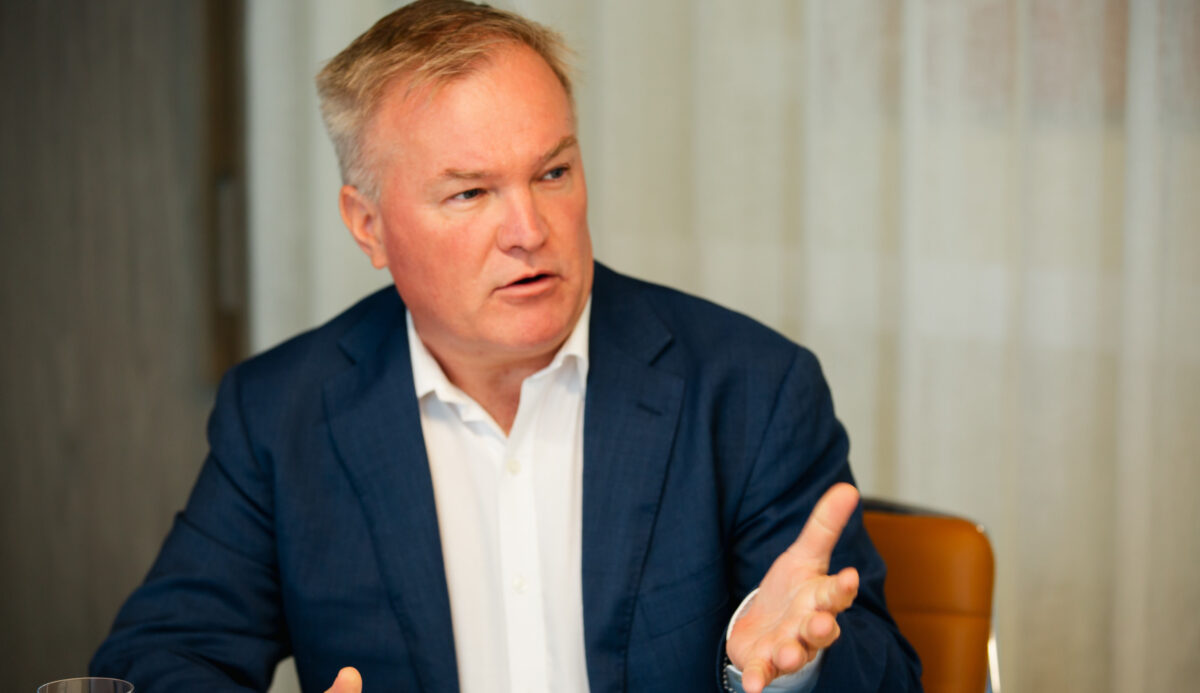
Alcock said retail platforms have had to work hard to compete for clients because they did not benefit from guaranteed inflows through the modern award system, which favoured industry super funds.
“In an award-based system, some funds are protected so they’ve never really had to compete and build truly efficient businesses,” he said.
“As a result, some funds are being left behind a bit when it comes to fees. I don’t think they know that because they still think they’re cheap, but when you analyse fees and outcomes, advisers are delivering significant value.”
When it comes to value, the focus should be on outcomes not just fees, said Dunn.
“Fees are just one part of the picture. Advice is about looking at someone’s holistic needs and the outcomes they are trying to achieve, and then delivering on that. They may need to pay a bit more in terms of fees to get a better outcome,” she said.
Innovation to enable long term sustainability
Minchin Moore’s Gowdie noted that a focus on lowest fees raises other concerns. “I worry if that is sustainable in terms of the governance, service, human capital and ongoing investment in technology that’s required,” she said.

HUB24 chief operating officer Craig Lawrenson said the HUB24 Group was investing heavily in technology and innovation to deliver improved outcomes to members and advisers.
“We’re delivering technology that’s creating back office efficiencies for advice businesses and also delivering a great client experience,” he said.
“It’s a dual benefit and that’s helping us sustain service and there’s more to come. Over time, you can leverage technology to reduce costs.”
He said technology would play an increasingly important role in expanding access to advice and improving retirement outcomes over time.
















Leave a Comment
You must be logged in to post a comment.