
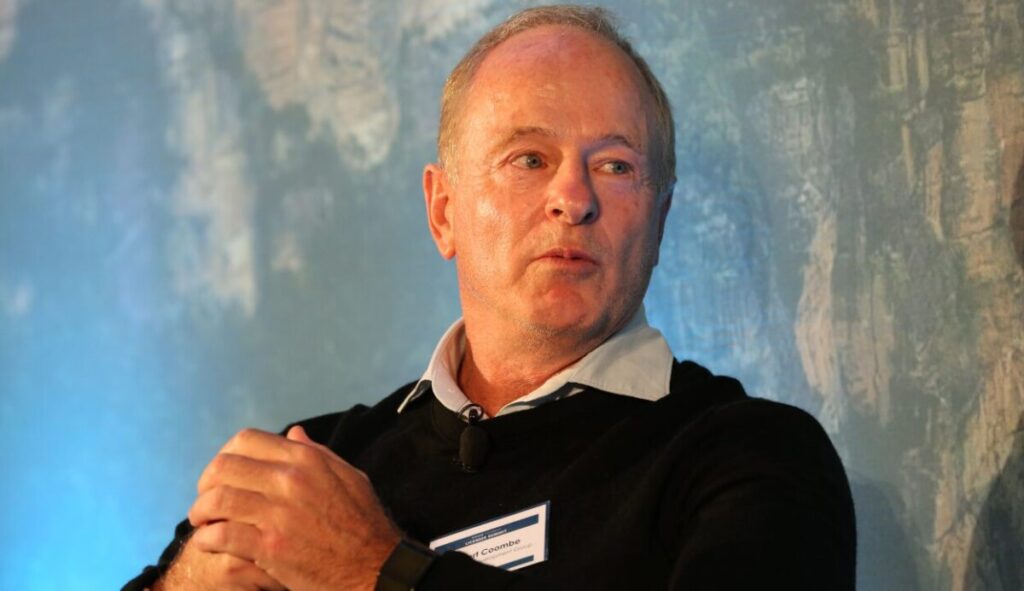

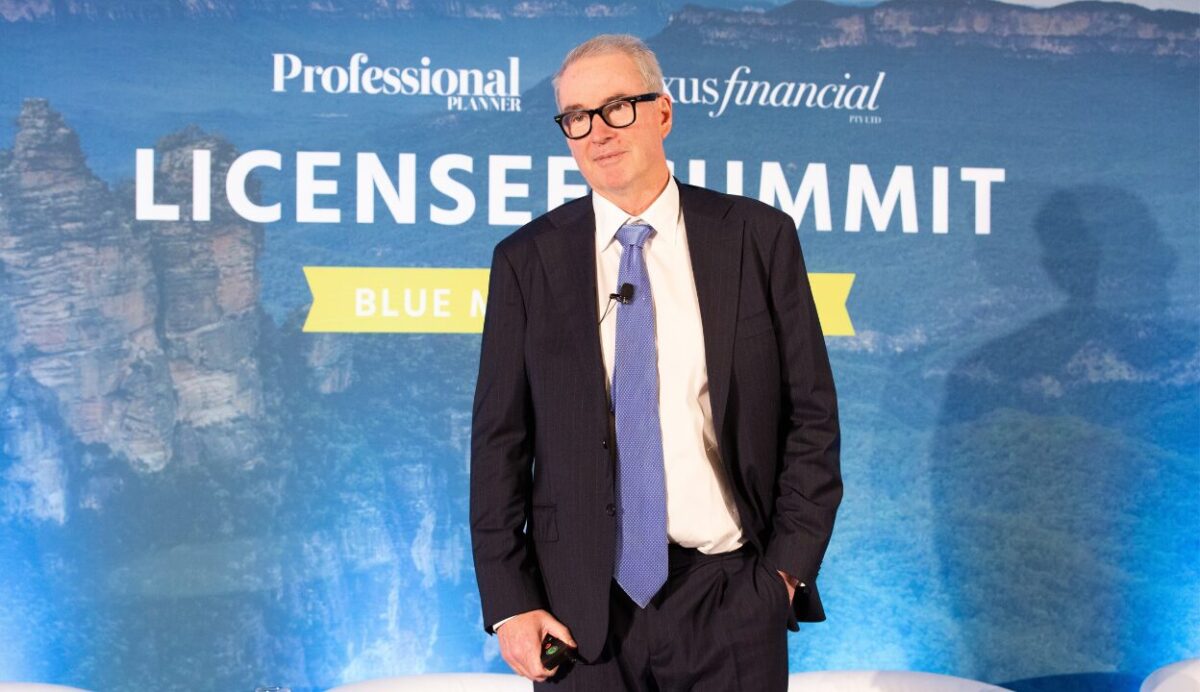
Generation Development Group executive chair and financial services veteran Rob Coombe says there are five predictors he relies on to determine the potential success of an executive.
In a fireside chat at the Professional Planner Licensee Summit, Coombe said curiosity, a strong desire to make a difference, self-actualisation, personal accountability and clarity were what he boiled down as the key traits.
“I started adding up all the people that had worked for me that had gone on to be CEOs and I got to over 40 on that and then I’m like what do those people have in common that help them in leadership roles and I was able to boil it down to five things,” Coombe said.
Personal accountability was the rarest trait, which Coombe said was “gold” when he found talent with that characteristic.
“It’s easy to blame exogenous factors and most people do, but try and take personal accountability before you put the blame to others. What could you have done differently? When I find that in people, that’s like gold because it’s super rare.”
Clarity was important – in thinking and in communication – because of the importance of being clear to everyone about what their role and responsibilities are.
“Not everyone had those five, but they were five key characteristics I noticed of those people that had gone into leadership roles,” Coombe said.
Coombe is presently executive chair of GDG, which operates Generation Life, the insurance bond and annuity firm previously known as Austock.
Coombe is also non-executive chair of Colonial First State. His four-decade career includes a six-year tenure leading BT Financial Group where he was responsible for all of Westpac’s funds management, financial planning, insurance, private banking, broking, platform and superannuation businesses.
He said his purchase of the GDG business was based on his prediction that the government would continue to tinker with superannuation, including with changes that would restrict how much money could go into super through a combination of caps and an increase in taxes.
The ASX-listed company has since grown with the acquisitions of Lonsec and Evidentia, putting it at the forefront of investment research and managed accounts.
Finding leaders
Among Coombe’s protégés are CFS Superannuation CEO Kelly Power, Perpetual Wealth CEO Mark Smith, BlackRock head of Australasia Jason Collins and GDG’s current CEO Grant Hackett.
At the Licensee Summit, Coombe recalled how the eager 21-year-old was already plotting his next career moves.
“I first met him [Hackett] in 2001 after the Sydney Olympics… I think Westpac had sponsored Grant, that must have been how I met him,” Coombe said
“We just chatted to him about what he had in mind for the future and it was already apparent to me at the age of 21 that he was incredibly curious, and had a savant-like-mind for numbers, which probably goes with tracking all the times that he was competing against,” Coombe said.
Coombe said he continued to stay in touch with him for the next seven years, adding him to corporate life when his Olympic career concluded.
“He was quite a smart guy and had a lot of emotional intelligence as well, you can imagine someone that’s been up there in the global spotlight,” Coombe said.
Coombe said both he and Hackett are “obsessed” with what high-performance looks like.
“We spent a lot of time talking about that,” Coombe said.
“As much as we can, we try and inculcate that model into the businesses that we run, so there’s concepts of what’s the strategy, what’s the reason that we all come together? What are the definitions of success and failure.”
Coombe said there’s a framework in each of the businesses to optimise the performance, which he concedes is not for everyone.
“If you’re not interested in performing at a high level, we’re probably not going to be the place to work at,” Coombe said.
“It doesn’t mean you’re a bad person, that’s just what we’re about. We’re prepared to pay for that, but if you’re not prepared to step up we’re probably not the right place to work at.”
Coombe said he loves working with Hackett because he considers feedback “a gift” and it means he’ll accept frank and direct conversations.
“He never takes exception to it, he takes that feedback and uses that to constantly get better and better,” Coombe said.
“I’ve known Grant from that age [21] to now, like that’s a span of 25 years, [watching him] turn from a kid to an outstanding executive, and that’s because of his capacity to absorb feedback and use that to get better and better.”
In the chair
While he’s content with pushing his executives, Coombe concedes the further you go down in an organisation, a softer approach is required.
“The meaning and reason are not as great in the lower parts of the organisation,” Coombe said
“But definitely in the executive ranks, we encourage open, honest conversations. We encourage people to have views which are different to convention and we like to challenge those views.”
Coombe is still chair of CFS, but the role has since changed since the appointment of CEO Clive van Horen.
“There was no CEO then because they told me that it was only a job they needed me for the three months, it turned into three years, so I was effectively captain-coach on that one,” Coombe said on his initial appointment.
“I had to do both roles there and with Generation Development Group, I’m executive chair but we do have a CEO.”
He described himself as being a “coaching, monitor, evaluator, pushing, probing, challenging” type of leader.
“I’ve got this language which I use with Grant and the other CEOs that work for me, it’s like we discuss/we decide, we discuss/you decide or we discuss/I decide,” Coombe said.
“The I decide in the executive chair role is very rare because if that happens too often, you’re disempowering the CEO. Occasionally, it happens, but not very often.”





Leave a Comment
You must be logged in to post a comment.