

On the face of it, she looked like the model adviser. She was respected by her peers, her advice was good, she regularly won awards, and her clients loved her. Then she started pre-charging clients fees for service, took the money, spent it, and disappeared. That disappearance was ultimately how Count found her.
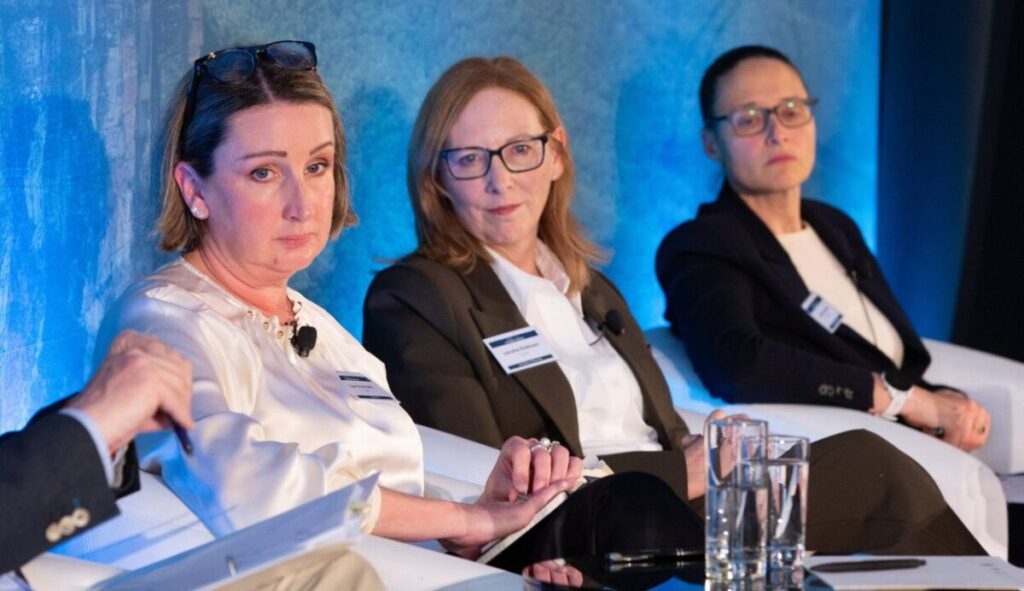
Count chief risk officer Lisa Chambers said the licensee never traced her, and neither did ASIC. Chambers said the adviser had operated under multiple names. When Count put what it had uncovered to her clients, many refused to bring a complaint, and some did not believe she had done anything wrong, even though she had taken advantage of their trust and, in several cases, their vulnerability.
Chambers said there’s a difference between “capability” and “ability” to impose effective investment and advice governance. Even Count, which has 23 people constantly monitoring for risk, cannot on its own always spot what is going wrong.
“All of the parts of the system have to work, because it isn’t just ASIC,” and it isn’t just licensees, Chambers said.
“It’s not just the regulator, it’s not just the licensees, it’s the product and platform partners, it’s the breach reporting regime, it’s education, it’s the complaint structures. When you see systemic failures, it’s because multiple parts of the system have failed.”
Whether large licensees have the capabilities to oversee their advisers, and whether ASIC has the capacity to conduct due diligence across the thousands of self-licensed practices operating around the country, are only part of the issue. It is also about the willingness of different players in the chain both to oversee and to be overseen.
Annika Bradley, head of advice strategy, research and technical at UniSuper, oversees a network of 70 authorised representatives providing comprehensive advice, mostly on an episodic basis. UniSuper monitors every single piece of advice that goes out to fund members, including investment exposures and product exposures, and it works on training, coaching and process consistency, with adviser incentives aligned to quality advice. None of it guarantees a catch.
“Fraud is just hard to detect, by definition,” Bradley said.
“We can have all the monitoring processes in the world. I’m not sure we’d hold ourselves out to say we catch that.”
ASIC is a conduct regulator, not a prudential regulator, and it takes a data-led approach, Chambers said. That approach steers it towards where the data is – which is typically the larger licensees.
“They’ve told us that they come to talk to us because we’re big, and that they can’t look at the whole of the industry, so they sort of rely on us,” Chambers said.
The smaller end of the licensee market is not necessarily worse behaved, but it is definitely less closely watched.
“If you want to do something bad, it’s a safer place to hide, because ASIC is not looking as closely at it, and so it will miss things,” she said.
Chambers said the law put the obligation on the licensee in any case.
“The Corporations Act says that I’m responsible for monitoring and supervising advisers. It doesn’t say that ASIC is, so it’s pretty easy for them to point the finger back at us.”
That leaves different links in the chain relying on each other to operate effectively. Chambers said platforms now come to Count with intelligence it could not generate itself, because they held the implementation data, ran bigger technology budgets, and saw things first.
Count was working with its product and platform partners to reach that data before the regulator did. The industry had been siloed, she said, and needed to cooperate more.
Bradley said the same platform data let licensees check a statement of advice against what had actually been implemented, and against the product disclosure statement.
Bradley said it had been reported that the Shield Master Trust product disclosure statement (PDS) described a balanced fund targeting returns of CPI plus 8 per cent over five to seven years, and classified it as medium risk.
“I do wonder how that PDS got in market,” she said.
Lonsec chief executive Lorraine Robinson said research ratings were being asked to carry more weight than they should. ASIC’s REP 779 had told licensees not to lean too heavily on them.
“A rating is not a governance framework, it is an input into a governance framework,” Robinson said.
Robinson said the choice of research partner, and the way a licensee used it, had to be deliberate.
“You need to be very deliberate about your choice of research and the way you use it, rather than an ad hoc, get a rating, tick, my work here is done.”
Lonsec had released an investment governance tool to flag funds whose performance had slipped and give licensees an auditable trail showing they had seen the flag, considered it and acted, moving product governance from a point-in-time exercise to effectively ongoing monitoring.
But what really matters in governance is actual accountability, she said.
“You can’t outsource your accountability, but you can and should be able to outsource the work to provide you the evidence to accept that accountability.”
Robinson said that while there may be real or perceived conflicts in a research model where product manufacturers pay for ratings, there has never been much adviser or licensee support for the alternative of charging the users of the research to fund a 35-person team.
“We’re very strict about our menu pricing, so that we can absolutely say that everybody pays us a menu price,” she said.
Bradley said the lesson of the recent product failures was less exotic than it looked, and that it looked very familiar, including high-fee products, highly leveraged products, and liquidity mismatches.
“There is an element of boring basics when we’re overseeing products,” she said. “Reading the PDS, doing that basic work, is really, really important.”
Chambers said creating and maintaining healthy culture was more difficult, but not less important. She wanted advisers to come to her when they had made a mistake, because the earlier she knew about something, the easier it was to repair.
Bad advisers were no more common than bad accountants, lawyers or doctors, she said; it’s just that the advice industry is really good at punishing itself.
“We just do a really good job of self-flagellation, and the regulator helps us with that.”






Leave a Comment
You must be logged in to post a comment.