


A “data war” between platforms and advice businesses and licensees over who owns client data is one of the biggest single roadblocks currently preventing financial advisers from doubling their client numbers, the Professional Planner Licensee Summit has heard.
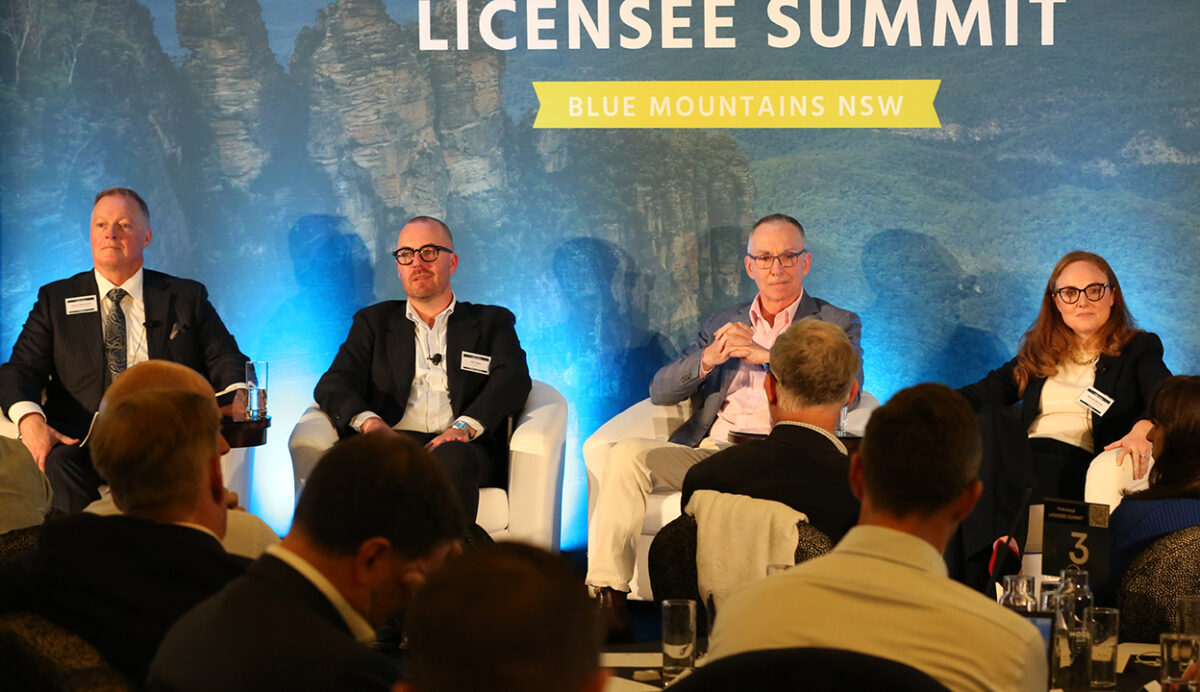
A panel examining the demand, supply and oversight landscape for financial advice heard that ownership of client data is the foundation of efficient advice practices, and controlling the data underpins the ability to automate and industrialise advice processes at scale.
The summit identified a notional target benchmark of 300 clients per adviser, compared to an estimated current average of around 150, as achievable, but the inability or unwillingness of parties across the advice chain to share data freely was strangling the efficiency gains needed to get there.
AMP North platforms group executive Edwina Maloney said the problem boiled down to “too much fighting over ‘I hold the data or you hold the data’.”
“There is now a much more open view of data exchange and sharing in a two-way sense between players across the value chain,” she said. But while the view has changed the reality continues to lag and advisers continue to suffer the consequences.
“There is so much friction in the system today. We hear from advisers all the time that they’ve got to re-key from one tech system into another into a third. Data and integration to me are key to unlocking this efficiency equation.”
AZ NGA chief executive Paul Barrett said getting even basic client data out of industry participants at the moment is challenging.
“We don’t own our data,” he said. Getting it out of planning software and getting it out of platforms “is bloody hard”.
“The very foundations of good practice and good business are things like owning your data and owning your enterprise architecture, and the advice industry doesn’t own either of those two things. There is a platform out there who will not give us our client data [and] that’s fact. They’re our clients. It’s our data. We’ve got to settle that debate.”
Who ‘owns’ the client?
The question of who “owns the client”, and whether it’s the platform or it’s the adviser and licensee, has long been settled (it’s the adviser), but the question of who owns the client data still has not and it will remain a problem until there’s broad acceptance across all links in the wealth management chain.
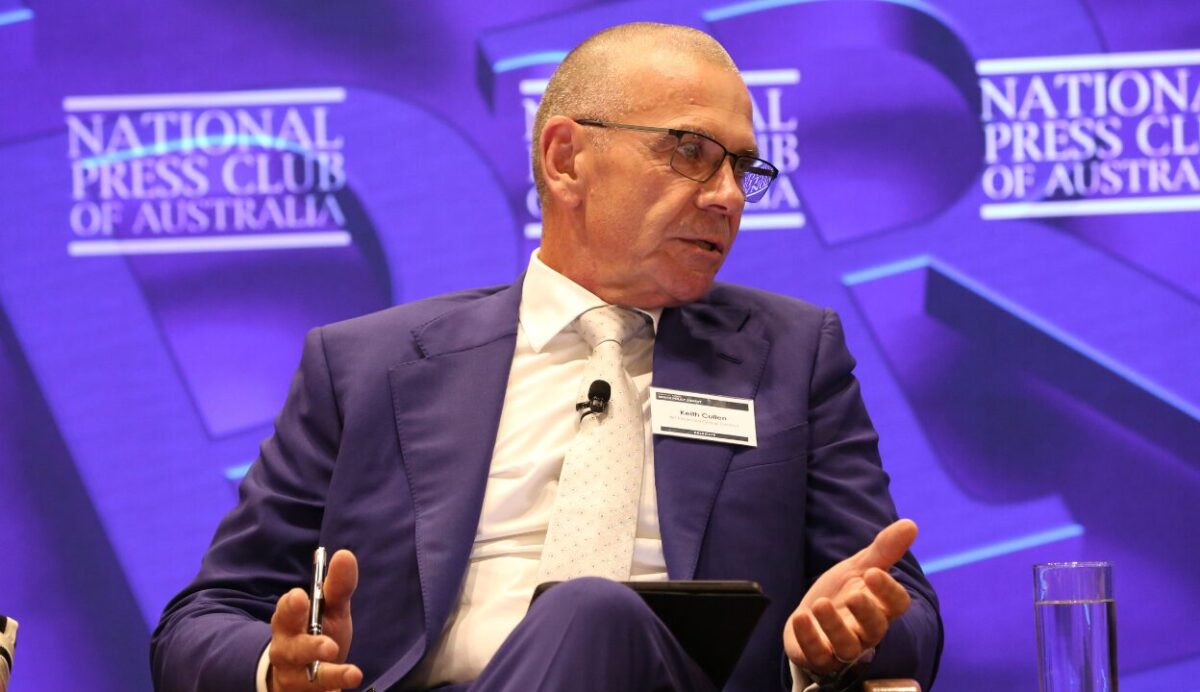
WT Financial Group founder and managing director Keith Cullen said advisers and licensees need “a single source of truth from the data”.
“You can’t automate processes unless you’ve got consistency across the data. But before you can automate anything in a business to get real efficiencies, you need an advice process map,” he said.
“You can’t automate boutique behaviours, and you can’t automate a lack of process discipline.”
Cullen said advisers have no excuse for serving many more clients once those structural problems are resolved.
“The number should be 300, there’s no question,” he said. “The best practices are seeing 300 already.”
Cullen said the advice profession continues to lack “pricing confidence” and is underselling the value of its services by as much as 40 per cent.
More than half of advisers are still not charging implementation fees, leaving substantial revenue on the table, and an apparent upward trend in the average cost of advice is largely a statistical quirk as low-value clients drop out of the data.
New era of advice
Barrett said the deeper root cause of adviser inefficiency lies in the pre-Hayne royal commission era, in which product providers controlled not just capital but the design and the execution of the advice process itself. Advice as a service was deeply subsidised by revenue generated from funds placed on platforms and into investment products.
“The platforms controlled the money, and they controlled the advice process, the design of the advice process, the execution of advice process,” Barrett said.
The consequence was an undercapitalised advice function, which was almost pathetically dependent on entities whose interests were not the interests of advice businesses and certainly not their clients.
But Barrett said that advice-led capital is now re-entering the sector at scale. AZ NGA is committed to spending tens of millions on business transformation with a focus on advice processes, technology, model office infrastructure and client engagement.
“For 20 years I asked my platform boss to provide me the capital for these things, and he said no. Finally, that capital is actually being spent.”
The corollary is that there will inevitably have to be “one advice process at AZ NGA”.
“It’s the only way to solve the problem of how you serve more clients,” he said.
HUB24 chief executive Andrew Alcock said his organisation wants to integrate and enable rather than control.
“We certainly advocate for handing over data. In fact, we’ll even help you build data lakes to do it. We need to make it work between us, and we’ve been saying for years that’s the issue here.”
He said that post-royal commission the return of capital to the industry had made a range of business models viable.
“Capital left the industry and it needed to come back. If it comes back and supports all those business models, that is an amazing story.”
Alcock said technology has made it easier to build open-architecture stacks where different components can be coordinated without being owned by a single entity.
Cullen said the technology solutions needed to industrialise the advice process no longer need to be built from scratch. Some WT practices had overlaid automation across existing, heterogeneous tech stacks without the need to replace anything.
“They’ve got a bit of this and a bit of this and a bit of that, but what they’ve done is they’ve cleverly overlaid the lot of it, and they’re taking advantage of automation that’s available to them to create the most incredible solutions for moving advice through their practices,” he said.
Count CEO Hugh Humphrey said he could see adviser productivity increases within the Count network.
“We used to talk about 80 to 90 clients per adviser when we acquired the Count Financial business from CBA,” he said.
“Then we were talking 120, now talking 180, and now the conversation is shifting to a few hundred.”







Leave a Comment
You must be logged in to post a comment.