

Radical transformation needed for golden era of advice

Digging a large hole with a shovel is time-consuming manual labour. More people and more shovels may speed up the process and increase the number of holes but it’s still strenuous work that’s difficult to scale.

Real progress requires earthmoving machinery and additional skills.

The takeout for the advice profession is that it can’t solve the advice demand and supply imbalance with more shovels.

The task of educating and guiding 22 million adult Australians and their families to financial freedom requires new equipment and a different way of doing things, backed by supportive regulation, to achieve stepped change.

That’s not to say that the work being done inside practices to drive continuous improvement and train and mentor the next generation of advisers isn’t valuable. It’s incredibly valuable and important, and must continue, but it’s just not going to move the dial when it comes to closing the advice gap.

A golden era

In the future, the financial services industry will look back on this time as the golden age of advice. After decades of trying to articulate and promote the value of advice, people finally get it. Not only do they get it, they want it.

However, the profession hasn’t adequately invested in supply, including people, systems and technology, ahead of growth. While there have been extenuating circumstances including unprecedented regulatory and structural change, fragmentation and higher than average attrition rates, Australians are now at increasing risk of getting poor advice from unqualified providers because professional advisers don’t have the capacity to help them or can’t help them at their price point.

When it comes to supply, the people challenge will take time to solve. It requires training and mentoring talent, education reform, and attracting graduates by positioning financial planning as an attractive career.

But the systems and technology challenge can be tackled now, provided Australia’s largest and most experienced groups are prepared to lead.

Advisers are crying out for solutions that will free them the operational aspects of delivering advice so they can spend more time interacting with clients and customising strategies to meet their needs. The profession also needs technology that can facilitate the delivery of digital advice at scale, and enable people to move along the advice continuum as their circumstances change.

While many advisers have built valuable businesses with loyal clients, delivering advice is more complex and time-consuming than ever. Advisers spend an inordinate amount of time onboarding clients and producing advice, due to the highly regulated, comprehensive nature of advice and the industry’s spaghetti of disconnected systems.

On top of all that, many also juggle the day-to-day responsibilities of running a business.

Consequently, the cost to serve and, in turn, advice fees are high, which is curbing the ability of advice businesses, and the broader profession, to grow. Not only are fees prohibitive for most people, but the industry’s rigid, one-size-fits-all approach is stifling capacity and productivity.

Some firms are managing capacity constraints by focusing on a smaller number of clients and charging higher fees without increasing services. This has arguably right-sized fees but it does not solve the issue of growth.

According to research by Colonial First State, advisers look after 112 ongoing clients on average but aspire to serve 152. Over 40 per cent say they are operating at full capacity.

Of course, some are serving more than 112 clients. They have addressed bottlenecks in the advice process by leveraging technology and automation. In doing so, they have been able to put some capacity back in the system.

We believe that this is just the tip of the iceberg in terms of what’s possible.

Stepped change

Australia’s adviser shortage is well known. Since 2019, numbers have fallen from over 25,000 to 15,488, as at 30 June 2026.

This means businesses must lift productivity and find more time in their week without employing more people. But going from 112 client to over 200 clients utilising only existing resources can only happen if businesses can remove the inefficiencies in advice delivery and ongoing client service, and embrace alternative advice models.

To drive stepped change, the advice profession must transform its operating model.

Transformation is a common concept used in business and politics to describe significant shifts and strategic initiatives to deliver material improvements in performance.

Transformation marks a departure from how things have always been done, which usually requires substantial effort, commitment and capital.

Few advice businesses have actively pursued transformation. Over the years, many have incrementally improved their processes, productivity and performance, but they haven’t experienced transformation or stepped change.

While continuous improvement is critically important and the foundation of innovation, the profession must think bigger to close the advice gap. Incrementalism alone won’t get us there.

Connected data is the key

Data is the key and advice businesses have plenty of it. While extracting data from clients and their service providers can be tedious and time consuming, gathering information is generally not a major problem.

The biggest challenge is connecting data, organising it to get a complete and timely picture of a client’s circumstances, and implementing insights to capture opportunities to add value.

This is hard because of the fragmented nature of data and the industry’s legacy systems and technology.

Most advice businesses are built on a myriad of applications and solutions that operate independently of each other, requiring advisers to jump between systems.

They’re not set up to take data from various sources, hold it in a centralised place, and glean insights. As such data, has never taken its rightful place at the centre of the advice process. It has never actively aided decision making, not only in terms of getting the job done for clients, but informing business planning and strategy.

Fortunately, technological advancements mean that advisers don’t have to struggle with fragmented data and inefficient operating models. With the right infrastructure, data can be centralised to create one source of truth, and data management can be automated to provide insights in real time. Having one knowledge base that multiple applications and solutions can interact with is the foundation of efficiency and sustainable growth, especially with the ability to overlay AI technologies like machine learning and large language models to interrogate data, create and allocate tasks, and deploy agentic capabilities that have traditionally been performed by humans.

We believe that current operating models and advice processes need to be overhauled and rebuilt on contemporary technology to facilitate connected data. Core systems have to change not just component parts.

Component tech has an important role to play but a plug and play approach is only effective if core systems and applications can talk to each other. If not, they will just become part of the spaghetti, spew out fragmented data and form an additional layer of inefficiency.

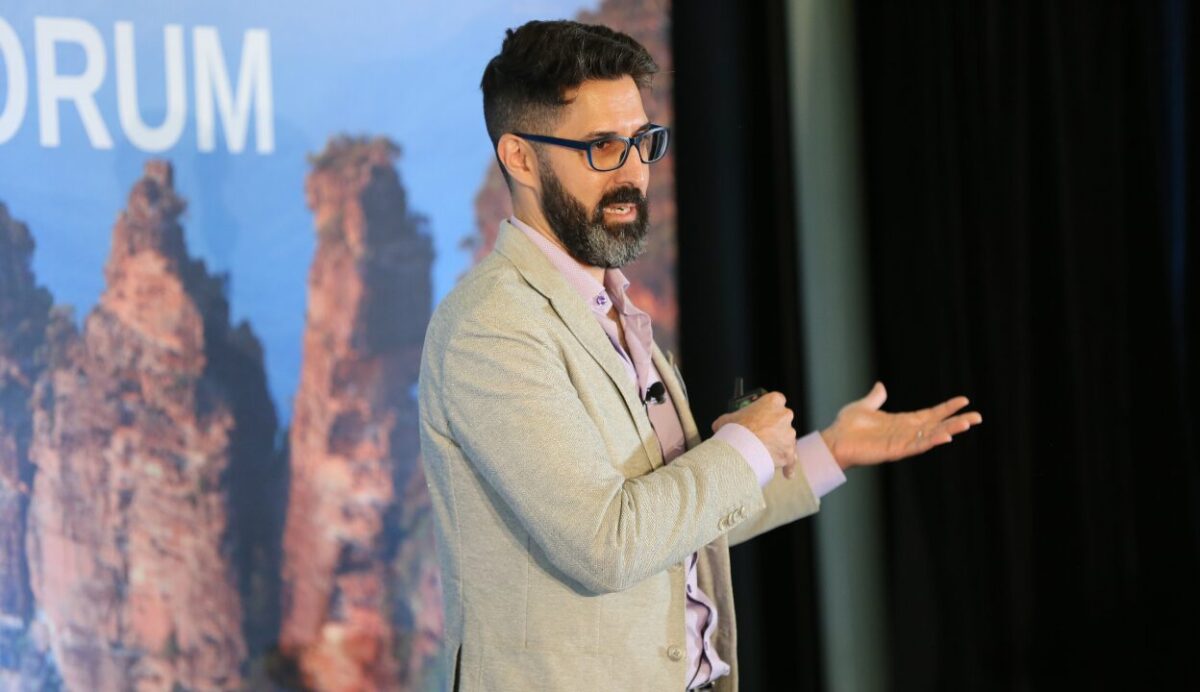
Neil Younger is group chief executive of Entireti.

, , ,

3 responses to “Radical transformation needed for golden era of advice”

  1. Scott Heathwood

    IFPA Calls for 30,000 Accountants to Re-Enter the Advice Market
    Scott Heathwood, President, Institute of Financial Professionals Australia
    The closing observation of the Licensee Summit’s final panel was not a subtle one. With close to a hundred senior financial professionals around the tables, the room had spent two days working through the pressures confronting advice businesses — regulatory complexity, rising compliance costs, licensee viability, the long-term shape of the profession. The consensus on the supply side was almost unanimous: there are simply not enough advisers, and the gap is widening.
    My contribution to close the session was direct. The answer is sitting right in front of us. Invite the 30,000 accountants excluded from the advice market in 2016 back in, and give them a proper seat at the table.
    A self-inflicted shortage
    The supply problem is real and it has consequences on both sides of the ledger. The tailwind is genuine — an ageing population with accumulating assets and genuine retirement planning needs represents a significant and sustained source of demand for professional advice. But demand without supply does not produce good outcomes. It produces unmet need, underserved clients, and advice businesses that cannot grow because they cannot find the qualified professionals to service the work in front of them.
    The profession has been losing practitioners faster than it has been gaining them. The education standard uplift that followed the Hayne Royal Commission was the right instinct badly calibrated. It took experienced, capable professionals out of the market without a credible pathway to bring them back. The pipeline of new entrants has not replaced them at anywhere near the rate required.
    The result is an advice market that is simultaneously more professionally credentialled and less accessible than it was a decade ago. That is not a success story. It is a policy failure dressed in compliance clothing.
    The accountant question
    The exclusion of accountants from personal advice on superannuation in 2016 was the product of a particular regulatory moment. The limited licensing regime that replaced the accountants’ exemption was theoretically workable but practically demanding — most accountants found it uneconomic to pursue, and the net result was a mass exit from a domain they had been competently occupying for decades.
    The case for bringing them back is not complicated. Accountants are already deeply embedded in the superannuation journeys of their clients. They prepare the returns, manage the administration, provide tax advice, and understand their clients’ financial circumstances in the round. They are, in most material respects, already doing the work that surrounds superannuation advice — they are simply prohibited from taking the final step of providing it.
    The argument that they require the same education uplift as a new entrant to the advice profession does not withstand scrutiny. These are not people who lack financial sophistication. They are highly educated, highly experienced professionals whose existing knowledge base is directly relevant to the advice needs of their clients. The question is not whether they are capable. The question is whether the regulatory framework is willing to recognise what they already know.
    A practical pathway — one clause, one amendment
    The solution does not require a wholesale regulatory overhaul. It requires, at its core, a single legislative amendment.
    Section 764A(1)(g) of the Corporations Act is the provision that classifies a superannuation interest as a financial product. That classification is what pulls superannuation advice into the full financial services licensing regime — and it is what the old accountants’ exemption used to carve around. When that exemption was repealed in 2016, accountants lost their operating room. The underlying classification in s764A(1)(g) remained untouched.
    The government has two levers. It could restore a properly scoped exemption for qualified accountants advising in defined superannuation areas — effectively reinstating and modernising the old carve-out. Or it could amend s764A(1)(g) itself to exclude certain categories of superannuation advice from the financial product definition where the advice is provided by a recognised accounting professional. Either approach is a targeted, proportionate fix. Neither requires rewriting the architecture of the Corporations Act.
    The scope should be specific: contribution strategies, transition to retirement, allocated pensions, and the structural tax decisions that shape retirement outcomes. These are the areas where accountants already operate in everything but name. Where clients require investment advice — asset allocation, portfolio construction, managed investments — that component can be referred to a fully licensed adviser. The accountant does not need to be an investment expert. Their clients’ primary gap is not investment selection. It is the structural, tax-effective architecture of their retirement. That is exactly where accountants excel, and exactly where they are currently prohibited from helping.
    This is not a radical proposition. It is the application of basic regulatory proportionality: match the licence to the task, recognise existing competence, and stop treating capable professionals as if they are starting from scratch because a subsection of the Corporations Act drew the wrong line in 2016.
    The broader point
    The panel’s discussion of licensee models and long-term prosperity is inseparable from this supply question. Licensee businesses cannot prosper if the market they serve remains structurally constrained. The clients are there. The need is there. The professional infrastructure to serve that need — at least in part — is also there. It is sitting in accounting practices across the country, largely idle on this question, because the regulatory settings have made participation unworkable.
    The profession spent years arguing for higher standards. Those standards are now in place. The task now is to build the supply base that can deliver on them — and that means looking seriously at the professionals who are already in the room with clients, already trusted, already competent, and asking why they are being kept at the door.
    Thirty thousand is not a small number. It is a workforce. It is the kind of supply-side response that the retirement income gap actually requires. The government should act on it.
    Scott Heathwood is President and Chairman of the Institute of Financial Professionals Australia (IFPA). IFPA is Australia’s peak professional body for financial advisers, tax agents, accountants, and superannuation professionals.
    Media enquiries: Scott Heathwood | scott@wealthyandwise.com.au | +61 416 100 395

  2. Mark Lewin

    Neil, I think you’ve framed the profession’s challenge exceptionally well. The “more shovels versus earthmoving equipment” analogy captures why simply adding more advisers or continually refining existing processes won’t be enough to close Australia’s advice gap. I’d add one further thought to the discussion. While technology will undoubtedly play a critical role, I suspect the real opportunity lies one layer beneath it, in the operating architecture of advice businesses. Connected data, AI and automation can only deliver their full value when they’re supported by documented procedures, consistent workflows, delegation, outsourcing and meaningful management information. In my experience, connected data is usually the outcome of connected processes, not the starting point. Perhaps the next conversation for the profession is less about adopting more technology and more about redesigning the operating model that technology supports. Businesses that have clarity around how work is performed, who performs it, how information is captured and how performance is measured are in a far stronger position to embrace the advances you describe. I completely agree that incremental improvement alone won’t create the stepped change the profession needs. Equally, I don’t think technology on its own will get us there either. Sustainable transformation comes when business architecture and technology evolve together. Thanks for contributing a thoughtful piece. It raises exactly the kind of discussion our profession should be having as we think about how advice can become more accessible, scalable and valuable for Australians.

  3. Daniel Gara

    Nice piece, Neil! Especially the distinction between continuous improvement and genuine stepped change. The profession has been buying more shovels for a decade.

    The part I’d underline is your point that core systems have to change, not just component parts. Connected data is the foundation, but the real unlock is the reasoning layer above it: AI that can do the analytical work with a human professional reviewing and signing every output. That’s precisely what we’re building in Vecta, and it’s the only version of scale I think survives regulatory contact.

    Good to see this argument made by someone with the distribution to act on it.

Leave a Comment

What Australian advisers can learn from their UK counterparts about AI and client relationships

What Australian advisers can learn from their UK counterparts about AI and client relationships

A Netwealth report following a recent study tour of UK advice firms shows a promising industry where AI is complementary to human qualities such as empathy, curiosity and communication, rather than a replacement.

Sort content by