
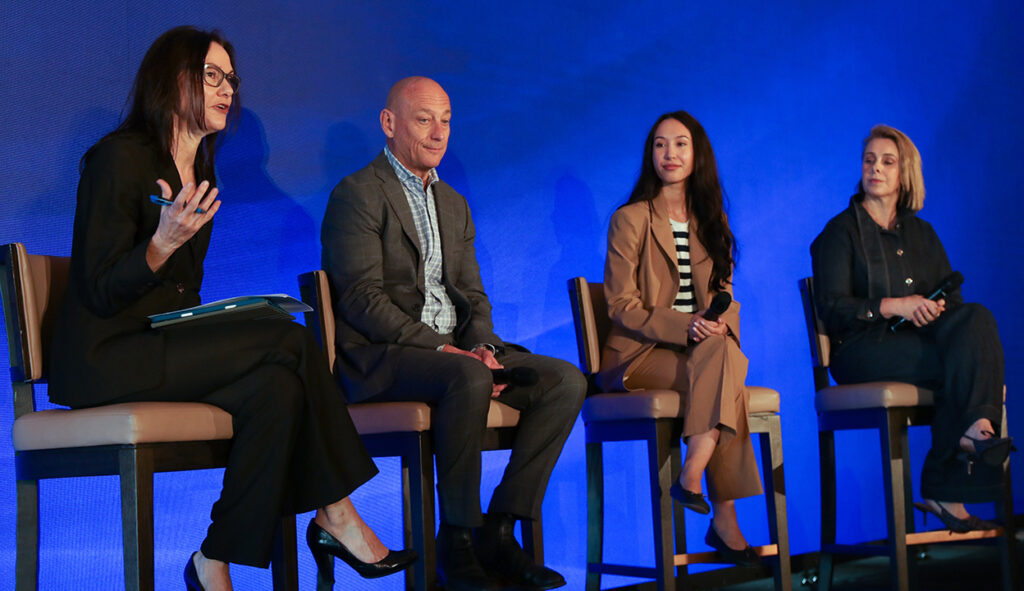

No part of the financial services ecosystem can be all things to all people, and Australians will get the right information, education and advice, in the right way and at the right moments in their lives, only if advisers, super funds, product providers and content creators work in concert.
Advice sits on a continuum that runs from education and information through nudges and guidance to full personal advice, and not everyone needs the whole package all the time, the 2026 Financial Services Council Retirement Summit heard.
People move along the spectrum in both directions as their circumstances change, which makes the handoffs between those who inform, those who guide and those who advise critical to whether the system overall delivers.
The current holistic advice model cannot reach everyone who needs it, complete digital solutions are not what most consumers want, and the standard of protection owed to people who share their financial information is a live question for advisers, providers and creators alike, the summit heard.
Rhombus Group chief executive officer Darren Whereat said advice in its current form cannot deliver at true scale, but that will change.
“Can I see a model of the future where traditional financial advice is at the centre of a different system, one that’s underpinned by technology, [but] still retaining the human element to give people the confidence to act? Absolutely. Can I see a different model come up with a different price point, a different value proposition? Yes,” he said.
Whereat said Rhombus’s licensees, RI Advice and Consultum, have 483 advisers across 183 businesses, and that financial advice continues to grow at a healthy rate.
“Over the last three years, we’ve seen new people coming into the advice arena, aged 55 plus, so we’ll call them pre and post retirees. Each year, we’ve actually increased it by 12 per cent. In fact, last year was the highest at 15. So, demand for traditional financial advice is actually off the charts, which is fantastic,” he said.
“If you think about advice as a continuum from education, information, nudges, intrafund, potentially full advice, understanding that full financial advice is not required for every single person all the time, I can see people coming up and down the spectrum if we can get our handoffs right.”
Vanguard Australia head of marketing Rebecca Pope said the fund manager does not hold a financial services licence and it can’t give advice, but it partners with educators such as Queenie Tan, co-founder and director of Invest With Queenie, and it makes referrals to professional advisers.
“We partner with Queenie. We take people along a certain journey, and we have a find an advisor tool on our website, and we actually encourage people [and] depending on what traits we see through their engagement, we will prompt them to actually go and seek financial advice at that point in time,” Pope said.
Tan said she can interact with people only so far and even though she holds an Australian financial services licence she will hand over those people who want personal advice to others who are authorised to provide it.
“I often have people emailing me, almost weekly, asking for that next step and personal advice, and I always refer them off to financial adviseors, whatever their needs might be,” she said.
Tan said Invest With Queenie creates general financial advice content on social media, and that about half her followers are aged 18 to 45.
Obtaining an AFSL means it has “gotten a lot more expensive with keeping up the licensing fees and all the regulation”, but if gives her reassurance that she’s providing all the necessary information and disclaimers and “saying things in the right way to not mislead people”.
“I think that having a licence has definitely helped with the trust and knowing that I am licensed and there is a regulator and somebody watching over me,” she said.
Whereat said an authorised financial adviser’s fiduciary duty to clients is at the centre of the profession, which is a key component of building trust.
“Secondary to that, we’re seeing the average age of advisers come down, which means that younger people are coming in and businesses are becoming more corporatised,” he said. “And so, for me, that actually is an element of building trust.”
Whereat said trust among people already receiving advice is high but it is lower among those who do not yet have an advice relationship. So, a key issue in helping to deliver more advice to more people is “how do you actually get more people into the system, because once they’re in the system, the trust is off the charts”.
Whereat said he has not yet seen any market in the world “where a complete digital solution is actually the preferred consumption method for financial advice”.
AI will take on administrative tasks and free up advisers’ time to see clients, and Whereat said he can foresee advisers making much greater use of hybrid models.
“There will always be people that will want a complete digital experience, but I think it’s going to be in the margins.”
Pope said people will trust AI more over time. “We’re moving from people asking ChatGPT a question to having agentic personal assistants that are doing tasks on their behalf, and that could, more than likely will, be financial tasks.”
Tan said financial information, education and advice providers should not be afraid to experiment with what works best for their clients.
“One thing that I’m trying to do more is just to be a bit more authentic and to be a bit more vulnerable,” she said. “I think that in all relationships, that’s where real trust is built.”
Pope said 35 per cent of people do not have confidence in making financial decisions, but “people care about their money, they care about their financial futures, but they are just sort of caught in taking that next step”.
Whatever form advice ultimately takes, and however it is delivered, the summit heard that regulation should apply uniformly across providers.
“I think everybody should be held to the same standard. If you’ve got the privilege of working with someone in their financial future and you’ve got personal information, then we all should be held to the same standard,” Whereat said.
Pope said there should be protection in place, and that the right protections depend on what support people are seeking.
Tan said service providers need to understand that the way a service is designed is sometimes different from how it’s used, particularly when the relationship with the end-user isn’t face-to-face.
“I thought I was creating my budgeting app for younger people,” she said.
“I’ve actually realised a lot of my customers are people who are retired that are just wanting to make sure that they are spending their money efficiently and effectively, so they still have money throughout their whole lifetime.”












Leave a Comment
You must be logged in to post a comment.