
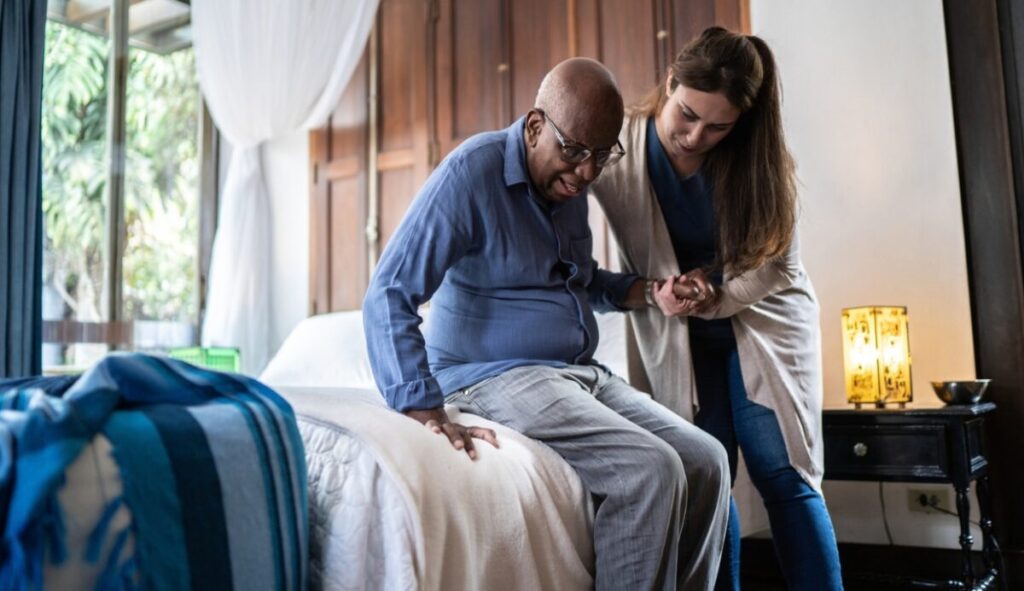

Longevity risk, the danger of living too long and running out of money, has been the main focus of retirement planning for decades but there’s another major risk that requires greater attention.
Frailty risk, which refers to the financial, personal and family consequences that arise when declining health and increasing care needs are not adequately planned for, is on the rise, with new data revealing that Australian retirees are spending more time living with a severe disability.
Between 2018 and 2022, the average amount of time men over the age of 65 were expected to spend managing a severe disability jumped from 3.5 years to 4.6 years, representing a change from 17.5 per cent to 22 per cent of their retirement years. Similarly, the average amount of time women over the age of 65 were expected to spend managing a severe disability jumped from 5.5 to 6.4 years, representing a change from 25 per cent to 28 per cent of their retirement years.
Financial advisers are ideally positioned to help clients understand and manage frailty risk by embedding aged care planning into their advice proposition and guiding clients to make smart decisions before a crisis occurs.
With around 5 million Australians over the age of 65, aged care planning that factors in the possibility of dementia and increasing care costs is an essential service.
Financial planners should actively and regularly discuss aged care decisions with clients, including the practical and emotional fears many have of losing independence, relying on family, or becoming a burden as they age. Aged Care Steps have termed this ‘The Burden Conversation’.
When raised early, the Burden Conversation helps clients clarify preferences and understand funding options before decisions become urgent – giving them greater choice, control and confidence while reducing the risk of rushed decisions, family conflict and avoidable financial stress.
Three phases of retirement
Retirement, much like any stage in life, is not a consistent, one-dimensional experience. There are phases and these phases can be defined by a person’s health and capacity. The three phases in retirement are:
- The active (care-free) years, when good health and higher levels of independence allow people to follow their preferred activities and live independently, is estimated to represent on average 43-44 per cent of retirement years.
- The quiet years, when a disability or levels of frailty increase, and while independence can still be maintained, it may require increased support. This is estimated to represent on average 28-37 per cent of retirement years.
- The frailty years, when higher levels of support are required on a day-to-day basis and to maintain quality of life, is estimated to represent on average 17-24 per cent of retirement years.
The reality of retirement
While advice is critical for helping clients determine how much they will need to save and invest to generate a stable and resilient income stream that will last throughout retirement, traditional straight-line approaches for projecting a person’s income needs (adjusted for inflation) do not adequately manage frailty risk.
Models need to evolve to take a different approach to portfolio construction and retirement planning.
Given retirees can reasonably expect to require higher levels of support during the last 10-12 years of their life, with many experiencing high levels of care dependency in the last 4-8 years, this may require:
- Additional and increasing income to fund care costs, including support in the home; and
- Capital expenditure to make the home suitable for the ageing person (for example, widening doorways to enable wheelchairs and ramps) or to move to more suitable accommodation.
Since the introduction of the new Aged Care Act on 1 November 2025, there has been a noticeable rise in the cost of aged care, which advisers and clients need to account for.
Of particular concern is the rising cost of accommodation for clients planning a move into residential care. Higher room prices, combined with changes to the calculation of daily accommodation payments, can place greater pressure on cash flow and make the choice between paying a lump sum, a daily amount, or a combination of both more significant.
Rising aged care costs highlight how a straight-line approach may fall short of predicting a client’s real retirement income needs, potentially leaving them exposed at their most vulnerable.
The Burden Conversation
As clients move through the active years, quiet years and eventually into the frailty years of retirement, they are less concerned about maintaining a comfortable lifestyle and more concerned about losing independence, relying on family for care and support, and becoming a burden on those they love.
To give clients confidence and peace of mind around these matters, advisers should have tough conversations early and often as part of ongoing retirement advice. These conversations should help clients consider:
- How they expect to fund future aged care costs, particularly as the system moves further towards greater user contributions;
- The role of the family home, including whether they are willing to access home equity or prefer to preserve it as part of their estate;
- Whether strategies such as downsizer superannuation contributions or equity release may form part of the funding strategy;
- The extent to which family members or friends may provide practical, emotional or financial support; and
- Options for funding residential care, including accommodation payments and ongoing costs.
While aged care conversations can be difficult and emotional, avoiding them exposes clients to significant risk. Advisers are well placed to approach these conversations with sensitivity and authority and to provide a structured process for planning ahead.
Assyat David is a director of Aged Care Steps. This is an edited extract from the recently released Aged Care Steps paper, Planning for the third phase of retirement.












Leave a Comment
You must be logged in to post a comment.