


Momentum in the development of Retirement Income Strategies (RIS) by super funds was evident at this year’s Retirement Leaders Summit (RLS): see our Review and Reflections write-up for our main takeaways from that event.
This momentum applies to what we refer to here as “Phase 1” of RIS development whereby funds aim to deliver retirement solutions and guidance regarding the member’s interest in the fund, i.e. their super balance.
We wonder out-loud about a “Phase 2”, under which super funds play an expanded role in their members’ retirement. Here there are many big questions such as who will be the central coordinator of retirement finances for Australians and to what degree should funds also be providing ancillary services during the retirement Phase?
In this article we sketch out the current state of Phase 1 and contemplate the possibility of a Phase 2. While we see this an important debate to have, delivering on Phase 1 in a timely fashion has to be the priority.
State of Phase 1: Assisting retiring and retired members utilise their super balance
We view Phase 1 as having three broad components of pathways, solutions and delivering through the “two I’s” of integration and implementation.
- Pathways – Funds are setting about building pathways to assist members towards suitable retirement solutions. The operative phrase at RLS was a ‘continuum of pathways’ that spans from supporting members to choose for themselves, through to digital and hybrid advice services, through to providing access to comprehensive advice. Scaled personal advice is emerging as the central pathway. Opt-out retirement defaults are currently missing from the continuum, with much debate over whether this pathway is required (as per our May 2026 report).
- Solutions – Retirement solutions involve combining an account-based pension, a lifetime income stream where appropriate and a drawdown strategy to shape up the total income delivered. The solution components are currently being built out, including most funds moving towards offering a lifetime income stream of some description.
- Delivering through the two I’s – Funds are well-aware they need to ‘make it happen’ for members. Integration involves a range of aspects including integrating operations to deliver on retirement, building integrated retirement solutions and integrating the solutions on offer into pathways and member engagement. Implementation entails many challenges, with perhaps the greatest being directly delivering solutions to members who push the ‘big green button’ that means “agreed – go!”.
We are also detecting acknowledgment across the industry of the importance of personalisation, engagement and understandability for members. The intent to deliver on these facets is evident.
While many of the key elements of Phase 1 are being addressed, progress in other elements was less apparent. One example is how funds will triage members into suitable pathways, in particular how members with more complex needs will be identified and off-ramped into a more tailored or comprehensive advice service. At a system level, progress on RIS assessment seems limited, aside from the Epic Retirement Tick.
While the broad direction of Phase 1 is becoming clearer and momentum is building, with the caveat that funds differ significantly in their stage of development, we also identify two necessities for Phase 1 to be fully realised.
First is prioritisation of retirement across all funds. While many funds have, exemplified by those leading on retirement, there remain those that have not made retirement a priority. It is the members of these funds who will not receive the best retirement services and solutions.
A second necessity is policy enablement, especially around supporting funds to guide their members into suitable solutions. This remains a wildcard despite Minister Mulino’s announced intentions, with many of the details yet to be sorted out. Complexity of the existing legal framework, high contestability amongst different parts of the system, and the limited timeframe before policymaking pauses for elections collectively represent sizable risks.
Potential for a Phase 2: Expanded role for super funds?
Looking ahead, the role played by super funds in the retirement system remains up for debate. An overarching question is whether there will be a central coordinator of retirement services and, if so, who? The super sector is a strong candidate. For the super industry this would mean expanding scope beyond the member’s interest in the fund and into other related matters.
There is a range of areas where super funds might get more involved:
- Household view – Super fund trustees could become more involved with assisting not just the member but also their overall household.
- Age Pension – Super funds might act as an agent for the member in establishing Age Pension eligibility and then collecting and distributing the Age Pension as part of their retirement income.
- Accommodation – The super system could be more closely linked with meeting accommodation needs in retirement through provision of long-term care insurance and perhaps assisting with members with retirement village and aged care home funding or access.
- Wellbeing – Super funds might also extend into offering various wellbeing services such as provision of wellbeing advice and health care services for the aged.
The above potential areas of expansion are contentious and speculative, although the idea of super funds assisting members with the Age Pension has already been floated. The rationale behind all these areas would be that super funds have an existing and often trusting relationship with their members, who may in turn welcome and benefit from the opportunity to access a broader range of retirement services through their fund.
Key issues include consistency with the sole purpose test, whether super funds could effectively undertake an expanded role, potential for adverse effects on competition and the hoary question of policy enablement. Partly related to the possibility of an expanded role is access to government information on members, an area Minister Mulino announced that he is examining while acknowledging there are many hurdles.
250,000 reasons to nail Phase 1 first…
The immediate and highest priority is for the super industry to deliver on Phase 1 … especially with 250,000 people retiring each year. We believe the focus should be squarely placed on building RIS that effectively assist members with how to best deploy their interest with the fund during retirement.
Delivering on Phase 1 would provide a proof point on whether expanding the role played by super funds would benefit members and the retirement system overall. We think industry needs to first prove its mettle before taking on more.
The discussion on Phase 2 should continue – all visions are welcome! But the need to progress Phase 1 must remain paramount.
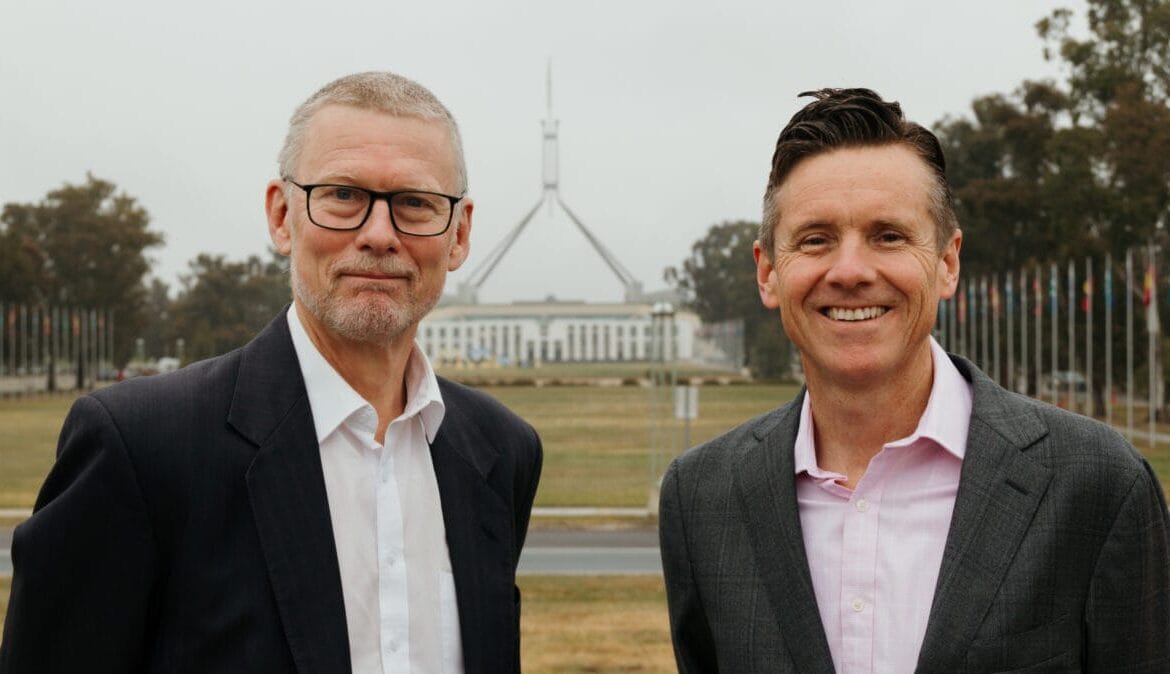
Dr David Bell is executive director of The Conexus Institute
Dr Geoff Warren is research fellow at The Conexus Institute
The Conexus Institute is a not-for-profit think-tank philanthropically funded by Conexus Financial, publisher of Retirement Magazine.












Leave a Comment
You must be logged in to post a comment.