


Much has been written about the “great wealth transfer” expected to occur over the coming decades, with JBWere’s 2024 Bequest Report estimating that as much as $5.4 trillion could be transferred by 2050.
While the scale of this transition has become a defining theme, it’s also changing the conversations advisers are having with enterprise families. Increasingly, those conversations extend beyond traditional estate planning and investment advice to governance, succession, stewardship and preparing the next generation.
Yet, much of the public discussion around wealth transfer can be overly simplistic. Too often, it centres on inheritance alone. It assumes wealth passes neatly from one generation to the next, that diversification requires unwinding ownership, and that younger generations are more likely to become passive recipients than active stewards.
For families whose wealth is tied to businesses, trusts and other long-term structures, the reality is often far more complex.
In practice, governance, decision-making and family values often play a much larger role in successful wealth transfer than is commonly recognised. The challenge is not simply how wealth is transferred, but how it is preserved, stewarded and managed across generations.
Myth 1: Estate planning and succession planning are the same thing
One of the most common assumptions within the “great wealth transfer” narrative is that major family assets will transfer from one generation to the next via a will.
For many enterprise families, this is only a small part of the picture.
A significant proportion of private wealth in Australia sits inside family trusts – structures that hold an estimated $3 trillion in assets and typically fall entirely outside the estate. On the death of a senior family member, there is often no automatic transfer of assets. Control of the trust may shift through changes to trustee directors and appointor roles, but the underlying assets remain in place.
What this means in practice is that “who inherits?” is rarely the central question. Instead, “who holds decision-making authority and what governance sits around that authority?” is the question. Many families come to us wanting to discuss estate planning, but the conversation inevitably focuses more on gaining a deep understanding about what the family wants to achieve and their attitudes and perspectives on fairness, as well as acknowledging the different needs of their family members.
I like to start these conversations by asking about the next generation, with questions like what makes you proud? And what are your concerns? This opens up the conversation to a much deeper issue that needs addressing, which is how will those stepping into control positions in trusts, companies and other shared assets make decisions together? We then discuss what we need to do as a family group to cultivate and develop the skills required.
From our experience, focusing solely on wills and estate documentation can overlook some of the most important succession questions around governance and decision-making.
Myth 2: Family enterprises have a limited life
Australia’s wealth creation story is still relatively young, which can make it easy to believe that family enterprises have a limited lifespan. Phrases such as “shirtsleeves to shirtsleeves in three generations” reinforce the idea that wealth inevitably dissipates over time.
Yet our work with enterprise families has highlighted that longevity is far from predetermined. It is shaped by governance, mindset and the deliberate development of future generations. Getting this right is critical, as the risk to the downside is losing shareholder value in the enterprise and straining family relationships and values.
Analysis from McKinsey of family-owned businesses found that many have outperformed their non-family peers over the long term, including during periods of significant disruption such as the Global Financial Crisis and the Covid-19 downturn.
According to McKinsey, the strongest family enterprises share common qualities. These include a clear sense of purpose beyond profit, a long-term perspective, prudent financial management and streamlined decision-making. They also invest deliberately in governance, talent development and succession planning, recognising that continuity requires ongoing renewal rather than passive preservation.
Myth 3: Diversification means dilution
There can be a tendency to treat diversification as something that happens at the time of a liquidity event. For the families we work with who have sustained wealth across generations, it is an ongoing discipline built into how the enterprise is run and performance is monitored.
Effective dividend and distribution policies allow families to manage concentration risk without unwinding ownership of the primary enterprise. Debt policy plays a role too, as some families use operating cash flows to service debt that funds distributions, keeping broader family assets unencumbered. The intent is not to fragment ownership but to give family members liquidity and diversification without weakening what has been built.
There is also a values dimension that is easy to underestimate. Keeping assets together is not just financially efficient. It gives families a shared context in which to apply a common set of values. Embedding family values provides a moral compass in the way assets are managed.
The practical question is where a family sits on the spectrum, between assets held so tightly they become constraining, and assets so dispersed that beneficiaries lose any meaningful connection to purpose or governance. Most families sit somewhere in between, and that position tends to shift over time.
Myth 4: Younger generations are more entitled
The concern about entitlement and wealth creating passivity or disconnection in the next generation is one we hear from senior family members regularly. In our observation, it is rarely inevitable.
More often, the challenge arises when younger family members have limited opportunities to engage with family wealth, understand its purpose or participate in decision-making.
The families that sustain wealth across generations tend to be deliberate about embedding a stewardship culture early, by clarifying roles and meaningfully contributing to the growth of the family enterprise with clarity of purpose.
Philanthropy is one of the most effective vehicles for doing this. A long-term philanthropic strategy, through a family foundation or private ancillary fund (soon to be known as giving funds), gives younger family members genuine exposure to financial governance, investment decision-making and the concept of perpetuity. It also provides a lower-risk environment to build the capabilities needed for future leadership roles.
Looking beyond the figures
The $5.4 trillion wealth transfer figure captures part of the scale of what lies ahead. But focusing solely on this headline figure risks overlooking the more complex questions families face around governance, responsibility and continuity.
The families that navigate generational transition most successfully are not those who have the best wills or the most sophisticated investment portfolios. They are the ones who have done the deeper work: clarifying values, building clear communication frameworks, investing in next-generation capability and embedding a culture of stewardship long before it is needed.
For advisers, these themes are becoming increasingly central to client conversations. As the wealth transfer unfolds, the opportunity extends beyond facilitating the transfer of assets to helping families build the structures and capabilities needed to sustain wealth across generations.
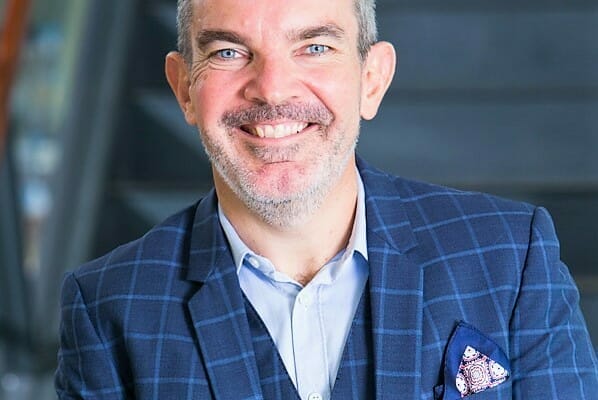
Kim Venter is director – family advisory for JBWere.












Leave a Comment
You must be logged in to post a comment.