
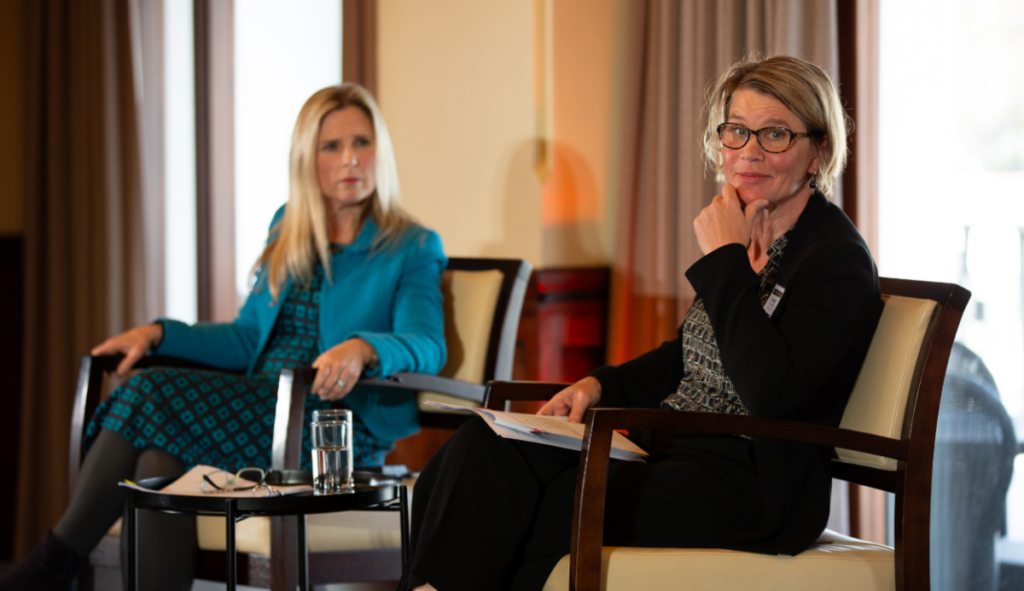

The gap between super fund trustees leading on retirement and member services and those lagging has widened over the past year, the 2026 Retirement Leaders Summit has heard.
ASIC commissioner Simone Constant told the summit, held at Old Parliament House in Canberra on Wednesday, that when she spoke at the same event a year ago she identified inconsistencies in how trustees are implementing the Retirement Income Covenant, and challenged all trustees to step up.
“This year’s story is too much like the last, which is far worse than just dull and repetitive, it’s outright disappointing. In fact, the gap between the leaders and the laggards in both retirement and member services is indeed widening,” she said.
A follow-up review of death benefit claims found the number of claims paid within six months had moved only 3 per cent, Constant said. Many trustees had strengthened their claims processes, but too many had not done enough to fix deficiencies.
“It’s those stragglers who risk undermining confidence in the industry’s readiness to serve our ageing population,” she said.
About 2.5 million Australians are expected to transition into retirement over the next decade, around the size of the population of Perth, Constant said.
ASIC consumer research found 48 per cent of Australians aged 50 to 66 were worried they would run out of money in retirement, and 14 per cent of people over 65 still working believed they would never be able to retire, largely for financial reasons.
“Australians need the action now, not the aspiration,” she said.
Constant said there are similarities between the ASX, which is the subject of an ASIC independent inquiry, and the superannuation industry: both are critical to the economy, both have failings that had damaged public confidence, and in both cases the failings are whole-of-business issues that have taken years to develop.
Trustees are stewards of $3.1 trillion of regulated retirement savings and need to boost their internal capabilities to match their size and influence.
Retirement is itself a whole-of-business issue, Constant said, and treating it as an isolated challenge is part of the issue leading to some of the problems identified by ASIC.
“Good retirement outcomes require more than just good retirement products,” she said.
“That includes how you deal with complaints, how you communicate with members, and crucially, how you use the information available to you to improve your service.”
Some trustees are still using their data “like they’re stuck in the 90s, pre-Y2K”, relying almost entirely on manual indicators to monitor potential harm.
ASIC’s Report 833 Safeguarding Super: How well are platform trustees monitoring risks to retirement savings?, released at the end of June, delivered mixed findings, and some of the poorer performers are arguably worse now than they were two years ago. On the other hand, the better performers were considerably better and there were more funds rated as leaders.
Among the poorer performers, ASIC found fee caps set far too high to protect savings from fee erosion, and oversight that was sometimes almost entirely manual.
An ongoing ASIC review, to be released later this year, will show that close to a quarter of trustees do not undertake regular complaints analysis to detect systemic issues, despite it being an enforceable requirement.
APRA executive director of life and private health insurance and superannuation, Jane Magill, said the retirement leaders treated retirement as a core business function, whereas laggards tend to treat it as a compliance exercise.
“The best people see member outcomes as a strategic business objective and opportunity.”
Magill said APRA estimated nearly four million more people would move into the retirement phase over the next 10 years, and that both APRA and ASIC would keep pushing to close the gap between trustees that had embraced the spirit of the RIC, and those that had not.
More members in retirement means more frequent and more consequential transactions, Magill said, which places a greater premium on operational risk standards, oversight of service providers and cyber controls.
“Ultimately, you are responsible for the effectiveness of your fund’s cyber controls,” she said.
Australians aged 55 and over were the most vulnerable to investment scams, losing a total of $90 million in 2025 according to the National Anti-Scam Centre, Magill said.
Retirement assets remain about 25 per cent of the superannuation pool and, on Mercer estimates, total system contributions will exceed outflows for about a decade, Magill said. Trustees with older membership bases and less favourable flows would face liquidity pressure earlier than the system as a whole.
APRA changed the capital treatment of longevity products from July to support a more competitive annuity market, and would increase transparency through its implementation of the government’s Retirement Reporting Framework, Magill said.




Leave a Comment
You must be logged in to post a comment.