


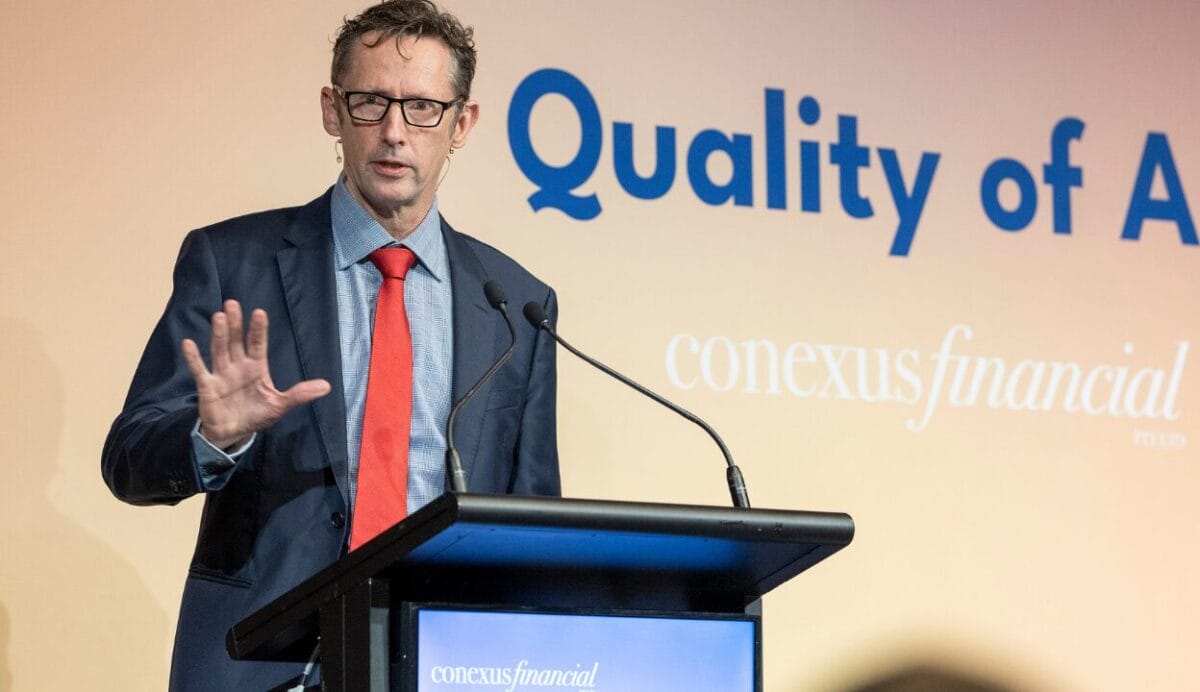
Computing power, not broad economic sanctions, is the one lever historian Stephen Kotkin argues the US can pull that might actually work against China. In a keynote address to the Top1000funds.com Fiduciary Investors Symposium at Stanford University, Kotkin suggested Nvidia’s Jensen Huang could be the one figure whose next move reshapes that balance.
Kotkin, who is the Kleinheinz Senior Fellow at Stanford’s Hoover Institution, said the US position in computing power is the exception to his general scepticism about sanctions.
“We’ve got about 75 per cent going to 80 per cent of computing power in the United States,” he said. “I would be seduced into thinking that’s a big trend line where money is going to be made, not just tomorrow, but maybe after tomorrow.”
That dominance matters, he added, “for as long as computing power is the limiting factor in AI”, though he was careful to note he does not know how long that will remain true.
But “there are many places” where broad economic sanctions could backfire, or only have “a temporary impact, if any, with perverse and unintended consequences,” he said. “It reduces trust in the dollar.”
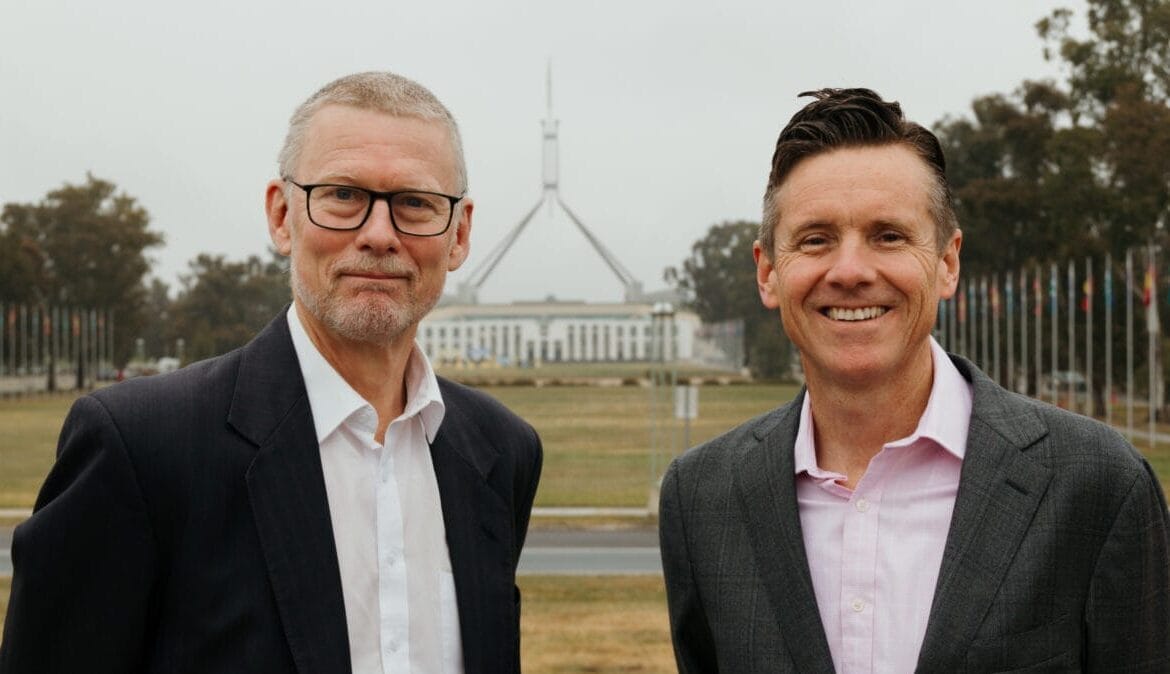
Prior to his address to the symposium, Kotkin met with Conexus Financial founder Colin Tate AM and chair Geoff Lloyd in his Hoover Tower office on campus at Stanford and expanded on the implications of the geopolitical landscape for investors.
Shifting ground
In his symposium address, Kotkin cautioned that the compute advantage is not static. He pointed to a string of looming shifts in chip packaging, memory and energy – South Korean packaging and memory, Taiwanese packaging, and fusion power, which he said “looks impossible now because of tritium, but that’s coming” – any one of which could alter who controls the underlying infrastructure.
Battery chemistry was another example: “Lithium batteries disappear, sodium batteries displace them. So, it’s just salt,” he said, describing how quickly a seemingly indispensable material can be supplanted.
He argued that the US advantage is to replicate, citing France’s difficulty finding sites for AI data centres. France’s search turned up only ten possible locations nationwide, he said, five of them under military control, which is a supply constraint he described simply as “insane.”
Kotkin singled out Nvidia’s chief executive as pivotal to how the contest develops.
“We have Nvidia and Jensen Huang,” he said. “Jensen’s in some ways the central actor of this whole story, especially if he does open weights [AI], which we suspect is his next move, to try to take over the entire global ecosystem against his customers who are buying the chips.”
Even as he named computing power as the trend line worth backing, Kotkin warned against treating any trend line as fixed. He recalled the consensus barely two decades ago that Chinese economic growth would compound at eight to ten per cent a year “kind of forever” until it overtook the US. “Those trend lines look stupid right now,” he said. “There’s so much that happens in material science that upsets the trend lines.”
Disclaimer: This article was composed with the assistance of generative AI, but edited, approved and fact-checked by the Conexus Financial editorial team.















Leave a Comment
You must be logged in to post a comment.