
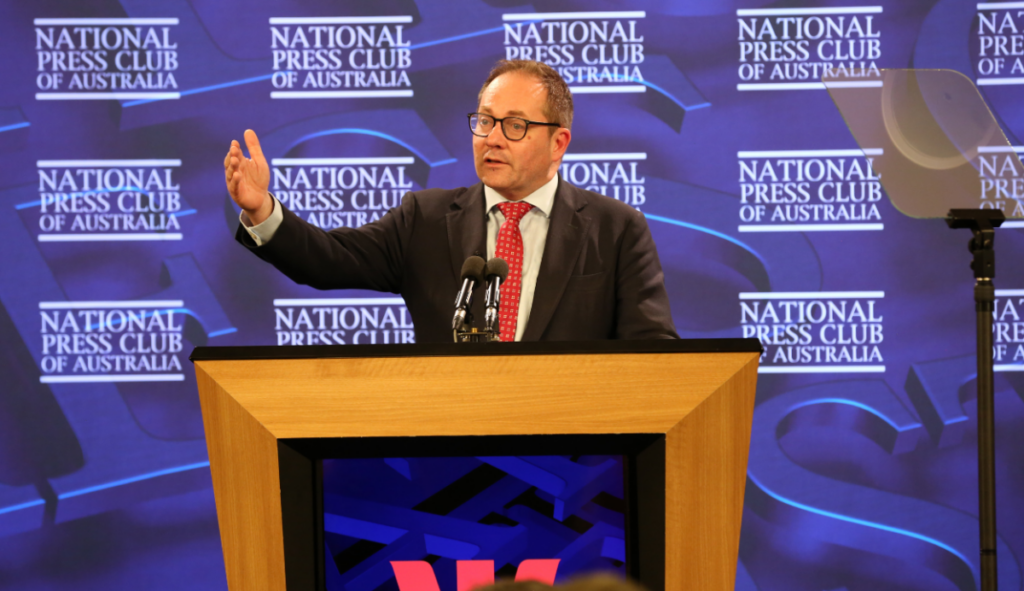

Financial advice licensees will be barred from employing the so-called new class of advisers, after the Minister for Financial Services Daniel Mulino said its implementation would be restricted to APRA-regulated superannuation funds and life insurers.
The surprise revival of a key element of the Delivering Better Financial Outcomes reforms is part of a regulatory package to strengthen consumer protection announced by Mulino, which also includes a revamp of the Compensation Scheme of Last Resort funding, a crackdown on lead generation services, and changes to improve access to safe and reliable financial advice.
Former financial services minister Stephen Jones told licensees in late 2024 that the new class of adviser would also be available to them as a way to deliver relatively simple advice to less complex clients. He was reported by Professional Planner at the time as saying licensees would be free to employ diploma-educated new class advisers and charge a direct fee for their services.
He said he had been “moved” by the argument the new class could serve as a career path for the next generation of advisers. Jones named a “level playing field” among industry subsectors as a guiding principle of the reform.
“We need to rapidly upscale the number of financial advisers that we have in this country,” Jones said at the time.
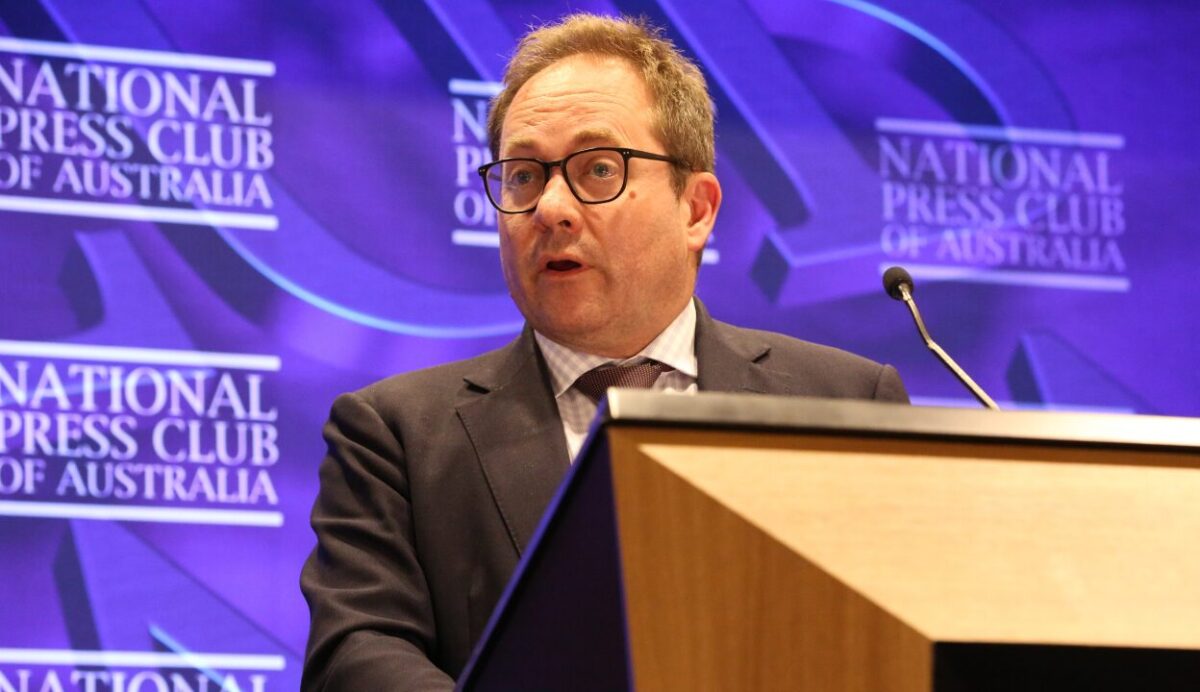
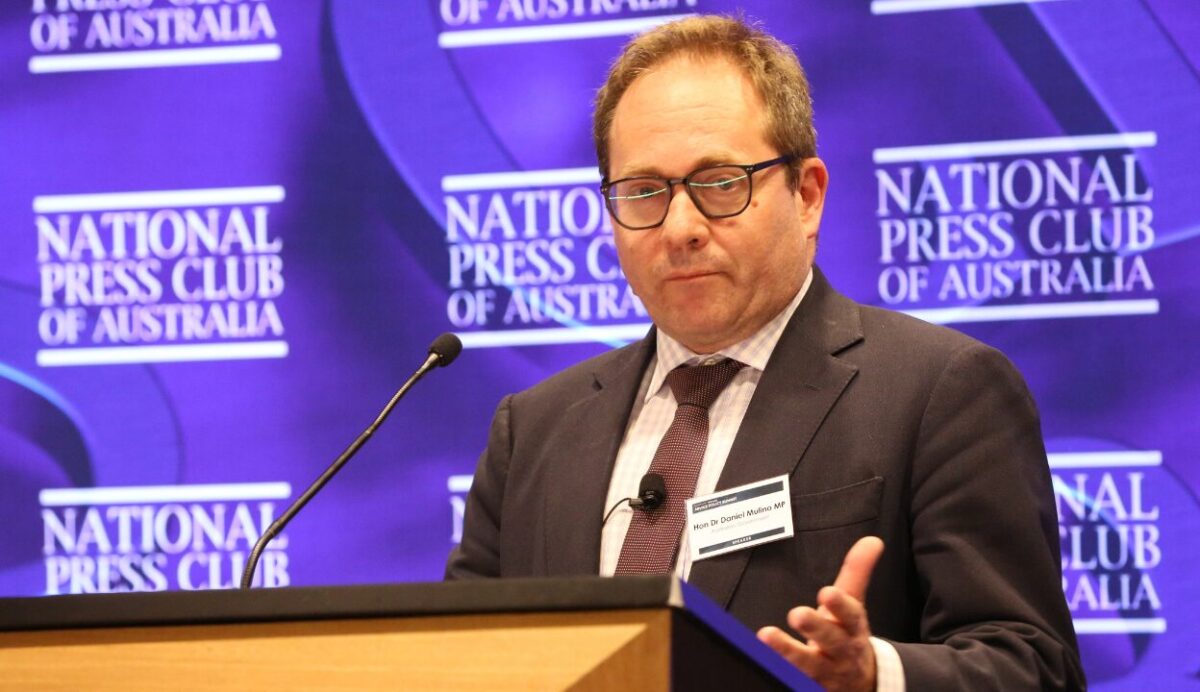
However, Mulino said in an address to the National Press Club on Wednesday that the rationale for the Delivering Better Financial Outcomes package had always been driven by consumer needs in superannuation and life insurance.
“In super, in particular, there have been a number of situations evolve in the system where a number of understandable protections in the system have now meant that super funds can’t answer basic questions when members call up, and that is not to the advantage of members,” he said.
Limiting it to APRA-regulated funds and insurers will provide people with answers to important questions without encroaching on the advice that professional advisers provide, Mulino said.
“It is going to be less regulated than the full-blown financial advice, which is a really critical part of our system. And I’ve said in a number of forums, I see demand for that increasing as balances grow, as more people approach retirement. But I think we need to really understand how it’s operating in that APRA-regulated part of the sector.”
The new class will carry prohibitions on commissions, bonuses and volume-based payments as safeguards against vertical integration. Trustees will be required to enforce advice fee deduction caps for members.
Elsewhere in the package, the government will deliver targeted reforms to the best interests duty to enable scaled advice, review the Adviser Code of Ethics, and streamline statements of advice.
Mulino also said reforms to adviser education standards announced earlier remain “a real priority”.
“It is difficult to argue that very large advice fees charged to members with low balances for switching-related advice can satisfy an adviser’s obligation to act in their client’s best interests,” Mulino said.
Fixing the CSLR
The government will apply the waterfall model to the $170.3 million special levy attributed to the financial advice subsector for FY2026-27. Mulino said that does not mean subsectors will automatically pay their maximum cap.
“The legislation requires me to consider the viability of affected sectors and the broader interests of the financial system, and that is exactly what Treasury is analysing now in consultation with stakeholders before I make any final decision,” he said.
“I recognise that financial advice is a sector made up largely of small businesses. I want advisers to know that I recognise the immense value they provide to Australians. I have heard the concerns that they have raised throughout this process, and I am committed to working with the sector to ensure that we arrive at an outcome that is sustainable, proportionate and fit for purpose.”
Self-managed super funds will contribute to special levies in future years, at an estimated cost of no more than $20 per fund per leviable period, scaled according to the size of SMSF sector assets relative to APRA-regulated assets. SMSF losses have accounted for more than 90 per cent of CSLR costs to date, and more than $100 million was invested into Shield and First Guardian funds through SMSFs.
Mulino said excluding SMSFs from the scheme altogether would have created significant gaps in consumer protection while adding complexity and administrative costs, and that SMSFs are also part of the financial services system that benefits from the existence of a compensation framework.
Compensation will be limited to actual investment losses rather than the controversial “but for” losses, for applications made to AFCA after 30 June next year.
Mulino said the special levy falls by design on parties with no connection to the conduct, including members of APRA-regulated funds who cannot claim from the scheme.
“The special levy is, in a sense, imposed right across the board on parties that were not associated with the bad activity, because when you get to the CSLR, the bad actors have phoenixed or left somehow,” he said.
“So everybody involved in the CSLR is not involved in perpetrating that behaviour.”
The announced reforms will also allow ASIC to direct superannuation trustees to begin remediation where an investment option fails and there is reasonable suspicion the trustee has breached its obligations. APRA given power to set capital requirements for trustees offering higher-risk options. Mulino said the model was guided by the response of platform operators to the Shield and First Guardian collapses.
“When Macquarie and Netwealth stepped up, and at different times, but they both stepped up, people got their capital back, and they got it back pretty quickly,” he said.
“It also meant that parties with a direct involvement were the ones who were stumping up, and it wasn’t then having to go to the CSLR and be spread across the whole sector.”
The CSLR was not designed to absorb the costs associated with large-scale investment losses linked to personal advice failures and the “quantum of these losses is simply too large”.
“The most important reforms required to strengthen the CSLR are not found within the CSLR itself. They are the preventative consumer protection reforms,” he said.
Managed investment schemes will face strengthened audit and assurance requirements and will be required to notify ASIC when they freeze, suspend or otherwise restrict redemptions.
Crackdown on lead generation
The government will ban unlicensed real-time communication about superannuation, limit the anti-hawking exemption for financial advice to existing client relationships, and strengthen penalties for anti-hawking breaches.
It will also run a targeted consultation on banning engagement models that collect consumer data for referral into other parts of the financial services sector and will introduce stronger consent provisions.
“A lead generator makes contact through social media, an online advertisement, or an unexpected phone call. A persuasive sales process follows. Consumers are told their superannuation is underperforming, that they’re missing opportunities, or even that their retirement may be at risk,” Mulino said.
“I have read the transcripts of these interactions. The perpetrators are sophisticated and effective.”
Consumers were then referred to an adviser, and savings moved into a small number of products that were sometimes “highly risky, not transparent, and not diversified”.
Mulino said the government has targeted real-time contact because that is where the greatest harm occurs through manipulation of unsuspecting consumers through telephone calls, discussions and chats.
“We’re confident that all of these measures working together will see a system whereby people will not have unsolicited [approaches made] to them, where they will be protected from that kind of manipulative behaviour, where their data will not be misused in the system,” he said.
“These reforms dovetail with the limitation of the anti-hawking exemptions to existing client lists, so it’s really all of these measures working together, and then finally with stronger consent provisions.”
Detail of enforcing the bans against activity conducted through social media platforms and bots will be developed through consultation.
“Obviously, when people think about real time in a telephone call, you think about interrupting that through stopping the call centre or interrupting it that way. If there’s activities through bots that are occurring through social media, then we will need to think through those details,” he said.















Leave a Comment
You must be logged in to post a comment.