
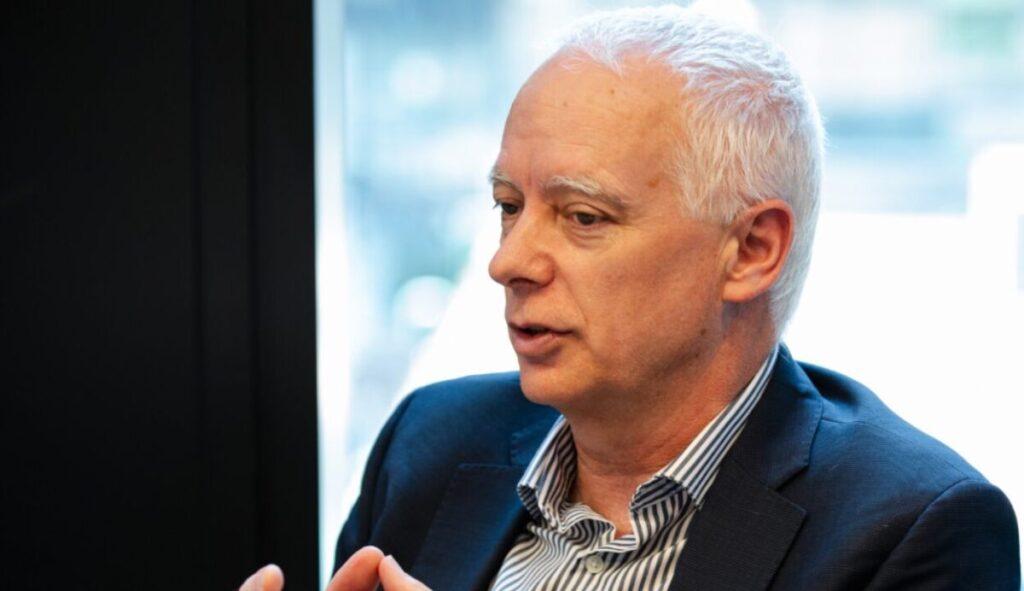

When Phil Anderson steps down from his role as general manager of policy, advocacy and standards for the Financial Advice Association Australia later this year and contemplates retirement, he will leave a legacy of highly regarded technical and legislative expertise, and as a fierce advocate for financial advisers and their profession.
The FAAA announced yesterday that Anderson will depart in November after its 2026 Congress, which will be a fitting farewell for the individual who has done as much as anyone in the industry to steer financial advice through the choppy waters of regulatory reform, including the Future of Financial Advice legislation, changes flowing from the Hayne royal commission, the Tax Agent Services Act, education and professional Standards, and the Life Insurance Framework.
More recently, Anderson has grappled with the Delivering Better Financial Outcomes reforms stemming from the Quality of Advice Review and has been a clear-eyed critic of the structure and operation of the Compensation Scheme of Last Resort, and the impact of the ASIC levy on advisers and their businesses.
Among all the associations, lobby groups and various self-interested parties making representations to Canberra over the past three decades, Anderson was acknowledged on all sides of politics as a reliable and insightful analyst of proposed reforms, why they would or would not work, and how they could be improved upon to limit detriment to advisers and clients. And he was trusted and respected by the media as an informed and objective commentator.
Anderson tells Professional Planner that over time the reputation of the financial advice profession has improved steadily, but gains have been hard-won.
“We were on the back foot for such a long time,” he says.
“When I came into this, it was in response to the Ripoll Inquiry [which led to the FOF reforms], then it was the FOFA reforms, and it was the FOFA amendments [and] the vitriol at that time, and the fact that we had people who were strong opponents of what we were trying to do
“Then we went through the various inquiries that led to the professional standards reforms [and] then the royal commission, but you can start to see that that financial advice was increasingly recognised as a profession.”
The turning point
Anderson says the QAR was “the turning point, in that all of the focus had moved from how to prevent inappropriate, unprofessional advice to how to ensure that we can provide more advice and improved access and affordability”.
“It was really quite a positive exercise. That’s probably, I’d say, the turning point, where we really felt that we were on the front foot after many years of being on the back foot,” he says.
“But then there’s been the slow progress with the DBFO reforms, and then Shield and First Guardian has, I guess, has put that into question.
“The problem has always been that’s the scandals have been in too close proximity. So, you rebuild the reputation, but then something else comes along.”
FAAA chief executive Sarah Abood said in a statement that Anderson was instrumental in the 2023 merger of the Association of Financial Advisers, which he represented at the time as its chief executive, and the Financial Planning Association of Australia to create the FAAA.
It was never seriously in question that Anderson would assume the premier role in the expanded entity on technical and regulatory issues and advice standards.
Abood said Anderson has made “an outstanding contribution” to both the association and the industry, and has been “absolutely tireless in shaping numerous important policy and standards outcomes, and building strong stakeholder relationships across government, media, and peak bodies as well as the broader profession”.
“Phil has been a determined advocate for the financial advice profession for over 20 years,” she said.
“On behalf of the board, executive team and staff, we thank Phil and wish him an extremely well-deserved, relaxing time in retirement.”
Anderson joined the AFA as general manager of policy and professionalism in mid- 2017, moving from Netwealth where he had been head of governance and advice.
It was his second stint with the AFA; he had earlier served as its chief operating officer between 2011 and 2015, following roles at Colonial First State and MLC. He also had time at Perpetual, National Australia Bank and AMP.
When he returned to the AFA, its then-chief executive Phil Kewin noted that Anderson had “a tried and proven track record in the field of policy and professionalism and a passion for advice that we believe will assist the AFA and its members take advice in Australia to the next level”.
For his part, Anderson said a return to the industry association fold put him in a place where “I can make a real difference in the process of making financial advice a recognised profession”.
“This is a challenging and exciting time for the profession as we progress with the implementation of the professional standards legislation,” he said.








Leave a Comment
You must be logged in to post a comment.