

Levying financial advisers for the Compensation Scheme of Last Resort was always an arbitrary decision and unsustainable. Given the rapidly increasing cost pressure it’s time other parts of the advice ecosystem were brought in.
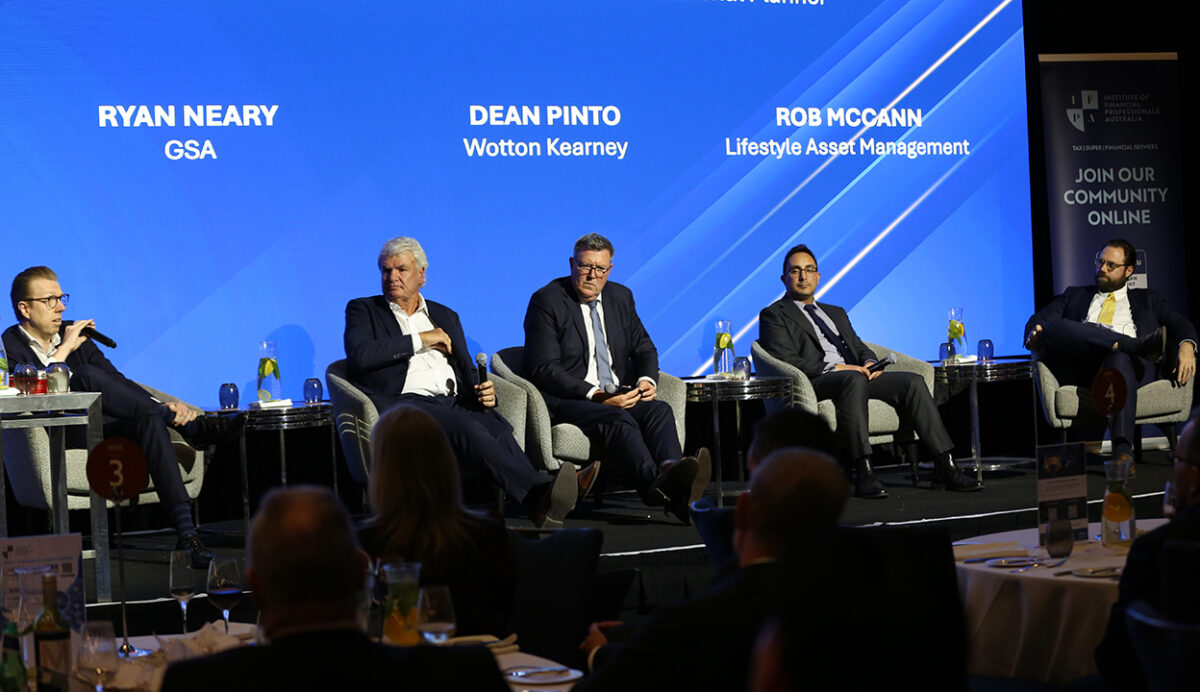
A poll conducted at the Professional Planner Licensee Summit last month found two-thirds of delegates believed that trustees and managed investment schemes (MISs) contributing to the financial sustainability of the scheme would support its long-term viability.
And while this was the licensee summit, which included heads and executives from the major licensees as well as self-licensed practitioners, the heads of platforms, super funds, life insurers, researchers, asset consultants and asset managers were also present.
As the FY27 levy approaches $200 million, the majority of the summit agreed that this was the change that would make the long-troubled CSLR sustainable.
It was vastly more supported than other suggested changes, including excluding “but for” claims (only 10 per cent of the room agreed), lowering the compensation cap from $150,000 or lowering the subsector levy from $20 million.
The government is consulting on changes to the scheme as part of a broad suite of regulatory reforms in the aftermath of the collapse of the Shield and First Guardian funds.
Minister for Financial Services Daniel Mulino has already ruled out lowering the $150,000 compensation cap.
The Coalition opposition said before the last election that it would lower the subsector cap to $10 million if it were returned to government, although this idea hasn’t received government support.
Mulino, like his predecessor Stephen Jones, has said “but for” claims – where investors are compensated for missed investment gains because they were moved into a poor-performing strategy – will likely go from the scheme.
The change has bipartisan support, having been pushed by former shadow Minister for Financial Services Luke Howarth before the last election, and the change has been endorsed by the CSLR.
Before the Shield and First Guardian collapse, this change seemed to be the easy solution to mitigating the costs of the scheme.
The CSLR claimed 80 per cent of compensation paid to consumers was tied to remediation over lost investment gains.
But the CSLR has said this would be less of a factor with Shield and First Guardian, largely because of the shorter time-frame of investments and because the average balance sits at $83,000 for Shield investors and $74,000 for First Guardian.
Dixon Advisory was meant to be a one-off “black-swan” event – one of the last remnants of the downsides to vertical integration – and it was anticipated that the advice sector would cover remediation costs and the industry would move on.
But the subsequent collapse of the Shield and First Guardian, whose fast rise seemingly flew under the radar of the regulator and platform trustees administering the schemes, has only exacerbated the problem, leading to consultations on the sustainability of the scheme.
The decision to levy advisers was politically calculated. Adding what was effectively a tax on an industry with the capacity to pay meant avoiding funding remediation from consolidated revenue and risking further blowing out the federal government’s budget.
The overall remediation for investors could end up being lower than the total invested into the funds plus missed investment gains; Macquarie and Netwealth settled with the regulator, agreeing to remediate investors to their starting positions. But that still opened the door for complaints against the advice and for missed gains.
Not all investors will make complaints to AFCA. Some will be happy with partial remediation and will want to move on; others will have no idea the complaints body and compensation scheme even exist.
Netwealth and Macquarie account for $421 million of the approximately $1 billion allocated by advisers to Shield or First Guardian. The rest sits within SMSFs, or on platforms under the trusteeship of Equity Trustees or Diversa Trustees.
Those organisations are fighting allegations of wrongdoing in court and, if they lose, they will be on the hook for remediation, the same way as Netwealth and Macquarie.
As part of Netwealth and Macquarie’s settlement with the regulator, both platform trustees agreed to admit to contravening the law by not doing sufficient due diligence on the funds.
The scheme was originally a recommendation of the 2017 Ramsay Review, which included then-Choice CEO and now ASIC Commissioner Alan Kirkland; and it also came up in the final report of the Hayne royal commission.
The scheme was designed – in the words of former Minister for Financial Services Jane Hume – to compensate victims of poor advice when their adviser had “closed up shop and flown off to Mallorca”. The rare cases where advisers actually steal money would be easily absorbed within the scheme.
Investment scheme collapses on this scale require deeper financial resources than just financial advisers to remediate. MISs and trustees are part of the same system, and it shouldn’t be left solely to financial advisers unrelated to the losses to be asked to compensate investors.


















Leave a Comment
You must be logged in to post a comment.