
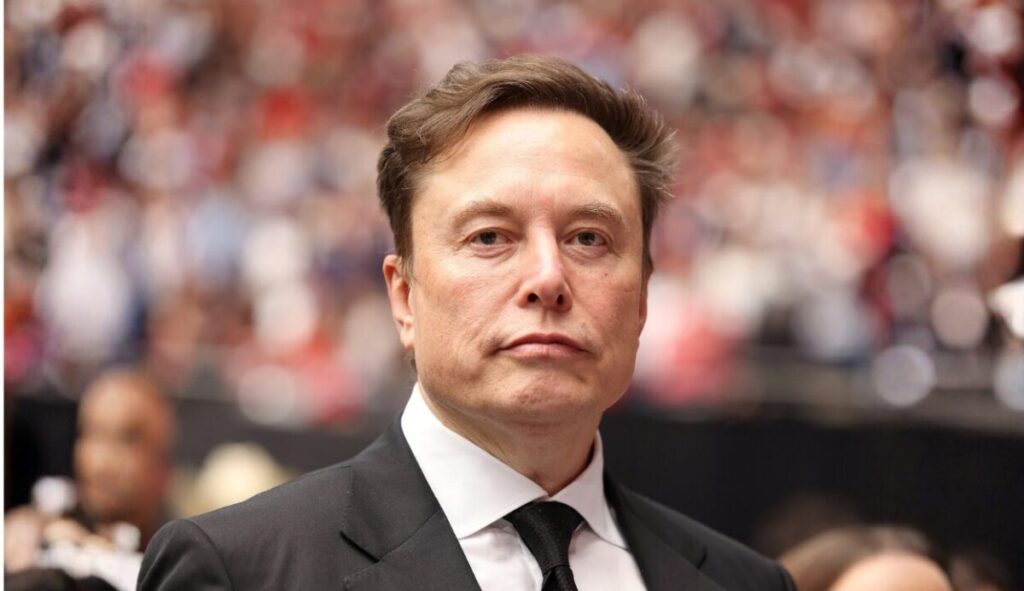
In 2013, on the sidelines of the Milken Conference at the Beverly Hilton, my friend and then-colleague Sean Scallan and I found ourselves in a seven-minute private conversation with Elon Musk.
He was not yet the figure he is today. Tesla was struggling. SpaceX had launched but not yet proven itself. The idea of humans colonising Mars remained, charitably, a long shot.
I asked him (somewhat naively, in retrospect) whether he had squirrelled any money away somewhere safe – Switzerland, perhaps – given that he appeared to be betting everything on three ventures that each carried a high probability of total failure.
He looked at me incredulously. Of course not, he said. And if these companies failed, he would simply start again.
I walked away with two distinct impressions. The first was that this was not arrogance – or at least, it did not feel like arrogance. The second was that for Elon Musk, the money was almost beside the point. What animated him was the scale of the problem, not the scale of the potential reward.
That conversation came back sharply last Friday, when SpaceX listed on the Nasdaq in what is now the largest IPO in recorded history, and Musk became the world’s first trillionaire, worth approximately US$1.4 trillion ($1.99 trillion) between his SpaceX and Tesla holdings, at least on paper.
I should declare an interest: I hold a very modest indirect stake in SpaceX through a former Greenspring Associates fund of funds, now managed by StepStone. I am also a Starlink customer, and it is an outstanding product.
These disclosures made, the scale of what happened last week deserves serious consideration beyond the financial spectacle of it.
SpaceX opened 19 per cent above its float price – extraordinary for any listing, let alone one that invited such wildly divergent pre-market speculation. It entered the top 10 largest companies on Earth on day one. And it did so on the back of a business that still, technically, does not turn a profit at the group level (though in fairness Starlink has changed that picture considerably, and the satellite and defence services businesses are growing fast).
The man who created it spoke from Texas while his executives celebrated in New York, which seemed to be a deliberate, untheatrical choice.
There is something in that which connects back to what he told me in Beverly Hills more than a decade ago. This is not someone for whom wealth is the scorecard.
Whether one admires Musk or not – and reasonable people hold very different views, particularly given his shift from left-leaning Democrat to prominent Trump ally, a journey he attributes in part to the government intervention his businesses endured during the Covid-19 pandemic – his emergence as the world’s first trillionaire is a moment that demands reflection.
Ashley Vance’s biography, a New York Times bestseller written with Musk’s cooperation, traces the journey from his South African upbringing through the creation of PayPal with Peter Thiel and into the serial entrepreneurship that followed. It is the most illuminating account of him I have read. What emerges is a portrait of someone who moved, in Vance’s framing, from idealist to capitalist, and who points to the pandemic and its associated government intervention as the catalyst for his shift to the right.
The book also introduces his brother Kimbal, who could not be more different: a gentle figure who, after making money alongside Elon in their early ventures, walked away to train as a chef and now runs farm-to-table restaurants in Boulder, Colorado, staffed by formerly homeless people. The contrast is instructive.
The bottom half of the American population, combined, is worth less than this one man. His paper wealth exceeds the entire GDP of even wealthy countries like Singapore, Sweden, Norway, Ireland, Israel and the United Arab Emirates – let alone developing nations.
Capital markets, whatever their original intent, have now produced something that no democratic theorist anticipated: a single individual whose financial power exceeds that of most sovereign states.
The question is not whether Musk deserves it. The question is whether any architecture of markets and democracy can remain coherent when it generates outcomes of this magnitude. The first trillionaire will not be the last. Bezos is not far behind. The system, if left unchanged, will keep producing them.
My brief encounter with Elon Musk in 2013 told me he would not flinch at rolling the dice. What last Friday told me is that the rest of us – citizens, regulators, capital allocators and advisers – need to decide whether we are comfortable with who is holding them.
Colin Tate AM is the founder and managing director of Conexus Financial, publisher of Professional Planner. He is currently on long service leave.








Leave a Comment
You must be logged in to post a comment.