
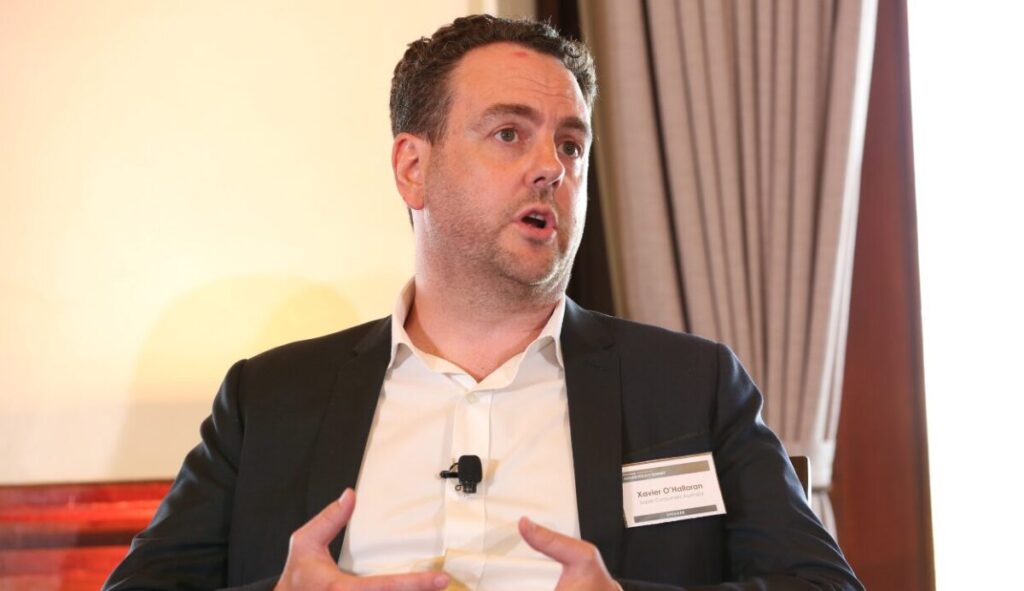

Super Consumers Australia has joined the chorus of criticism from the advice sector over the latest iteration of financial advice reform, arguing it “falls short” of delivering meaningful help for Australians planning retirement.
In its submission to Treasury on the first part of the Tranche 2 Delivering Better Financial Outcomes legislation, the consumer advocacy group supported moving to simplify and clarify advice obligations for super funds and advisers but has concerns about how the reforms will work in practice.
SCA chief executive Xavier O’Halloran was critical of any reform allowing super funds to give advice about retirement products. “But when most funds only offer one product, that’s not advice – it’s a sales pitch,” he said in a media statement accompanying the release of the submission.
The criticism from the consumer group follows that of others, like the Financial Advice Association Australia, who believed the draft bill promoted anti-competitiveness.
However, The Conexus Institute* has posited retirement advice through super is better than no advice at all.
The SCA submission called for introducing mandatory minimum standards and performance testing for retirement products to make sure the system is designed to provide safe and high-quality retirement products to all super fund members.
This was particularly important due to the implementation of nudges/prompts that could direct members to move into a certain retirement product, for example.
“The modest impact prompts may have must be balanced against the risk of misuse or unintended consequences,” the submission said.
Calls for retirement products to be included in the Your Future Your Super performance test have been considered by government, but consultations on the matter have received heavy industry criticism due the complexity of assessing performance in retirement products.
“Australians deserve a system that delivers safe, high-quality retirement outcomes, not just advice that steers them into the only product a fund has to sell,” O’Halloran said.
“We’re calling on the Government to step up and make the retirement system safer by design, so that no one is left behind, whether or not they get financial advice.”
The draft bill will replace Statements of Advice with Client Advice Records – and while much of the advice profession has been critical over whether this presents a tangible change – the consumer group also had its own issues with the reform.
SCA’s issues differed from the advice sector, instead arguing CARs should always be required to be provided to a consumer even if there is no requirement currently to provide an SOA.
The submission argued current circumstances where there is no requirement to provide an SOA and where there would be requirement to provide a CAR are situations where it would not be onerous to provide one if requested by a consumer.
The consumer group recommended amending the draft legislation to provide consumers the right to request a CAR if there is no obligation to provide one, like for small investments, further personal advice, basic deposit products and no purchase sale recommended – citing requirements under sections 946AA, 946B, 946BA and 946BB of the Corporations Act.
Consumers should also be advised of their right to request a CAR if one is not provided, the consumer group recommended.
However, the consumer group has acknowledged SOAs had fallen into the trap of prioritising “transparency over disclosure” by focusing more on documenting their own compliance over communicating their actual advice to their clients, which has ultimately led to increasing the cost of advice.
The group does support the CAR, but called on ASIC to provide clear guidance including sample templates, noting there was a likelihood advisers will maintain their current practices without any clearer direction.
The consumer group also called for a free, government-run product comparison tool hosted on ASIC’s Moneysmart website; and a “one-stop-shop” information and guidance service, modelled on the UK’s Money and Pensions Service.
“The first step in delivering this one-stop-shop service is for the government to task an independent agency to connect up and promote the existing suite of government services through a single portal,” the submission said.
“Awareness of some of these services is currently low, and they are spread out over multiple locations making it harder for people to find and access them. Some also have information that is hard to locate, lacking in depth, or difficult to understand.”
*The Conexus Institute is a not-for-profit think-tank philanthropically funded by Conexus Financial, publisher of Professional Planner.
















Leave a Comment
You must be logged in to post a comment.