


Minister for Financial Services Stephen Jones has pinpointed industry consensus as a key factor in the Quality of Advice Review reforms succeeding, and hopes to avoid a repeat of licensees, professional indemnity insurers and product manufacturers attempting to push advisers to standards above those required by law.
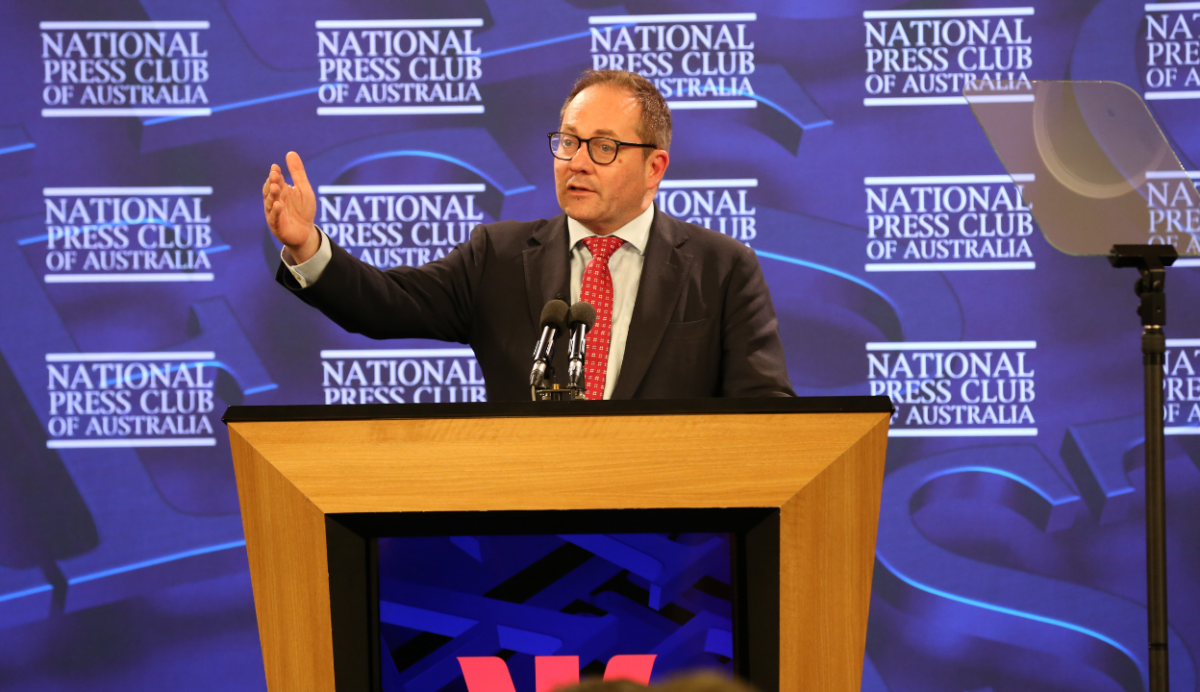
Speaking at FAAA Congress on Wednesday morning in Adelaide, Jones noted the current practice in the industry has made the advice process more complicated than what it is required by legislation.
“When I’ve spent so much time digging in and talking to [associations], licensees and product manufacturers about the complexity and the problems, everyone seems to agree on the problems. Not everyone agrees on what the source of the problem is,” Jones said.
“What has become obvious to me is that a whole heap of the problems aren’t driven by what’s actually in the legislation, they’re driven by the risk appetite of the licensee or the standard format of the product issuer or people’s perceptions of what’s in the legislation or the individual appetite of an individual adviser, or they’re concerned about what the regulator might do.”
The first round of draft consultation was released last week which included changes to fee consent, but not to Statements of Advice or safe harbour steps.
The minister used the need for consensus as justification for delaying the release of draft consultation on SOA and safe harbour changes, adding that removing currrent requirements won’t automatically solve the problem.
“I guarantee you that a licensee will say ‘that’s fine, but in our standard forms we’re going to re-create it because that’s going to make us litigation proof’, or the regulator saying ‘that’s fine but still need to have all these processes in place’,” Jones said.
“Unless we bring everyone together on that and ensure the legislation reflects the reality and there’s community understanding of what we’re trying to do here, you won’t solve the problem. That’s why I’ve spent so much time on that thing.”
Fee consent changes may be added to this list of issues requiring consensus, after the draft legislation stated a single form should be prescribed, but that it wouldn’t be a legal requirement to for all manufacturers to use it.
Asked about this loophole, in a media briefing after the Q&A session, Jones called for an industry response. “I’m particularly keen to hear from product manufacturers and the licensees,” Jones said.
“But let’s be clear, we will prescribe a form if we need to. The objective is to have a single form that advisers can use. We’ve consulted on the draft; if we can’t get there by one means we’ll get there by another.”
‘On track and on time’
Jones said he has largely stuck to his preferred reform timeline, but acknowledged criticism of the pace of change.
The minister indicated earlier this year during the Conexus Financial QAR Roadshow that anything requiring only ministerial discretion could be addressed this year, but any legislation wouldn’t be introduced until 2024.
“We are on track and we are on time,” Jones said. “I want to stress that. All the things we’ve been saying this year and the timeline we set out, we are on track and we are on time.”
Jones said last week during the draft legislation announcement that more policy details around Stream Two and Stream Three would be released before Christmas, while further draft legislation would follow early next year.
“I’d like to be able to say on this day of this week it’s all going to be done, [but] some of these things aren’t in my control,” Jones said.
Asked by FAAA chief executive Sarah Abood during the Q&A about giving discretional relief if any legislation is held up, the minister was non-committal adding, “my energy is going to be focused on delivering what I’ve promised”.
Another brick in the wall
Jones reiterated in his speech his commitment to expanding pathways to enter the profession, which was flagged during the experience pathway legislative process.
“Like other professions, this means that there is a need for a shared standard of education, competence and ethical standards,” Jones said.
“However, many stakeholders have told me the current pathways need more flexibility and we need to more accurately reflect the way the people come into the industry.”
Pushed by Abood on the minimum standards for advisers for super funds under Stream Two of the reforms, Jones reiterated the need for it to be fit for purpose and that it could be used a talent pathway for the industry in the longer term.
“Whatever we do with super funds has got to be tight governance and regulation around the scope of advice, the way it’s charged and the qualifications for somebody giving advice,” Jones said.
“Narrower scope of advice, narrower qualifications but not the lowest possible of bars.”
Jones said if this is executed properly it would create a pathway for someone who has part of the full qualifications required to be a holistic adviser to complete the rest of their study to become a “fully-fledged” adviser.
“We do it in a really positive way [where] there is now a logical pathway for somebody to start with a super fund but then think ‘you know what, I’d like to put my own shingle up or go and work for a licensee’ and that becomes the incentive for them to complete the qualifications,” Jones said.
















Leave a Comment
You must be logged in to post a comment.