
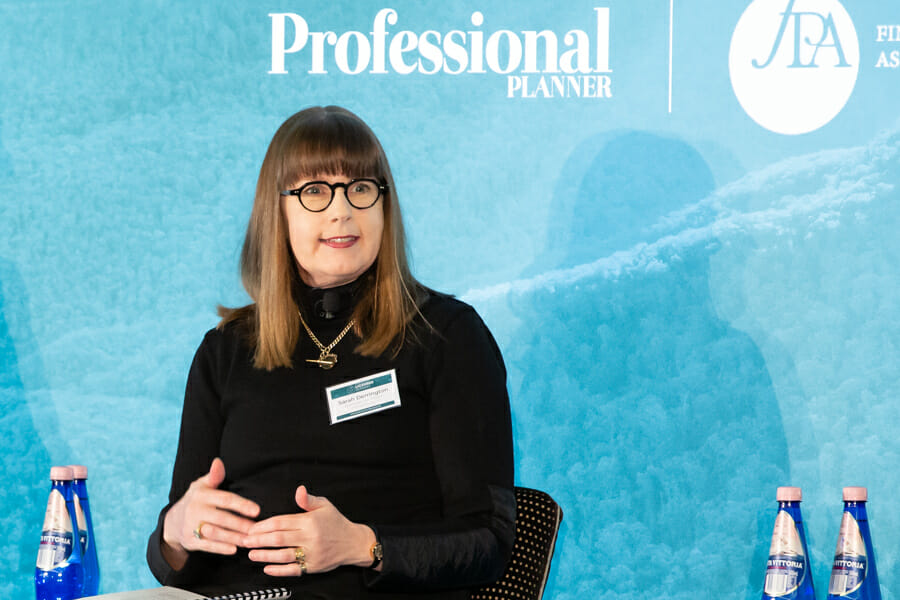

The advice industry should consider the unintended consequences that might arise if it becomes a recognised profession according to Hon. Justice Sarah Derrington, federal court judge and President of the Australian Law Reform Commission.
Speaking to open the 2021 Professional Planner Licensee Summit in Katoomba Monday morning, Derrington said advisers need to question how they want to be regulated and what broad changes to current arrangements might mean for their advice delivery models.
If advisers want to be regulated on a professional level, she believes, this will probably bring with it a higher level of fiduciary duty than the industry currently owes its clients.
“I’ve noted from the press that professionalism is something that’s really important to you,” Derrington said. “And if that’s the track you want to go down, you’ve got to be careful and think about the unintended consequences of doing that, because you might well find yourself in the same position as the lawyers and the doctors with a new load of fiduciary obligations.”
Many observers regard individual registration for advisers and an unwinding of the current licensing regime as a significant step towards professionalism for the industry. If that comes to pass, Derrington told Professional Planner, advice regulation could take a different shape entirely.
“If [advisers] do look like going down the track of becoming true professionals they’re open to a broader range of ethical duties and obligations that are typically associated with the professions like law and medicine,” she said. “So that’s a question for the industry to think about.”
The way advisers are regulated is central to a review the ALRC is undertaking to simplify and clarify financial services regulation, in particular the Corporations Act. The ALRC is due to hand down the first of three interim reports in November this year before filing its final report in 2023.
The work the ALRC is doing is likely to have a major bearing on the advice industry’s fate. In May ALRC Commissioner Justice Hon. John Middleton said pulling Chapter 7 out of the Corporations Act was “on the table” – a move that will likely prompt a review of whether individual adviser registration would be a better fit for the industry in the long term than the current AFSL model.
If individual adviser registration was legislated and implemented, any subsequent lift in professionalism would also bring with it a higher standard of fiduciary duty, Derrington said, which could “change radically” the structure of advice service deliver.
“It’s not just that you must act in the [client’s] best interests, you must act only in their interests, and not in your own interests,” Derrington explained. “So it’s not just that you must manage conflicts and avoid conflicts, you have two primary duties; not put yourself in a position of conflict with your client, and not to profit from that position.”
















Leave a Comment
You must be logged in to post a comment.