


Financial advice is positioned to avoid a “Kodak moment” and being made obsolete by AI and technology, as human-led interactions will continue to be a driving force in its proposition.
A Kodak moment is an idiom, mimicking the company’s marketing tagline, but now referencing the downfall of the once dominant photographic film company that failed to adapt to increased market competition from digital cameras at the turn of the millennium.
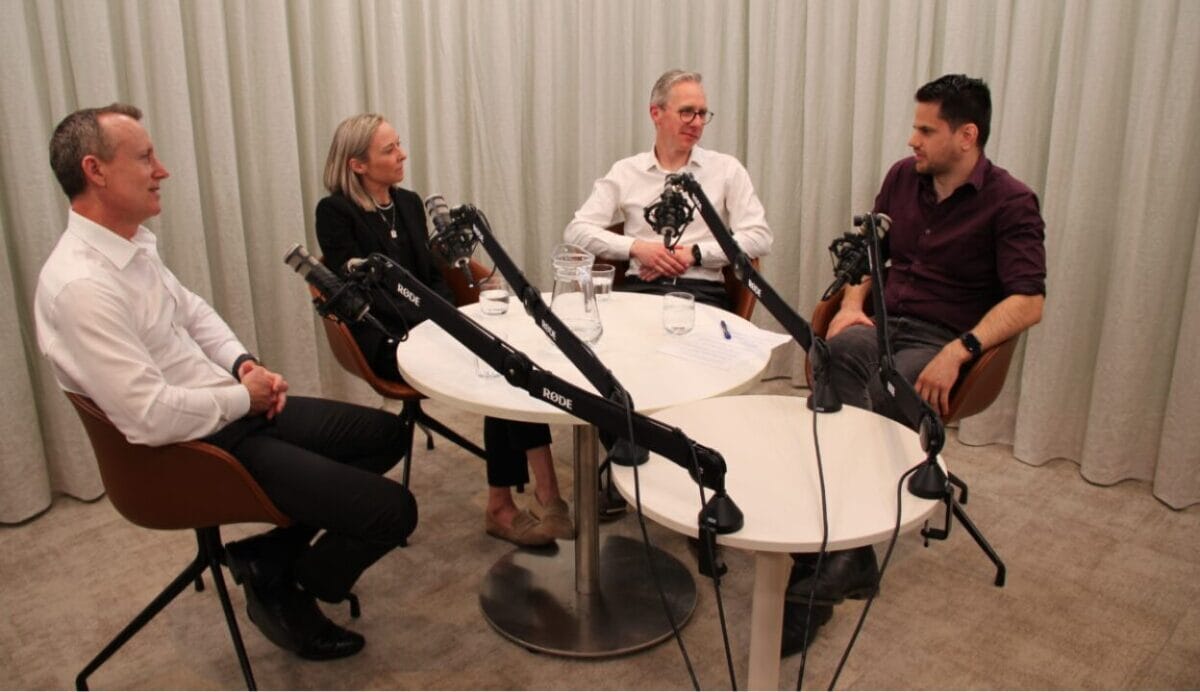
Conexus Financial chair Geoff Lloyd told the Professional Planner Licensee Summit he wasn’t convinced the advice profession should worry about a “Kodak moment”, but that there were two sides to consider: what can be learned and what can be done to avoid it.
“Not sure this is quite a Kodak moment, this is an evolution of the way in which we can build and deliver services and products, and then serve our clients,” Lloyd said.
“It’s just a new level of technology that’s advanced to be able to help us and enable us. I do like the AI-plus-human element to it.”
Lloyd said that over the next three to five years it will be about advice enablement opportunities and that can include advice delivered direct to clients.
“I’m less worried about full disruption of advice by an AI agent, delivering advice and executing advice, because there’s more than just getting the advice, you’ve got to execute on that advice,” Lloyd said.
“Even if I was able to grab any one of the LLM models and get great advice for my circumstances, then what? I suspect that will be solved, but we’ve also seen [roboadvice models] in the US come and go, and that was because ultimately they were providing really good new technology directly to end clients, but they were banks who were then obviously trying to push one product more often than not, so that’s always the deficiency.”
UniSuper chief advice officer Andrew Gregory said the profession should have a heightened awareness of the “Kodak moment” risk because consumer habits are changing and they’re not only using AI instead of seeing an adviser, but to also aid their relationship with one.
“Specifically, I’m talking about members that are coming in now with readouts from their ChatGPT or their Claude interface,” Gregory said.
“It’s something that I think that we should just put on note, that we should be more aware about this. It may not be a Kodak moment per se, but it could be, and it’s happening so quickly.”
Vertical models
The final discussion of the summit not only focused on the future implications of AI, but the lingering impact of vertical integration and whether it still has a place in the profession.
Entireti group chief executive Neil Younger said it was important not to conflate different models of vertical integration.
“Where we’ve seen things go wrong, Shield and First Guardian, that wasn’t just a conflict, that was an obvious and deliberate intent to get to a result that was nowhere near anything to do with the best interest of the client,” Younger said.
“We put all of this stuff in the one bucket and say it’s the same. Well, it’s not.”
While the Shield and First Guardian funds operated independently from the advisers and licensees responsible for distribution, ASIC has alleged in court those parties received significant financial benefits from doing so.
Issues with vertical integration – whether advice and product could co-exist under the same roof without being a detriment to client best interests – came to the fore during the Hayne royal commission, leading to the exit of the big four banks from financial advice, although the inquiry declined to recommend outlawing the practice.
ASIC has been conducting surveillance of AFSLs recommending and offering managed accounts to retail clients.
Younger said there are advantages to vertically integrated structures, and it’s a matter of whether the conflicts in those models can be managed.
“What we’re trying to do is deliver advice to clients in their best interest,” Younger said.
“We made a decision that we would never be in asset management. We would see that as too high a bar around conflict.”
Likewise, Younger said he didn’t see the licensee being a platform superannuation provider or administrator.
“We don’t believe for the best interest of our clients that we have the scale to compete with the established platforms that are in the sector today,” Younger said. “That’s where we’ve made decisions about how we manage conflicts.”
However, Younger doesn’t see portfolio construction through managed portfolio services as a conflict because it’s centred around advice.
“We make some money out of that piece, we make some money for the service we deliver in that portfolio business, and we don’t ever deliver it to the client in circumstances where we couldn’t get to our first priority which is best interest,” Younger said.
Lloyd, formerly an executive for BT and MLC, said he’s never heard of vertical integration for a service, only in the context of product distribution.
“ASIC’s now looking to SMAs [separately managed accounts] because they are product versus MDAs [managed discretionary accounts] where it’s a service,” Lloyd said.
“Where did the vernacular come from that we’ve got a problem with vertical integration of a service. I never even heard of vertical integration of a service; I have for a product.”
The new vertical
Although the banks and for-profit institutions have largely moved on from vertically integrated business models, there are profit-to-member funds who have a combination of in-house advisers and product.
One of those funds, UniSuper, operates a licensee and is bound by the Best Interests Duty for financial advisers and Best Financial Interests Duty for super funds.
Gregory acknowledged the fund had a vertically integrated model, but said the fund is structured “appropriately”.
“The problem we’re trying to solve, which is access to education, guidance and advice to the scale of our membership.
“We structure ourselves appropriately. We’ve got a group executive that is accountable for advice delivery. We’ve got independence of the advice business unit that has a direct relationship to the board committees for things like APL [approved product list] management, [and the] conduct of the representatives. We own and operate our APL.”
Gregory, along with CEO Peter Chun, both had backgrounds in the retail world, working for the big four banks’ advice arms.
“The context of vertical integration in the previous generation is very different to the context that exists today,” Gregory said.
“When you apply today’s context, we should all be proud of the professionalism and the resilience of all the advice models and we should all be proud that we’ve got a role to play in that advice ecosystem.”
One of the other challenges super funds face is recruiting financial advisers – the $166 billion UniSuper has 79 advisers but 680,000 members.
“In an employed operating model as well, we need to value our employment value proposition quite high,” Gregory said.
“There’s not many advisers that aspire to work for a super fund. You need to build a contemporary employment proposition to attract and retain good talent, and for us, having the mantra of ‘the home for advice professionals’ has been very intentional.”








Leave a Comment
You must be logged in to post a comment.