


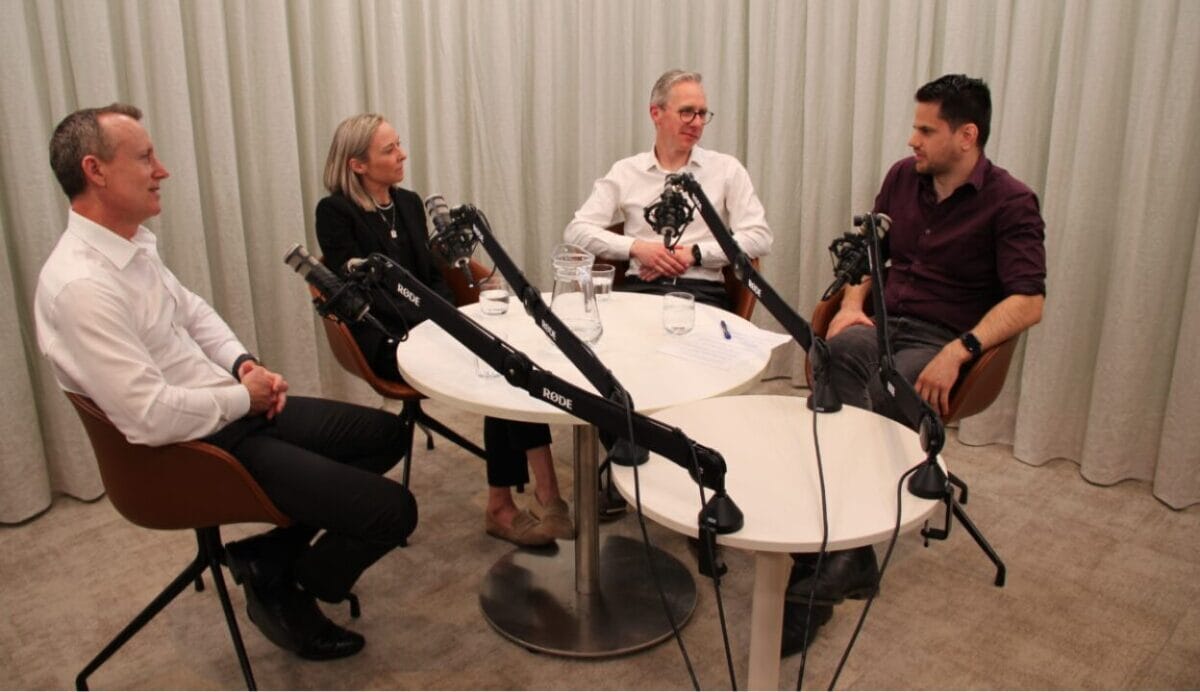
In an exclusive roundtable session with Professional Planner and Investment magazines, the Assistant Treasurer and Minister for Financial Services and Superannuation, Bill Shorten, discusses the government’s reform agenda – the key issues, and timing.

SHORTEN: This government scraped home in the last election. We were given a second chance by the Australian electorate. One of the lessons…which I think is clear is that any political party – or indeed, any organisation – which over-promises and under-delivers, will damage its credibility.
So what do I mean specifically by that? How do we deliver, not just promise? There was good work done in the first term by my predecessors, led by obviously Wayne Swan, but Nick Sherry and Chris Bowen. We certainly did look at a range of issues, the Johnson Report, Cooper, FoFA – the Ripoll Report, that is.
I think that if I was to have this forum review in two-and-half-to-three years’ time, the one thing which I hope you could all say to me is, “Well, you actually did what you said you were going to do at the end of the first term.”
The reason why I talk about some of those things, specifically, in an opening, is that the first point which all of those issues go towards is that we will implement what we say we’re going to do. So there shouldn’t be any uncertainty about that, no reading of the tea leaves. There’ll be plenty of wrinkles in the implementation, and we will count upon people in this room, and again, the broader industry, to help us iron out those wrinkles.
I think superannuation is an unvarnished gift to the Australian economy and to the Australian people, and at the core of that we need to get SuperStream right, and we need to get MySuper right, and we need to make sure that the planners are in the tent and not out of the tent, and make sure that we aren’t charging whole lots of fees and trailing fees and commissions – all of that debate is incredibly important. But all of that debate is underpinned by the need to ensure that Australians have an adequate retirement.
I think that superannuation has taken a bit of a knock in the last few years. Let’s be clear, returns were down.
But having said that, superannuation is as relevant now as it was in 1985. In 1985, unions and Labor government recognised that only a few people had a decent private savings plan, and what needed to be done is to provide that opportunity to all Australians. We are living longer than ever before, which is a fantastic thing, but what that does mean is if we have greater periods of life beyond work, then we want to make sure that the money doesn’t run out for those people.
That is the power of what you all contribute and you all see yourselves as working to [serve] multiple constituencies: you’ve got shareholders; you’ve got stakeholders; you’ve got the beneficiaries; in the representative associations, you’ve got your members. But at the end of all of those constituencies is just the Australian people, and they rely upon the people in this room.
Now, all of you have been architects and contributors to the success of our superannuation industry, the fourth-largest market of funds under management in the world; the fastest growing; and all of you can take some credit. Not that you always get thanked – but you know, this is your one thank you.
The reason why I’ve taken such time at the beginning of this talk, when perhaps some of you want to delve into more technical issues and where your constituencies stand, is that I don’t believe the electorate at large is as engaged with the debate about retirement savings as they need to be. I think, individually, they sense anxiety and all the work and surveys show that, but I don’t think they’ve linked it to public policy, and I don’t think public policy – this debate about increasing superannuation or indeed the Cooper Report or indeed FoFA – in many cases, it’s the industry talking to each other, and I think that there’s a whole conversation that all of us need to have with the rest of Australia.
The fate of nine-to-12 [increasing SG contributions from 9 per cent to 12 per cent], whilst it will be decided in Parliament here, I actually suggest to you it will not; whilst technically it will be decided here, it will be practically decided in the lounge-rooms and at the mailboxes of millions of Australians who are counting on that superannuation to provide them some degree of retirement. So if you want to know where I’m coming from…we want to keep our promises, there has been a lot of work done to say, “Where should we go?” in terms of the administration of the industry, the legitimate reduction of costs, benefits to the consumer, reduction for fees, but I’m also completely committed to creating competitive markets and completely committed to the adequate retirement.
COLIN TATE (publisher, Professional Planner): Well, thank you, Minister. I know that for many in this room, that’s refreshing information.
Many of the things you’re referring to, including 9-to-12 per cent, were thought by many in this room, I think, as a fait accompli. What you’re saying is the recommendations of the various reforms are certainly a long way from a fait accompli; is there support in the House, however, from the Independents and from the Greens for 9-to-12 per cent?
SHORTEN: I think the Greens support 9-to-12. There’s got to be lots of discussions in the House. I haven’t given up on persuading the Libs and the Nats. I don’t see why we couldn’t have the support of 150 members at Parliament. But if you want to build support here, there’s two ways to do it. One, get a big majority in an election. But I think there is a better way.
I suggest to you there is another whole strand of persuasion which would exist to build the support of the 150 [members], and then indeed the Senate. That is: get out and talk to the people who get paid superannuation. It doesn’t matter if it’s in a self-managed super fund, it doesn’t matter if they’re in an industry fund, a retail fund, a public sector fund, a corporate fund. The point about it is that they’re the people who the conversation should be with. They’re the people who, I believe, will grasp the benefit of increased superannuation, but that’s where the conversation’s got to take place.
I think that if we wanted to convince people in Parliament to enthusiastically support 9-to-12, the work will be done outside of the Parliament, talking to everyone else.
TATE: Okay, before I open the questions to those around the table, could you give us a timetable, therefore, and what you’re suggesting, and also you haven’t yet mentioned the three all important Independents. Have you had specific conversations on this issue with the three Independents?
SHORTEN: In terms of the Independents, not yet. But I know that they’re all interested in superannuation, and their Parliamentary records would indicate that.
So we will definitely be engaging with the Independents, and that will be sooner, rather than later. We have to be very clear what it is we want to do, so yes, that will happen.
In terms of timetables, there’s a timetable for nearly everything, I’ve discovered, in this portfolio. I’ve got more timetables than the Italian pre-war railway network.
I’ll give you a general answer, but then as we go through specific issues, we can articulate it. One thing we have said is that we’ll respond to the Cooper Report before Christmas.
It is important that we constantly consult and discuss. I know, for instance, with financial planners, we’ve deferred a matter for several months because we said we would.
But the short answer is: we will move as quickly as we possibly can, whilst engaging in consulting before we finally implement and legislate.














Leave a Comment
You must be logged in to post a comment.