

Retirement’s wealth wave demands a new language for advice

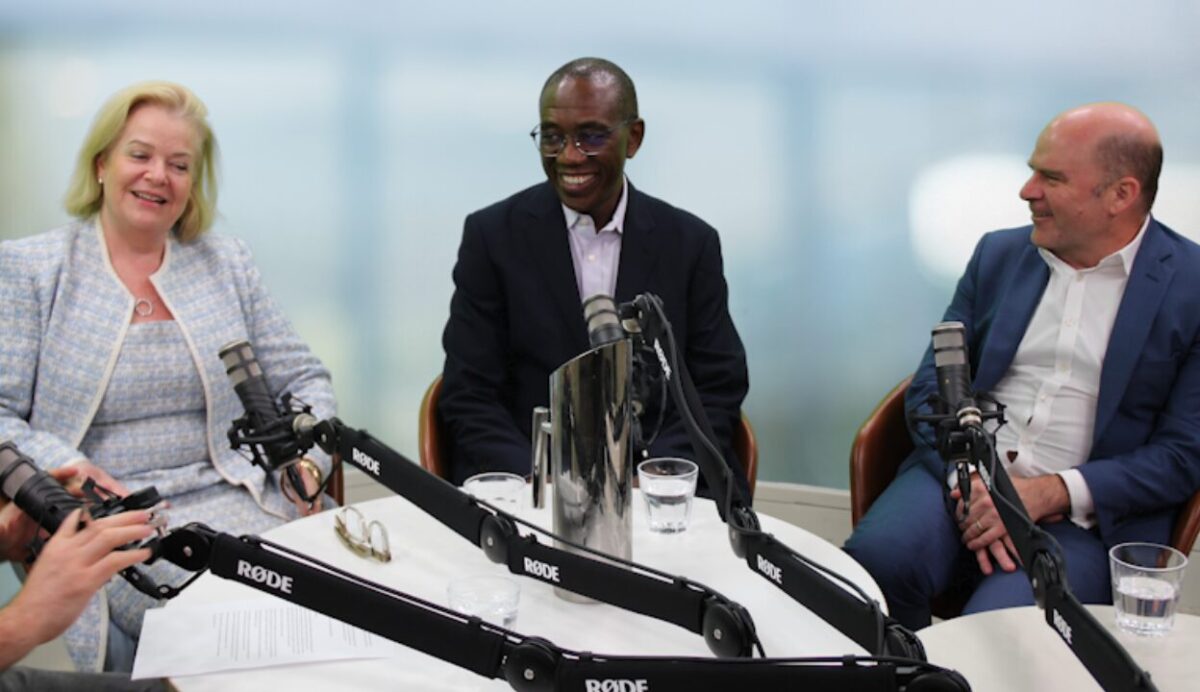
Clockwise from top left: Simon Hoyle, David Bell, David Hutchison and Bec Wilson.

The superannuation system is producing retirees with balances unlike any previous generation, and the industry is still working out how to meet them.

In episode four of Managed Accounts Decoded, brought to you by North, Retirement Magazine editor Simon Hoyle is joined by North general manager for managed portfolios and investments David Hutchison, The Conexus Institute* executive director David Bell, and Epic Retirement Institute founder Bec Wilson.

This episode explores how managed accounts can serve the hyper-personalised needs of retirees, why a performance test borrowed from accumulation would struggle to translate, and what it will take to build a consumer narrative around the genuine value of advised, managed portfolio solutions.

*The Conexus Institute is a not-for-profit think-tank philanthropically funded by Conexus Financial, publisher of Professional Planner.

, , ,

One response to “Retirement’s wealth wave demands a new language for advice”

  1. SONJA

    The elephant in the room: Who can actually afford financial advice?

    By Sonja Boric
    With respect, Bec, there is an elephant in the room in this continuing conversation about financial advice.
    Not everyone can afford a financial adviser.
    The median super balance for an Australian aged 60–64 is around $203,000. The median cost of ongoing financial advice is around $4,668 a year.
    For someone approaching retirement with $200,000 in super, several thousand dollars every year for advice is a serious expense.
    I don’t blame professional advisers for that. They operate inside an expensive regulatory system involving levies, professional indemnity insurance, licensing and an enormous compliance burden. Those costs ultimately land with the consumer.
    So before we keep telling Australians to “get financial advice”, perhaps we need to confront why good professional advice has become unaffordable for so many people.
    And that brings me to the other elephant in the room: how super funds spend members’ money.
    Across the industry substantial amounts are spent on advertising, marketing, sponsorships and executive remuneration.
    Meanwhile, we tell the member with $200,000 in super that professional advice is important — then send them away to find thousands of dollars a year to pay for it themselves.
    I think we’ve got our priorities wrong.
    If funds can spend millions promoting themselves, members are entitled to know how much is being spent directly on them — financial education, retirement planning, understanding investment risk and meaningful access to qualified professional advisers.
    We have built an extraordinarily complicated retirement system and placed too much responsibility for navigating it back onto the consumer.
    Understand the product. Read the disclosure. Understand the risk. Do your due diligence. Get professional advice.
    Except professional advice is increasingly unaffordable for many of the people we’re telling to obtain it.
    So here’s my demand of the super industry.
    Publish what you spend on advertising, marketing, sponsorships and executive remuneration — and put beside it what you spend on member education and access to qualified professional advice.
    No more hiding those priorities inside billion-dollar balance sheets. Put the numbers in front of members.
    Then start redirecting more of members’ money towards services that directly improve their financial wellbeing.
    Australia’s superannuation pool is not a corporate free-for-all.
    It is members’ money, accumulated from their working lives for their retirement.
    Spend it accordingly.
    Put the member first — not in the advertising, but in the accounts.

Leave a Comment

Translating big picture views into portfolio action

Translating big picture views into portfolio action

Sticky inflation, bifurcated equity markets and an uncertain rate environment are the challenges facing investors in the market today, according to AMP chief investment officer Anna Shelley and general manager of investments Stuart Eliot.

Sort content by