
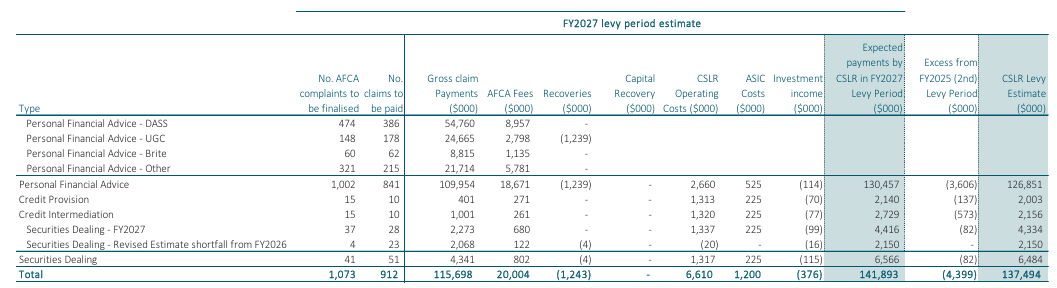
The Compensation Scheme of Last Resort has revealed the initial estimate for the FY27 levy will be $126.9 million for financial advice, once again breaking the subsector cap, but Shield and First Guardian could double that figure.
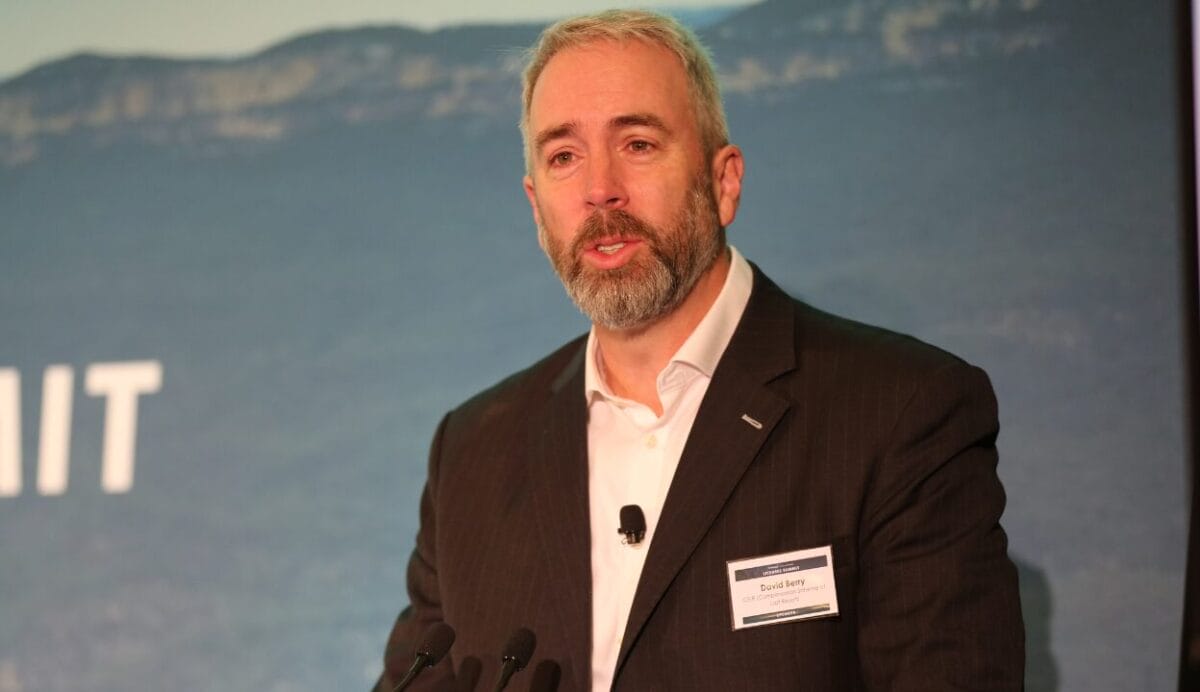
CSLR chief executive David Berry flagged at the Professional Planner Advice Policy Summit in February that the FY27 levy was expected to surpass the $120 million threshold.
The newly-released figure exceeds that, but also doesn’t factor in Shield and First Guardian complaints, which means it could be higher than the initial estimate if it becomes clearer that those complaints could be paid during the CSLR levy period.
The CSLR’s estimate is that this could add a further $110 million in compensation to victims, as well as an additional $15 million in AFCA fees.
Berry tells Professional Planner the scheme considered whether it would be appropriate to include Shield and First Guardian into the initial estimate.
“In the end we decided not to include it, however, in our efforts to be transparent, we felt it was important to consider the potential implications for the revised estimate to be completed and ready for sharing in July,” Berry says.
The CSLR estimates there would be a claim size of $99,750 per determination for Shield and First Guardian determinations.
In total across all four sectors, the initial estimate for FY27 has been calculated at $137.5 million.
| Sub-sector FY27 initial levy estimate | |
| Personal financial advice | $126.9m |
| Securities dealing | $6.5m |
| Credit intermediation | $2.2m |
| Credit provision | $2.0m |
Source: CSLR
A revised estimate will be completed in June 2026 and because it will exceed the $20 million sub-sector cap, a special levy will be requested as required under law.
The legislation that governs the scheme means the minister will be required to decide on how the excess about the $20 million subsector cap is levied.
Initial estimate for FY27 levy period
 Source: CSLR.
New Minister for Financial Services Daniel Mulino launched a consultation via Treasury about funding options for the special levy and is yet to announce a formal direction, although he has hinted in the past at potentially broadening the scheme.
But this has already occurred after the FY26 levy came in above the subsector cap and Mulino’s predecessor Stephen Jones launched a consultation about the sustainability and funding model of the scheme after it was revealed the FY26 was expected to surpass the cap.
Jones indicated at the Advice Policy Summit openness to excluding ‘but for’ determinations – where clients who receive a favourable AFCA determination would be entitled to compensation for lost investment gains due to poor advice – a recommendation the CSLR has formally suggested to government.
However, while this reform would have mitigated the amount of Dixon Advisory complaints that went to the CSLR – the scheme estimates 80 per cent of claimants didn’t make a capital loss despite the poor advice – Shield and First Guardian victims have currently lost everything, albeit with the potential for some return of capital via liquidators.
Shield investors on Macquarie were remediated via an agreement with the wealth giant and ASIC, but that wouldn’t prevent them from making a complaint against their adviser to AFCA and having that determination flow through to the CSLR since they were only refunded to their original investment position.
Netwealth has applied for government assistance to remediate clients and it’s expected Diversa Trustees and Equity Trustees will do so as well which could further mitigate the pressure placed on the CSLR.
Reforming the funding model has become one of the major advocacy pillars for the industry, with the Financial Advice Association Australia citing at one of their biggest member priorities.