
Sequoia Financial Group, the parent company of InterPrac Financial Planning, has denied it is transferring advisers out of its licensee with the intention of avoiding mounting liabilities from the collapse of the Shield and First Guardian master funds.
Victims of the collapsed schemes raised the concern to Professional Planner, but this has been disputed by the company when reached for comment.
“InterPrac rejects the material provided as being entirely unfounded speculation,” a spokesperson from InterPrac tells Professional Planner. “InterPrac does not comment on hearsay.”
The closure of the Libertas AFSL meant an AFCA determination went to the Compensation Scheme of Last Resort rather than being paid for by the company; the CSLR caps claims at $150,000.
Sequoia acquired Libertas in 2019, when the business had approximately 70 authorised representatives, but by September 2023 Sequoia announced it would close the licensee.
The advisers were given the option to join the other two licensees owned by the firm: InterPrac or Sequoia Wealth Management; or to find another licensee or go self-licensed.
Closing an AFSL while transferring assets, advisers and clients has become a key advocacy issue for the advice industry and the issue was included in the terms of reference for the since shuttered Inquiry into Wealth Management Companies.
The review was launched over concerns of the sustainability of the CSLR in respects to instances like Dixon Advisory whereby firms could put subsidiaries into administration to avoid liabilities.
In a submission into the review, the Financial Advice Association Australia highlighted disappearing assets from Libertas, which could have led to $1 million potentially being used to cover disputes directed towards the CSLR.
InterPrac is currently the only licensee named by ASIC into its broader investigations into the Shield and First Guardian collapse that hasn’t been cancelled by the regulator.
ASIC has acted against trustees involved by taking Equity Trustees to court and has since come to an agreement with Macquarie who will remediate Shield investors on the platform with investigations into Netwealth and Diversa Trustees ongoing.
The collapse of the fund has left $1.2 billion in retirement savings of 11,000 Australians in limbo after ASIC introduced stop orders against the funds over concerns of conflicts of interest, mislabelling of risk profiles and misuse of investor money.
The regulator has alleged that advice firms received payments from the Shield and First Guardian funds, which in turn used lead generation services to funnel customers into the funds without factoring in their best interests.
Ferras Merhi, considered by the regulator to be a central player in the advice component of the investigation, has had further allegations of misconduct introduced by the regulator.
Doing due diligence
The advisers, licensees, trustees and researchers involved in the collapse of Shield and First Guardian have all denied any blame, often pointing to failures outside their scope.
On a webinar on Tuesday morning, operational due diligence firm Castle Hall Diligence listed several red flags that were missed by the gatekeepers involved in the process.
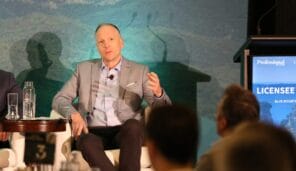
Alex Wise, who sits on the firm’s global advisory board and leads the APAC business, said this included overlooking that the funds had a short operating history.
“It used to be the case you couldn’t get a research report until you had a track record,” Wise said.
“It used to be the case that you couldn’t get on a platform unless you had a set of audited financial statements. Standards have slipped in the past 10 years because there’s a real desire from advisers to get private assets onto platforms so they can start to funnel capital in there. In a lot of cases that’s absolutely valid, that’s a great strategy but here where we’ve got those affiliates throughout the structure, these checks should have been really important.”
Furthermore, Wise pointed to other red flags like rapid increases in assets under management (AUM) over a 12-month period and AUM being below $50 million.
“We talk about the significant growth in the funds, that certainly triggers interested and a flag from us, particularly where that growth is in a small fund that is happening very quickly,” Wise said.
“I can guarantee the various characters in this structure were not investing alongside the mums and dads who put their hard-earned money into that.
Audits of the auditors
The Castle Hall Diligence commentary comes as ASIC released its report into auditors which found that multiple auditors from audit firms of all sizes were unable to effectively demonstrate compliance with independence and conflict of interest obligations.
Report 817 Building trust: Auditor compliance with independence and conflict of interest obligations found a “disappointing” number of likely breaches of prescriptive independence requirements.
Included in the report were the big four consulting firms – EY, Deloitte, PwC and KPMG – along with BDO, which was the auditor of the Shield.
Fifteen auditors were found to be in likely breach of rotation requirements, relationship prohibitions or providing a prohibited non-audit service.
None of the 15 auditors flagged by ASIC as having breached their obligations had proactively reported the potential breaches to ASIC, despite a reminder from the regulator last October.
The 48 auditors and 19 audit firms that were the subject of ASIC’s review were selected using a risk based, data driven methodology.
Data relating to 2900 auditors was reviewed for indicators of potential threats to independence arising from the provision of non-audit services to audit clients, long association with clients and relationships between auditors and clients or their officeholders.