
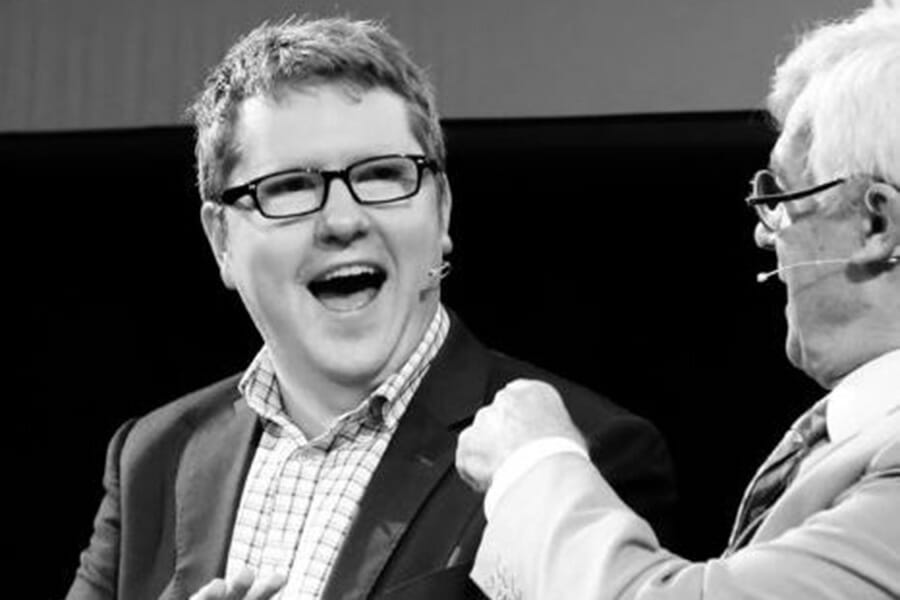

Blockchain technology will radically transform the economy around us and the Australian Securities Exchange’s switch to it is just the tip of the iceberg, academic Chris Berg says.
Blockchain – the technology that makes bitcoin possible – has “a large number of applications across the economy for much more than things like cryptocurrencies”, he says.
Berg is a senior research fellow at the RMIT Blockchain Innovation Hub, an adjunct fellow with the Institute of Public Affairs, and an academic fellow with the Australian Taxpayers’ Alliance. He says blockchain offers almost limitless possibilities, in contrast to Bitcoin, which he argues is less of a sure thing for the future.
“I’m obviously not an adviser, but when anybody asks me where I should put my money in terms of bitcoin, I tell them to put in only as much as they’re willing to lose,” he says, “because we’re still trying to figure out what it is.”
Berg says that to understand the scope of blockchain’s applications for the economy, people need to understand what it can do for supply-chain management.
“A lot of investment has been put into blockchain use cases for supply and logistics,” Berg says. He uses the agricultural industry as an example, pointing to the way blockchain’s digital ledgers can reduce food fraud by guaranteeing the provenance and quality of goods.
“We have some of the best agricultural products in the world, and we want to sell them into emerging markets across Asia, but to do so we need to demonstrate to consumers in China that the goods they are receiving are genuine,” he explains. “We want to know that this lobster comes from Tasmania, or that this product is organic.
“If we put that sort of information on a decentralised ledger that doesn’t have any sort of single authority controlling that information, then we’re more likely to trust that information,” he explains.
New way to move money
Berg says that if we apply the same thinking to the economy, blockchain can add security and clarity to the way money is moved globally.
“If you start to see the economy as a nested group of supply chains, you can see that blockchain will [very probably be] integrated into so much of what we do,” he says. “What we have in the world right now is a very opaque financial system, because we don’t know enough information about the financial products that we’re purchasing and large institutional investors lack visibility of the financial supply chain. Blockchain can change that in a significant way.”
Another advantage of this development, he predicts, will be a dramatic increase of liquidity in the market.
“It makes it much easier to move funds around the world, to do interbank transfers and make remittance payments,” he says.
Pushing boundaries, raising dilemmas
Berg will be a speaker at the 2018 Portfolio Construction Forum Strategies Conference, to be held at Carriageworks in Eveleigh, Sydney, on August 22-23.
This year’s forum will feature 45 investment thinkers from around the world debating contemporary and emerging portfolio construction strategies in the context of the thematic question, “Are future-proof portfolios achievable?”
Berg will expound on how blockchain will affect the economy and look at the way authorities will be forced to alter policy to accommodate the changes.
“I’m going to talk about the really dramatic public policy changes that’ll be taking place over the next decade as technologies like blockchain come on board,” he says. “What I’m really interested in is preparing audiences and people who are operating the economy for a period of radical change in an economic sense and a public-policy sense.”
That change, he believes, will be far reaching.
“New technologies will push at the boundaries of existing regulation,” Berg says. “They will create new challenges and resolve old challenges in ways we haven’t expected, and raise dilemmas for regulators, governments and local councils across the country.”










Leave a Comment
You must be logged in to post a comment.