


After an extended period of globally low interest rates and a flood of liquidity being pumped into the financial system, there is a heightened probability that credit and share markets will experience a correction in the medium term.
There are a number of concerning signals including:
– The signal by the US Federal Reserve that there will be an end to quantitative easing and a move towards normalised interest rates;
– US sharemarket volatility is at historically low and unsustainable levels;
– Demand for collateralised loan obligation (CLO) products (highly leveraged products) is close to levels reached prior to the GFC;
– Current low yields and spread levels provide little buffer against a rise in interest rates by central banks;
– Leveraged syndicated loans are growing more rapidly than they were pre-GFC.
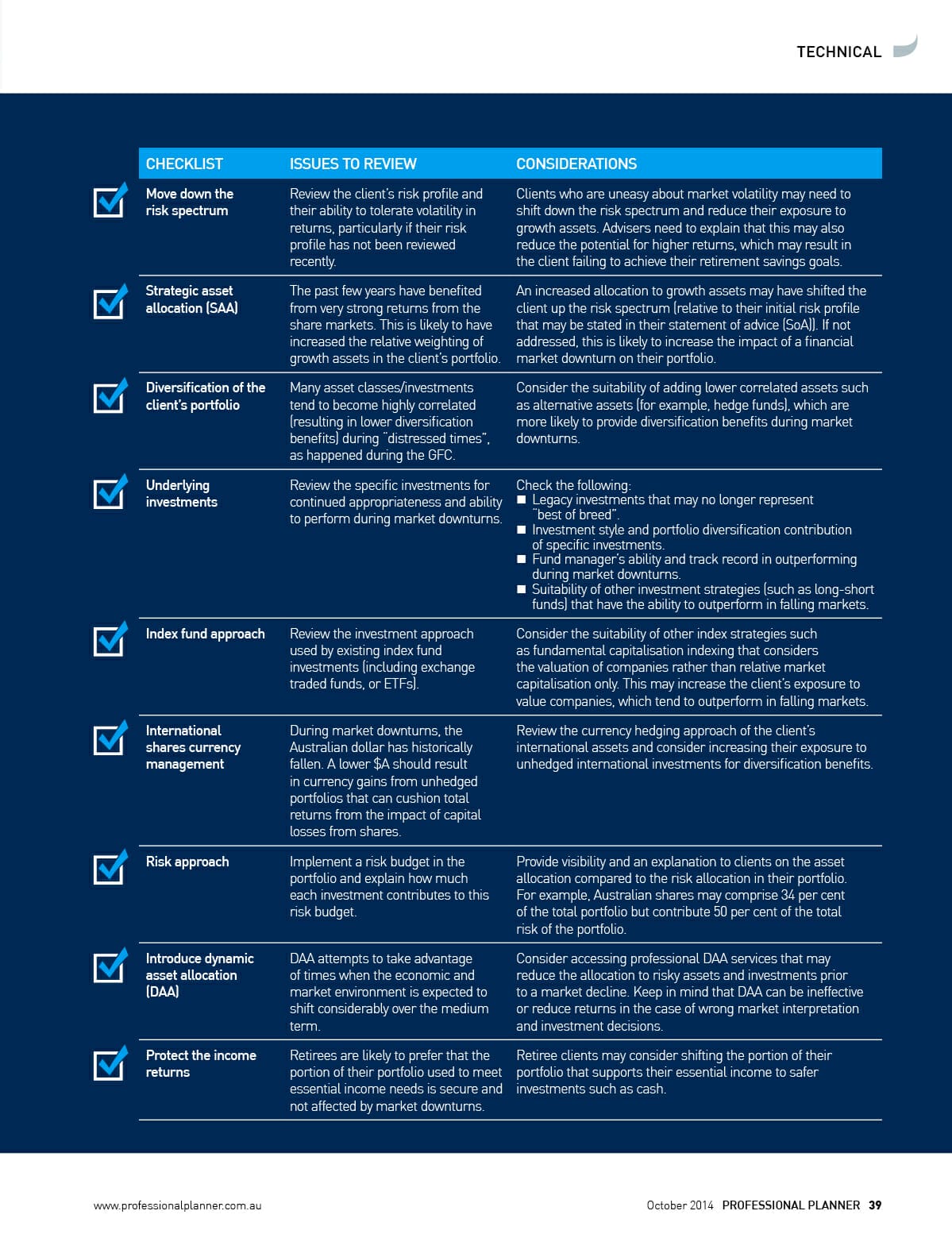
At this juncture in financial markets, it may be a good time to conduct a health check on client portfolios to ensure they are well positioned to ride out any financial market shocks. On the following page is a checklist of client issues to consider.
Keep in mind that any changes to client portfolios may result in realised capital gains as well as transaction costs. These need to be taken into account and explained to clients.
Click the image below to enlarge.






Leave a Comment
You must be logged in to post a comment.