
As the managing director of BT Investment Management, Emilio Gonzalez routinely encounters conflicts of interest – conflicts between, on one hand, what might be best for the business that employs him and, on the other hand, what might be in the public interest, or in the interests of society more broadly.
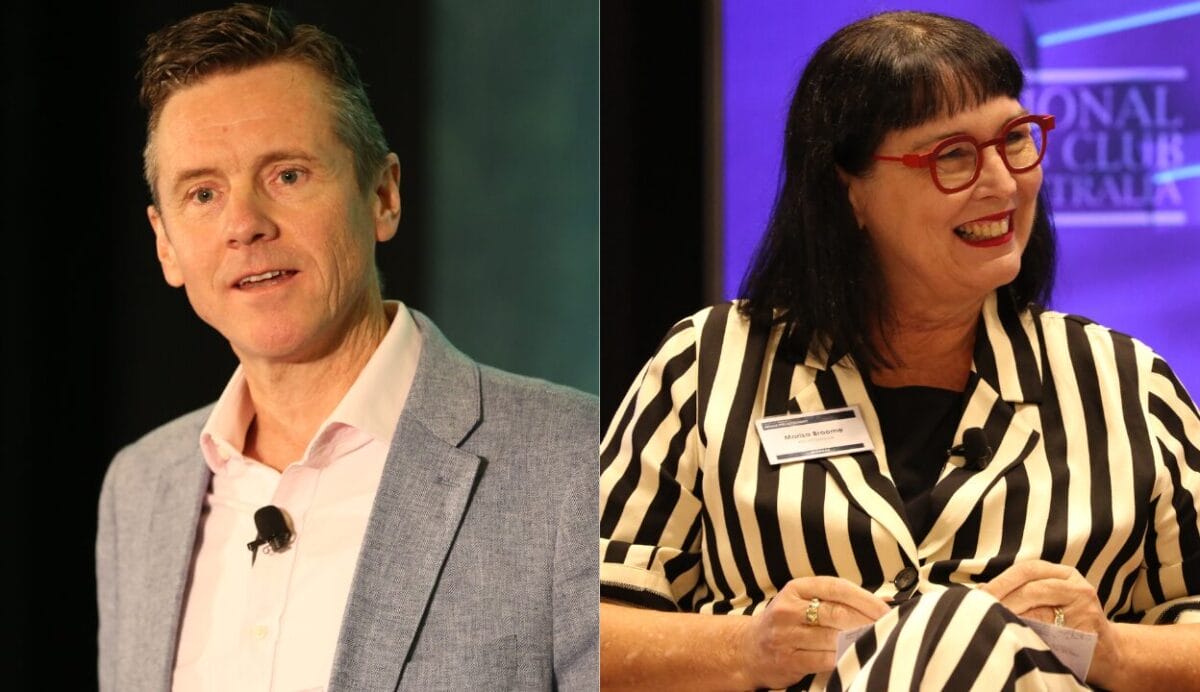
Gonzalez (pictured) says he has worked hard to created a culture at BT that he believes leads to potential conflicts being resolved in the right way. He says it requires an approach encompassing more than just regulation-driven, tick-a-box compliance – it requires a deep understanding and appreciation of ethics.
He says the benefit of an ethical culture is that it then does not necessarily require the managing director to be involved in every single decision, and in a healthy corporate culture employees make the right choices instinctively. There are plenty of examples in other places where rotten or poorly managed cultures have led to poor behaviour by staff, to the ultimate cost of the business and customers.
On October 13 at the 2015 CFA Societies Australia Investment Conference, Gonzalez will take part in a debate at the on the topic “Regulation v Ethics – What will Save the Industry?”, along with Clare Payne, a consulting fellow at the St James Ethics Centre; Anthony Serhan, managing director of research strategy, Asia Pacific, for Morningstar; and company director and former deputy chair of the Australian Securities and Investments Commission (ASIC), Lynn Ralph.
When no one is looking
Ethics, in a nutshell, is “what you do when no one is looking”, Gonzalez says.
“It’s cultural, to the extent you’re dealing with behaviour,” he says
“When you’re dealing with culture you’re dealing with understanding what drives people’s behaviour. [In] what drives people’s behaviour, you get into beliefs, both personal and company; how they will respond to situations based on those beliefs and values.
“It’s what someone would do if no one is looking over their shoulder – what you do when no one is looking – especially in areas of conflict.”
An ethical corporate culture means everyone knows what the right thing to do is – and anyone not doing the right thing is easy to identify.
“Ultimately, you want to rely on people who will make [good] decisions, irrespective of whether you’ve got systems in place or tick-the-box [compliance],” Gonzalez says.
Gonzalez says regulation-driven compliance is important. It demonstrates integrity, and clients demand that businesses have strong compliance checks – “and you’ve got to demonstrate a level of integrity and ethics in doing the right by the client”.
“The second thing is competency,” he says.
“Do you have the right level of technical expertise to make informed decisions?
“You combine those two things together, and you’ll get to a position that, hopefully [leads to] the right decisions not only from an ethical perspective but from a competency perspective.
“Those two combined is important to get the outcome that clients are looking for.”
Starts at the top
Gonzalez says ethics starts at the top of any organisation, and it can only be cultivated and permeate the organisation if actions match words.
“It doesn’t come from the bottom, and it comes through actions, and reinforcing values, actions and beliefs,” he says.
“If people in an organisation see how people respond, act, that’s the most powerful message you can give to others. And if you support that with beliefs, positioning, [by reinforcing] ‘this is how we do things around here’, and education, then ticking the boxes and regulation will always be there, but that shouldn’t be a problem.”
Gonzalez says regulation is a starting point. It is “there to try to get the front piece right”, he says.
“How organisations respond to particular certain events, internally or externally, is critical – which is why I think there’s an increased focus from regulators, in some parts, to thinking about culture,” he says.
‘I tell people I have two roles. One is, I allocate capital. That’s all I do all day. I allocate financial resources and intellectual capital. Every day I get people coming [to me] wanting to do this, wanting to do that, spend time here, spend time there. All I do is allocate capital. My job is to allocate the resources the company has in the areas we feel will generate the best return.
“My other job is to train my people and my direct reports to make the [sorts of] decisions I would make if I am not here. To do that, I’ve got to create a culture, I’ve got to explain to them under certain circumstances what decisions I would make, and why; then if [the decisions] they are making…in my absence are the same ones I would make, then that creates a culture throughout the firm.
‘What would Emilio do?’
“But for them to make those decision, I need to give guidance: what would Emilio do? Or what would drive his decision in this situation? You’ve got to give guidance from how you act, but also guidance around the executive table on why we make these decisions, and what’s driving that. There is a values component in that as well.”
Gonzalez says ethics isn’t all soft and fuzzy: it has to lead to better results for the business. But if there’s a disconnect between what an organisation says it stands for and the standards of ethical behaviour it says it expects, and the behaviour and results it rewards, it’s human nature to gravitate towards behaviour that is rewarded.
Ultimately, he says, a business like BT is assessed on funds inflow and growth. But Gonzalez says both of those things should be the results of process and a strong, healthy culture.
“The rewards system, to a large extent, is based on financial outcomes – which is volume and growth,” he says.
“However, what I would emphasise is, if you’re doing the right thing by the client, if you’re giving the best service, if you put in place and follow the processes we’ve put in place that we believe will drive the best outcomes for the client, the volume will come. But it is a consequence.
Not an input and an output
“Don’t try to drive the volume as the input and the output; volume is the output. Every now and then you may have to sacrifice some volume – let’s give away that sale, it’s not the right thing by the client.
“Sometimes you’ve got to lose a few battles because ultimately you want to in the war. You want to win it for the client, and you want to win it for the business and the shareholders. Sometimes you might need to take a hit, because…it’s actions that drive culture and [what] people respond to; and ultimately the credibility of the organisation will pay off in more volume down the track.
“If we do this right, and we follow the right processes and we believe we are doing the right thing by the client, and we make the right decisions, the volume should follow. And if it’s not, then it’s something we’re doing wrong here.”
“If you reward based on volume, that will compromise your process. Because [if] you’re focusing on volume principally and solely, you will try to do things that are outside the process that will create volume. For me it’s a function of focus.”