
Some financial planning industry associations may find themselves excluded from a revised co-regulatory framework alluded to in the Parliamentary Joint Committee report handed down at the end of last year.
This would be underpinned by the Financial Planning Education Council (FPEC) and the Professional Standards Council (PSC). The PSC would have to endorse any professional association, particularly around providing limited liability and professional indemnity cover to financial planners.
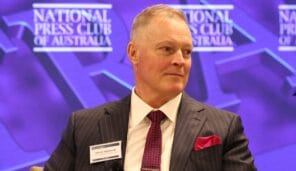
“Some are certainly closer than others to ticking minimum requirements [of the PSC]…to become part of that scheme,” says Mark Brimble, chair of FPEC and head of Griffith University’s finance and financial planning discipline.
“That could create some very interesting circumstance for some of the professional associations out there…having to have that code of conduct that has to be enforced along with the whole range of investigations and penalty regimes that requires.”
Without naming who the likely losers could be, Brimble believes the accounting associations are currently in a commanding position.
“The accounting bodies are in the box seat, because they’re already in the PSC and have an interest in this space in various ways, while none of the financial advice associations are under the PSC’s agenda at the moment.
“The way they’ve framed it is if you want to give advice, then you have to be a member of an organisation that falls under the PSC scheme, that could be a very interesting shuffling of the deck chairs,” Brimble says.
He believes the approach outlined in the report is sensible in that it proposes to using existing regulatory frameworks in a new way instead of creating an all new structure.
“Why reinvent the wheel by getting ASIC to recreate some piece of legislation, then try and administer it, when we’ve already got this?” Brimble says.
The report further echoes the financial sector’s widespread agreement around a need to continue raising education standards.
A further point Brimble emphasises from the PJC report is around the need to bolster key terminology around the terms ‘general advice’ and ‘personal advice’.
“They’ve proposed to move it from personal advice to financial advice, and to take away the term general advice and replace it with sales advice – which is an interesting one. Without saying they’re the right or wrong words, I think the notion behind it is really important,” he says.
Financial planning academia
Looking at financial planning education more broadly, as head of Griffith University’s finance and financial planning program, Brimble expects 2015 will be a very positive year.
In addition to steady growth in its undergraduate programs, the university’s financial planning postgraduate stream is also expanding.
It offers a new masters of financial planning degree, including both traditional on-campus and online versions, along with one provided specifically to AMP through a partnership program.
The financial planning PhD program is also attracting strong interest, with more than 50 students already participating, stretching the university’s supervisory capacity.
“The fact we’re even talking about those sorts of things means we’re looking about a whole broader level of things [in Australian financial advice].
“Making our own substantial contribution to the body of knowledge around financial advice and financial services more generally…senior staff in the industry are quite excited about that,” Brimble says.