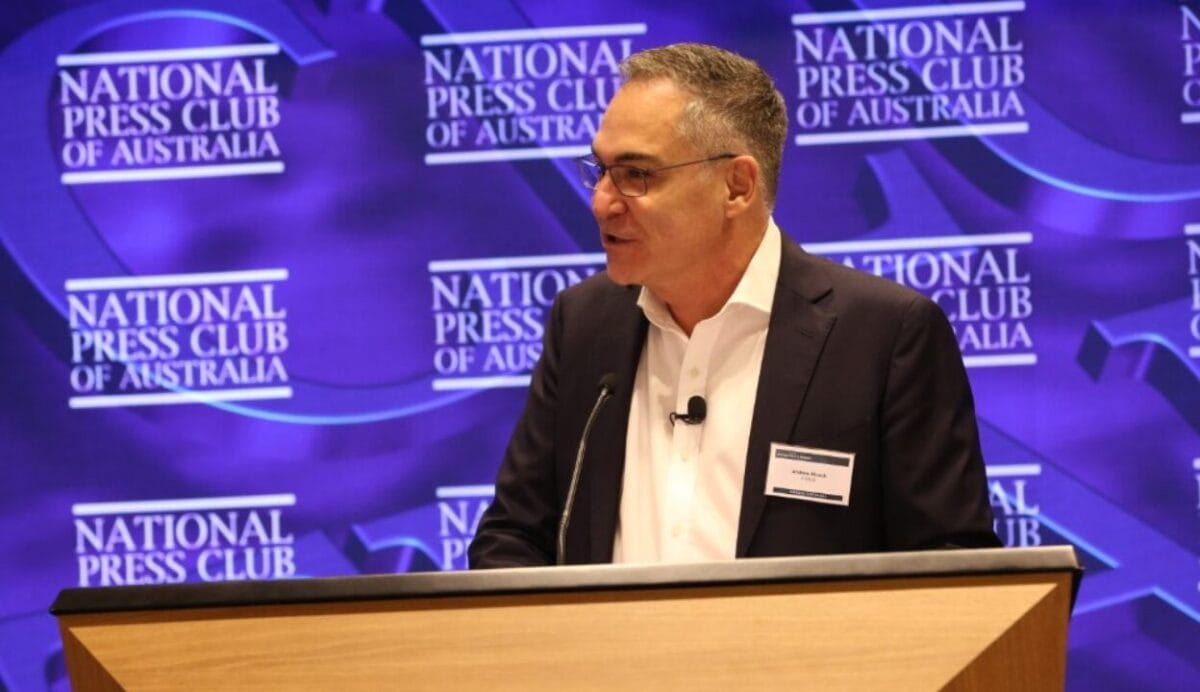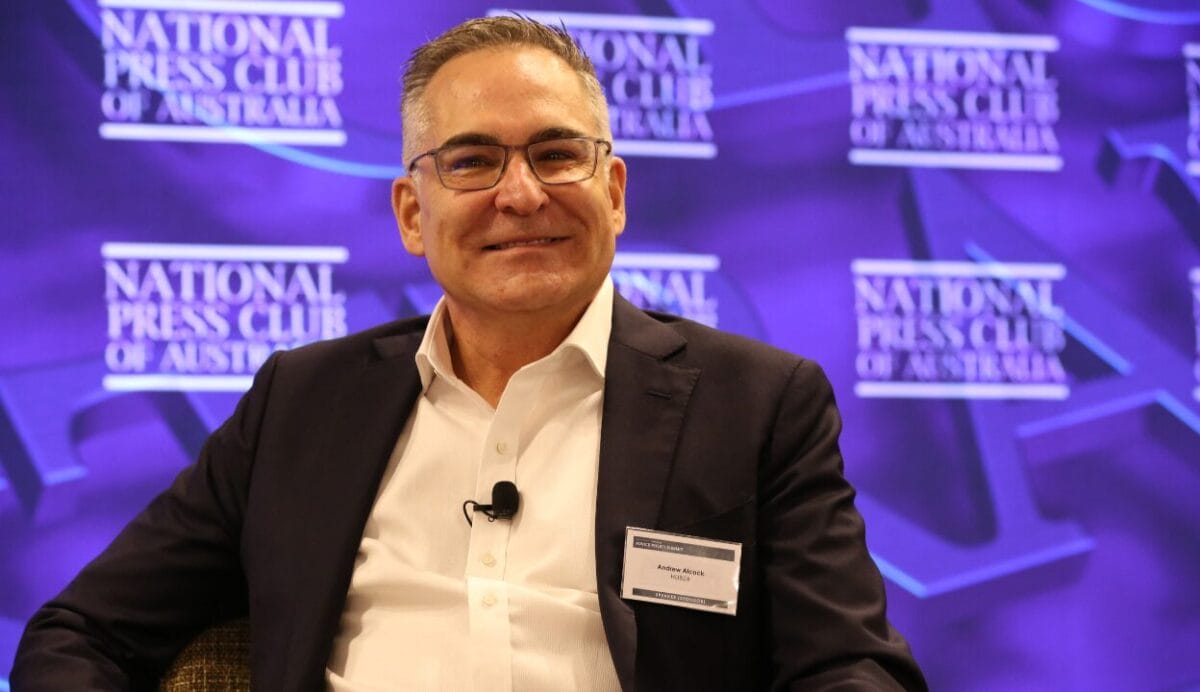

HUB24 chief executive Andrew Alcock has called on the financial advice profession to embrace artificial intelligence as the key to closing a widening advice gap, warning that demand for advice is growing while the system’s capacity to deliver it is not.
Alcock told the Professional Planner Advice Policy Summit that technology, and AI in particular, can support advisers to be far more productive and, in turn, make advice accessible to more Australians, not just those who can afford it.
Alcock said Australia’s superannuation system is undeniably a success story – in the accumulation phase, at least – but it has become complex, and complexity has created a problem that the financial advice profession has yet to solve at scale.
“Demand for advice is growing,” he said.
“Complexity is increasing. The gap between Australians who need advice and those who can access it is getting wider, and that’s a really sobering statement to say, when you think about the purpose of our industry.”
The system is actively failing the people it was designed to serve as they consider financial decisions across super, retirement, insurance and wealth transfer issues. And, in the absence of affordable and accessible advice, they’re increasingly looking to other places, including finfluencers, and becoming more vulnerable to falling prey to scams and fraud.
The advice gap is beginning to attract the attention of opportunistic investors who understand the opportunities that will arise as steps are taken to close it.
“We’ve got offshore dollars coming into this country investing, private equity investing into advice businesses, because they see an opportunity in disrupting the industry,” Alcock said.
“They see an opportunity to improve a business model or make a profit by lowering costs or increasing revenue or seeing more customers. So that’s happening in our country. We need to think about how we increase that productivity for the benefit of Australians, not just for the benefit of commercial profits.”
Alcock said the core of the problem is structural and the current model simply does not scale.
“Advisers are stretched, through a lack of productivity and increasing complexity. [Advice is] becoming a luxury item. We need advice to be accessible to all Australians, not only those who can afford it.”
Technology is not the threat
Advisers should avoid thinking of technology a threat – as something that might replace them – but rather, see it as a tool to empower them to be more what they got into the profession to be in the first place: providers of face-to-face, personalised and highly valuable professional services.
Alcock said parts of the profession have already missed one wave of technological investment and cannot afford to miss another, and artificial intelligence could be a kind of technological lifeline.
“There’s a technology revolution underway, yet we’ve missed the boat already on the current technology set, or the previous technology set, in many ways,” he said.
“Hopefully this new technology set, called AI, can be a help for us to catch up. We can choose to be scared about it. We can choose to worry about it, or we can have a go. We should embrace it. It should be an opportunity for us.
“I don’t think advisers will be out of a job. I don’t think our industry will be out of a job. If you look at what we do, we’re in a highly regulated environment. People require trust. They require connection. We sit on a whole lot of infrastructure that AI just can’t replicate.”
Alcock said adviser-client relationships can’t easily be reduced to something technology can simply replace. There are things technology does extremely well, and there are some things that will remain the domain of the humans.
“Trust and relationships remain the foundation of an advice profession,” he said.
“Advice is relationship-driven. Clients need certainty and confidence and human connection. Now, that may change over time, but at the core of it, it’s required.”
Doing the heavy lifting
The real opportunity in adopting technology is to remove the friction that stops advisers spending time with clients, Alcock said.
“Functional advisers provide a critical service. They are constrained by admin and compliance. Tech can create efficiencies, increase productivity and enable them to spend more time with more clients,” he said.
“Platforms have done a great job of making the advice implementation faster, better, smarter, but the friction is in other parts of the process. It’s in seeing a client, gathering information, formulating advice. They’re the areas we need to work on across this industry to make advice more accessible.”
The benefits of getting the mix between technology and humanity just right will be measured in more than just the increased profitability of advice firms, or in the improved financial outcomes created for individual clients.
“If we increase productivity for advisers, will advice practices just be more profitable, or will we deal with that social cause we have?” he said.
From burden to opportunity
Alcock said AI is already reshaping how advisers work, including in areas that really matter for clients and advisers alike.
“Imagine a world where an adviser has access to information and AI is helping us gather that information across an ecosystem from many different sources, [that it’s actually] reliable, and you can work with it,” he said.
“A simple thing, like using automation in our business to help with common advice strategies, re-contribution strategies, things that used to be very difficult to do for people who are approaching retirement or in retirement. To be able to implement them overnight on our platform using technology, it’s actually making that faster. A process that used to take weeks is faster.”
Alcock said the compliance burden on advisers is being significantly lightened.
“We use AI to actually help that process make it more streamlined,” he said.
“In fact, we won an award for fee consent, which I think is an embarrassment for our industry, that you can win an innovation award on a compliance initiative because you made something easier.”
Nirvana is an advice ecosystem where technology handles the burdensome, difficult, repetitive and dreary aspects of processes and compliance, and advisers – and other advice firm staff, for that matter – get to do more of what they enjoy and are really good at.
“We need scalable systems and productivity that free advisers to spend more time with clients,” Alcock said.
“Just as our nation requires productivity to ensure its future, to ensure that we have a great, sustainable country where productivity is driving better living outcomes for our citizens, in the same way we need productivity in our advice service and advice industry to ensure that people have a sustainable retirement as well. It’s up to us.”