


Somewhere between the general information and intrafund advice offered by superannuation funds and the full-freight holistic advice offered by professional financial advisers there lies difficult terrain to negotiate.
It’s the space where advisers struggle to build profitable businesses serving clients with relatively straightforward needs, and where industry funds fear losing members to advisers who need to move clients out of industry funds to justify (and generate) advice fees.
The losers from this are the millions of fund members who might benefit from receiving financial advice but can’t access it or can’t afford it, or both. With the Delivering Better Financial Outcomes reforms initially slow to arrive and now apparently stalled, other mechanisms need to be developed to lift supply and bridge the so-called advice gap.
Super funds themselves could scale up their advice operations, but it takes time and is expensive; or they could refer more members to external providers but remain wary of dealing with advisers and licensees whose objective they believe is to roll members out of their industry funds.
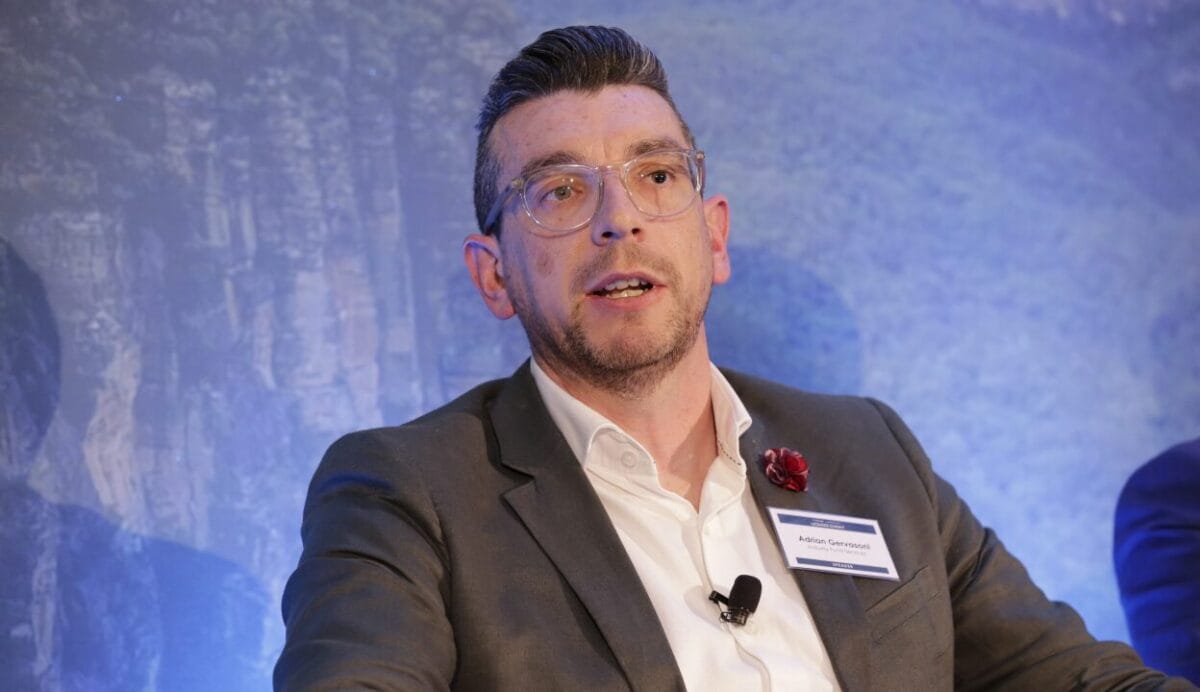
Industry Fund Services executive manager advice services Adrian Gervasoni says there’s space in the current line-up of licensee offers to support advisers who want to provide relatively simple advice, backed by systems that are already proven to work in the industry fund ecosystem. By making those systems and processes available to external advisers – creating an advisory force authorised by a “friendly” licensee – it’s also creating a bulwark between funds and the advisers they’ve tended to avoid.
Initially such a bulwark will be modest. The IFS service formally kicks off in July, and includes advice technology, audit, appointment booking, and training. Gervasoni says 35 to 40 advisers have registered interest in the offer, and IFS will be happy if as few as 10 take it up at launch.
IFS already authorises advisers employed by super funds, but with those funds not scaling up their own advice offers, extending licensee services to self-employed advisers is a natural extension, and potentially taps a new revenue stream. Gervasoni says IFS is expected by its industry fund-owners to be profitable.
“We’ve sold off a number of businesses over the last decade or so,” he tells Professional Planner. “We haven’t had to ask shareholders for money, because we’ve had these asset sales. The imperative is, this has to be profitable, albeit modest.”
Decades-long evolution
The IFS offer is the latest step in the decades-long evolution of how advice and industry funds co-exist. It’s not lost on the broad advice community that for decades industry funds engaged in a pitched battle with advisers, whom it claimed did not act in members’ best interests because they were paid commissions for selling investment products (with the incentive to roll members out of industry funds into commission-paying alternatives); and now IFS itself wants to license advisers not employed by or embedded within funds.
“This is to sit in the space [of] who provides a mum and dad advice if their fund isn’t scaling their offer to fill that gap,” Gervasoni says.
“It’s not so much about the license… it’s we’ll give you the operating model. We don’t do anything other than mass market advice, so the technology that we give the advisers to use, and our approach to audit and risk monitoring, it’s all focused around superannuation and retirement. We think that could be useful at helping an adviser run a profitable practice serving this market.”
Gervasoni says advisers on the IFS licence will not be “just limited to working with industry funds”.
“[But] we couldn’t support an adviser that wanted to build their own product, for argument’s sake an IMA or SMA. We don’t have that capability in-house to effectively manage that risk, and so we’re just saying that’s just not something we would support. We don’t support asset-based fees. Review arrangements would want to be transactional.”
IFS initially described its licensee service as “the Independent Adviser Licensing Model” but modified that description to “the Trusted Advice Model” to avoid complications connected to the legal definitions of “independent”, “impartial” and “unbiased” contained in the Corporations Act.
“Rather than bring heat on an issue, I just didn’t want to distract from what this is about,” Gervasoni says.
“Technically, there’s nothing about us that would preclude someone being deemed independent. It’s going to come down to that adviser themselves, and is there anything else about their business arrangement that we’re saying isn’t a deal breaker for us to be licensed, but means that you can’t claim to be independent.”
Two sides of the coin
Attracting advisers to the licensee offer is one side of the coin. The other side is convincing funds to refer members to those advisers. Gervasoni says each trustee has its own process and idiosyncrasies in vetting advisers; a vet-once-refer-often approach with a known and trusted licensee could streamline the process considerably.
“Each trustee [has] their own process to get member information, advisers getting paid. Every fund has their own rules and process. That’s stuff we could solve.
“If I could get funds to agree that if we license the planner that should give [them] all the comfort in the world that they are trustworthy planners, to serve your members’ needs, they’re probably going to have to audit us, but it’s better auditing us once and not the individual planners again [and again]. They save themselves some unnecessary costs.”
Editor’s note: This article was edited on 17 February 2026 to correct Adrian Gervasoni’s title.











The problem with many industry funds is they can’t bear the thought of members leaving. Their view is the industry fund is a perfect fit for everyone, irrespective of personal circumstances. An adviser has an obligation to educate people so they can make informed decisions. For example, give them all the pros and cons of retail funds, industry funds and self managed super funds. Then let the person decide for themselves. In most instances the typical mum and dad will be well served by staying in their industry fund, but there will be instances where a retail or SMSF is the option that best suits their needs. It has nothing to do with “generating advice fees” and to state so is nothing less than mud slinging. Until the industry fund accept their product is not for everyone this problem will continue. What they’re after is sale people that will sell their product only, irrespective of whether it’s right for the member. I see industry funds as having a product that is worthy of recommending. It’s just a matter of building a relationship with an adviser, not a sales person. What industry fund lose to member choice exits they would pick up with new business referrals from the adviser. So while an adviser will assist member exits, where it is the chosen path by the member, they would pick up new business where it fits another person’s needs. It’s all about the industry fund becoming a preferred product on the AFSL approved product list. There is no reason that cannot happen. But such a relationship is not wanted by the industry funds. They want it all their way!