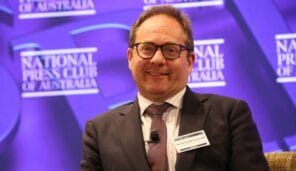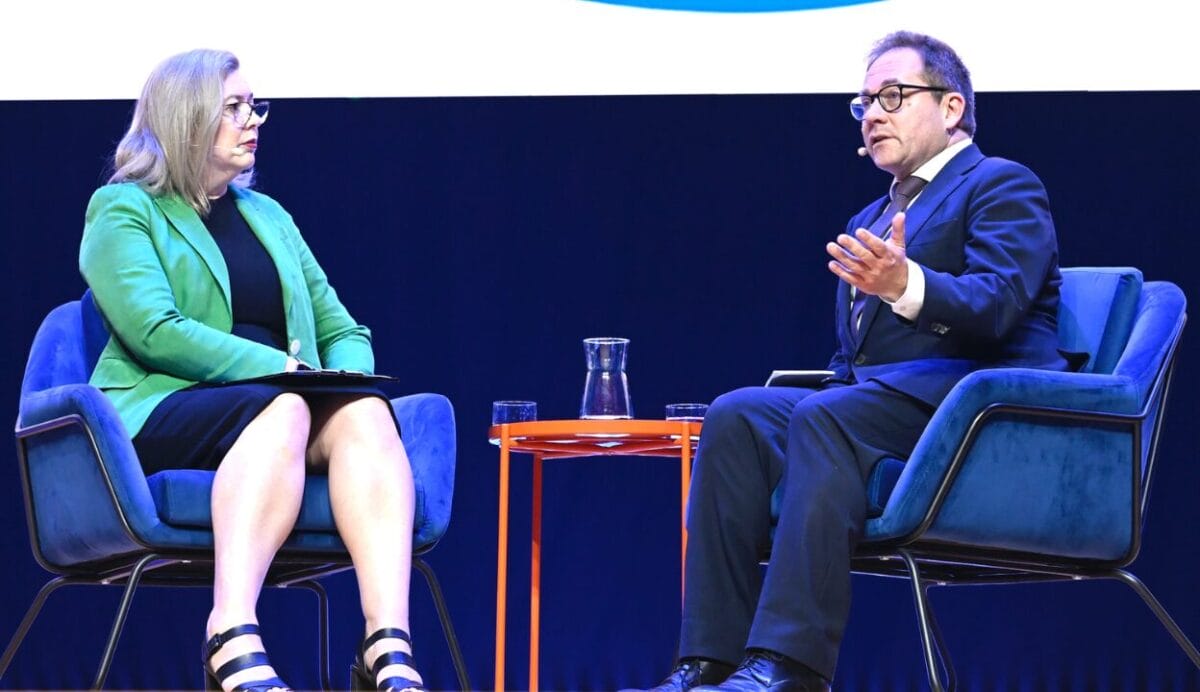

Minister for Financial Services Daniel Mulino says a decision on how the CSLR special levy will be funded is coming within weeks.
Mulino acknowledged to the FAAA National Congress in Perth on Wednesday morning that the CSLR is “coming under strain”.
“[For] the FY26 [levy] we’re not looking at a long period of time before I can work through that, a matter of weeks but I can’t give a particular time,” Mulino said.
“When I work through that particular levy, I’ll also be trying to think through some of the more systemic issues. I’m not going to be looking at FY26 in isolation, I’ll be looking at more systemic reforms.”
The CSLR announced the initial estimate for the FY27 levy earlier this week which has confirmed suggestions that it would be surpass the $120 million mark, but that early Shield and First Guardian AFCA determinations could double the levy.
The legislation that governs the CSLR dictates that a special levy must be called when the subsector cap surpasses $20 million and Treasury is already consulting on options due to the FY26 levy having already broken the cap.
Mulino said the current thinking is around looking broadly across the sector to fund the CSLR, which comes after comments in the Australian Financial Review suggested he would levy super funds, and comments at an FSC event in July where he was open to expanding the levy beyond the financial advice sector.
But the minister conceded this has been met with significant pushback.
“I can just tell you that just about every part of the financial services feels frustrated that they’re involved at all,” Mulino said.
“It’s a situation where there’s no straight-forward answers and where nobody much wants to be involved contributing that to that levy. That’s why I’ve publicly stated that an option is to try spread it quite widely so as to deal with these issues of not putting too much burden on any particular part of financial services.”
The Association of Superannuation Funds of Australia and Super Members Council have both pushed back on their members covering the levy.
In a statement to Professional Planner, Super Members Council CEO Misha Schubert confirmed the lobby group has rejected the bid for cross-subsidisation and reissued its call for stronger uniform consumer protections across the system.
“It’s not really fair to ask 12 million low- and middle-income Australians in the highly regulated super system to pay for compensation elsewhere in the financial services system,” said Schubert, who will be speaking at the Advice Policy Summit in February.
Financial Advice Association Australia policy general manager Phil Anderson told the congress on Tuesday afternoon that super funds will get drawn into a levy one way or another – Netwealth had already applied for government assistance to remediate First Guardian clients on its platform and it’s expected that the government would levy super funds to fund the levy as was done after the collapse of Trio.
“The CSLR is the scheme of last resort to the extent that super funds have created this problem by putting investment options on their menus that should never have been on their menus,” Anderson said.
“They need to contribute to fix this problem. We won’t back away from endorsing that and supporting that. that is one thing that should happen before it ends up with the compensation scheme of last resort.”
Minor differences
Despite the pushback from ASFA and SMC, FAAA chief executive Sarah Abood told the plenary session on Tuesday afternoon that the association has been working quite well with both those associations on advocacy work on other issues, including advice reform via the Delivering Better Financial Outcomes.
“There’s a group of us that’s getting together increasingly regularly with shared interests in ensuring that the DBFO legislation is progressed and its progressing in a way that we all think is going to be in the interest of consumers and our members,” Abood said.
“That’s going really well. As we get to know each other better, we’re realising more and more how much common ground we do have.”
Abood said the relationship with consumers, particularly Super Consumers Australia, has improved in the four years since she became the CEO of the association.
“They are recognising that our members acted in the interests of consumers and that’s been the change I’ve seen accelerate,” Abood said.
“Whenever we have common ground with someone else, we get another voice saying something we think is important for ourselves and our clients and consumers more broadly.”
During a media briefing on the sidelines of the congress on Wednesday morning, Abood played down any notion that the different positions would have any impact on industry groups’ collegiate relationship.
“I’m not concerned about that – we won’t always agree and that’s an area we don’t agree and that’s fine,” Abood said.
“There’s going to be areas where their advocacy for their members is going to take them in different direction to our advocacy for our members and that will happen from time to time. It hasn’t been much the experience that’s the majority of our interactions, there’s plenty we want to work together on because we do agree on what the outcomes are.”
Making it sustainable
Abood told the congress on Tuesday afternoon there is going to be a need for a special levy “into the foreseeable future”.
“And that’s without knowing about what financial firms might collapse in two years’ time, so we’ve got to put [the CSLR] on sustainable footing,” Abood said.
“People who did the wrong thing who actually gave rise to the need for that compensation are pursued to the limits of their resources before that bill hits people who had nothing to do with it and there’s plenty of evidence, we’re not doing that right now.”
FAAA government relations manager George John said the government appreciates it’s in their best interests to make sure that this scheme works so it doesn’t need to be re-visited every year.
“The announcement we’re expecting from Minister Mulino we think will set up some of kind of framework for what will happen above that subsector cap for the years moving forward,” John said.
Platform culling
In light of the collapse of the Shield and First Guardian collapse, the minister said platform governance and more scrutiny of investment options are important.
“Prevention is far more better than compensation,” Mulino said, adding that relying on compensation schemes isn’t sustainable.
“We are stepping through policy options carefully and as a part of that, I’ve got my department working on a wide range of options. I’ve written to APRA around ways in which can be regulated in a way which achieves more prevention through stronger onboarding and due diligence arrangements.”
When asked at the media briefing – which was held after Mulino’s Q&A session – whether enhanced restrictions on investment options on platforms would adversely impact advisers Abood said there was “a danger” of an overcorrection.
“Macquarie and Netwealth have both taken a whole lot of options off their platforms and it looks clear that’s a response to the risk that they perceive in this market,” Abood said.
“Many advisers use them because of that investment choice and because they’ve got fund managers that they work well with. I don’t think there’s been a lot of scrutiny or awareness of those products are approved or not approved so that’s going to be a good outcome of this process.”