



Micro-licensees would be required to go under more rigorous accreditation and advisers would be more accountable for their conduct under broad recommendations suggested in a green paper issued by the Financial Services Council.
The Value and Future of Advice Licensing green paper, which is backed by research from CoreData, recommends introducing an adviser skills and performance registry, an accreditation framework for third-party compliance service providers and a tiered licensing framework.
Traditionally representing retail super funds and asset managers, the FSC has since grown to include membership from major licensee groups Entireti, WT Financial Group, Count and Rhombus Advisory.
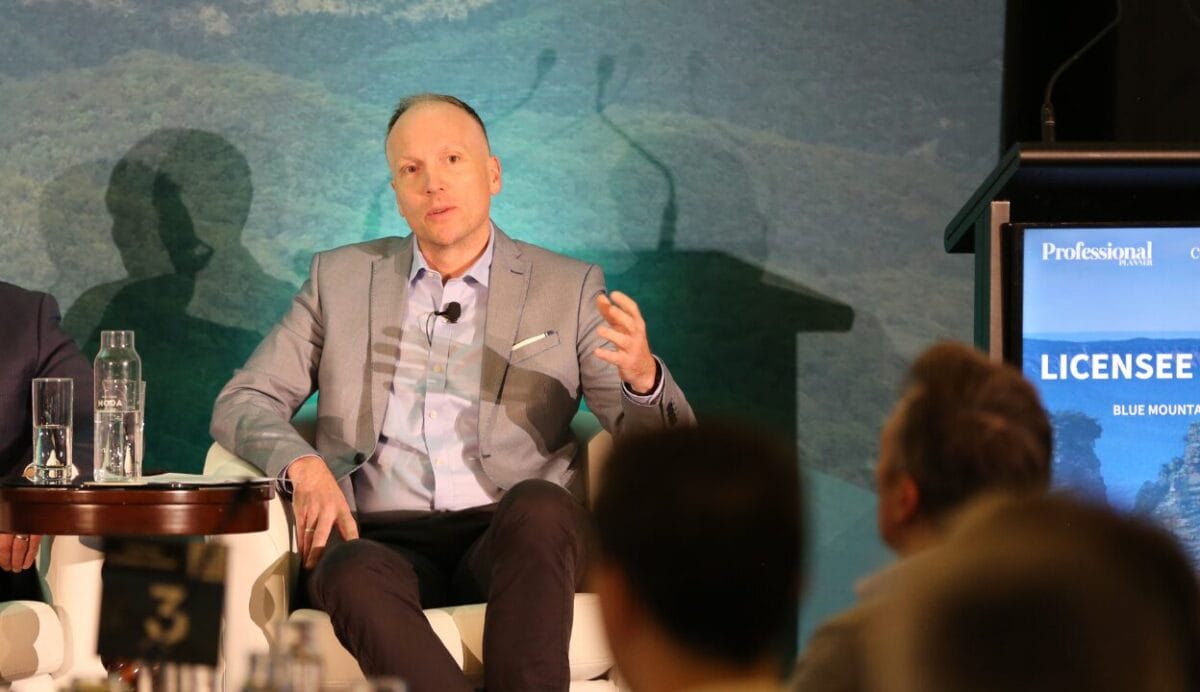
Challenges with advice licensing have long been noted by this group – and were once again a key topic at the recent Professional Planner Licencee Summit – which has consistently argued that licensees aren’t adequately remunerated for the risk they take on and that it’s too easy for advisers to leave and become self-licensed and avoid compliance scrutiny.
The paper noted that while adviser numbers have declined overall, more than 450 new micro AFSLs (defined as firms with fewer than 10 advisers) have been approved since 2020, but compounding this issue is ASIC’s limited capacity to effectively monitor and enforce compliance across all licensees.
“With around 6349 total approved AFSLs of varying size and complexity, the regulator’s resources are stretched thin, creating the potential for high-risk firms to operate without adequate oversight,” the green paper said.
The paper said that while individual practitioners must comply with the Best Interests Duty and Code of Ethics, their AFSL is responsible for supervision, training, and remediation. This in turn distorts the market because AFSLs are held accountable for the conduct of their advisers even in cases where the adviser may be at fault.
“This misalignment of accountability creates undue financial and operational risks for licensees, making it costlier and less attractive to hold an AFSL,” the paper said.
“Conversely, advisers, while subject to individual accountability standards, are not fully empowered to take ownership of their professional responsibilities. This can dilute their sense of personal accountability and weaken the professionalisation of the advice sector.”
Instead, a potential middle ground would involve further reforms to shift liability and responsibility closer to individual practitioners while maintaining necessary consumer protections.
“This could include a greater role for professional associations in accreditation and discipline, alongside targeted regulatory adjustments to ensure AFS licensees are not unduly burdened by adviser misconduct,” the paper said.
The green paper recommended the government could introduce a clear, tiered licensing framework that tailored obligations based on the size, risk profile, and service scope of the entity.
“This could create a level playing field for licensees based on capital invested, complexity of advice being provided, training, oversight, and workplace engagement,” the paper said.
Additionally, the government or industry could establish an accreditation framework for third-party compliance service providers that would require them to meet defined standards of competence, governance, and accountability.
The green paper suggested the introduction of a “practicing certificate model” which advisers would be required to obtain to confirm their compliance with registration, continuing professional development (CPD), and ethical standards.
“By making advisers more accountable for maintaining their professional standing, this could encourage greater ownership of their actions and ensure that advisers are not only fulfilling regulatory requirements but also meeting the ongoing expectations of their profession,” the green paper said.
It suggested ASIC could introduce an adviser skills and performance registry, creating transparency regarding advisers’ professional conduct and performance.
The aim of the registry would be to give clients, licensees and regulators clear access to records of the qualifications and any potential historical issues of advisers, including responsible managers or responsible persons.
“This system could help prevent the phenomenon of ‘phoenixing,’ where individuals with compliance failings leave a licensee and go on to re-establish themselves under a self-licensed or smaller licensed entity,” the green paper said.
The green paper also suggested the government be able to assess the appropriateness of current cash and capital requirements, but that this should take into account the size of the licensee so smaller AFSLs wouldn’t face undue financial burdens.
ASIC would also be required to exercise proactive oversight of the amount of professional indemnity insurance coverage held by AFSLs.
The paper noted that one of the criticisms levelled at the AFSL regime is that it does not resemble other professions, where others like accounting and law are licensed and authorised individually through an association or another body.
“In this model, there is more accountability on the individual practitioner, who are required to hold their own professional indemnity insurance. It is also accompanied by strong self-regulation through professional associations,” the paper said.
Feedback on the green paper will be used to generate a white paper on the Future of Advice Licensing, with an anticipated release date of early 2026.














Clearly uninformed.
There are two things that the cases in the Royal Commission and the Post-R/C spate of advice failures all have in common., and they are vertical alignment and conflicts of interest.
The paper floats requiring individual advisers to carry their own PI insurance, presenting it as a potential government reform to “create a more direct form of accountability.” While not making this a firm recommendation, the FSC suggests government should “assess the appropriateness” of mandating that advisers be covered individually rather than through their licensee. This proposal fundamentally misunderstands how financial services achieve affordability through scale. AFSLs currently negotiate group PI insurance rates and pool compliance costs across multiple advisers, saving practices $70,500 annually according to the paper’s own data. Individual PI insurance would be prohibitively expensive for most advisers – destroying the cost efficiencies that make advice remotely affordable and forcing thousands more advisers out of the industry. New entrants would find it particularly impossible to obtain affordable coverage without an established track record, further constraining the already diminished adviser supply.
Despite claiming to reduce regulatory burden, the paper calls for extensive new government intervention: a tiered licensing framework, accreditation systems for compliance providers, expanded adviser registries, proactive PI insurance oversight, practicing certificates, and revised capital requirements. These proposals would create additional bureaucratic layers, monitoring oversight bodies, and compliance costs in an already over-regulated industry that has lost nearly half its advisers.
The paper’s most glaring contradiction uses large firm failures like Dixon Advisory to justify concerns about micro-licensees. Dixon was a substantial firm, not a micro-licensee, yet the paper illogically uses such failures to argue for restrictions on small firms without any evidence linking firm size to failure risk.
The compliance evidence directly contradicts the paper’s narrative. Only 10% of smaller licensees reported breaches versus 81% of large ones, and self-licensed firms successfully manage their own compliance with 93% valuing the flexibility. Yet the paper frames the growth of 450 micro-licensees as problematic rather than a market response to adviser needs.
Most damaging is how the proposals would worsen the accessibility crisis they claim to address. The paper acknowledges advice is unaffordable, adviser numbers have collapsed, and regulatory burden drives 70% of client onboarding costs. Yet it proposes fragmenting the efficient licensee model and adding more regulation, which would inevitably increase costs and accelerate adviser exodus—achieving the opposite of improved accessibility. The paper never explains how adding layers of cost and complexity would somehow improve access to advice; it simply assumes more regulation will help.
The paper’s comparison to accounting and law professions reveals a fundamental misunderstanding of financial advice as a service. Unlike lawyers who charge $400-800 per hour for discrete transactional work, or accountants who perform annual compliance tasks, financial advisers provide ongoing relationship-based guidance covering investments, insurance, retirement planning, and life transitions over decades. The average Australian cannot afford legal services precisely because of the individual practitioner model—most people only engage lawyers for crises like divorce or crime. Financial advice, by contrast, aims to be a democratized service helping ordinary Australians build wealth and security. The paper ignores that lawyers and accountants serve primarily businesses and wealthy individuals, while financial advisers aspire to serve teachers, nurses, and tradies planning for retirement. Furthermore, legal and accounting work involves standardized procedures with predictable risks, while financial advice encompasses unpredictable market outcomes and long-term projections where client losses can occur despite good advice. Law and accounting built their professional models over centuries of evolution, yet the paper expects financial advice to transform overnight. Forcing advisers into an individual practitioner model would transform financial advice from an accessible middle-class service into another elite profession available only to those who can afford to pay lawyers’ rates—completely defeating the purpose of helping everyday Australians achieve financial security.
Literally the dumbest, self interest thing I have ever read. RC showed Big licences were the problem. I left a 40+ monstrosity of a dealer group that was an absolute rip off to be my own licence. You seriously think that large groups can monitor 400 completely different businesses properly. What a ridiculous article.