


A great “investment menu clean-up” is underway among advice and wealth management businesses around the world, driven by merger and acquisition activity, a desire to magnify investment conviction and to reduce client fees and, in Australia, by renewed regulatory focus on product failure.
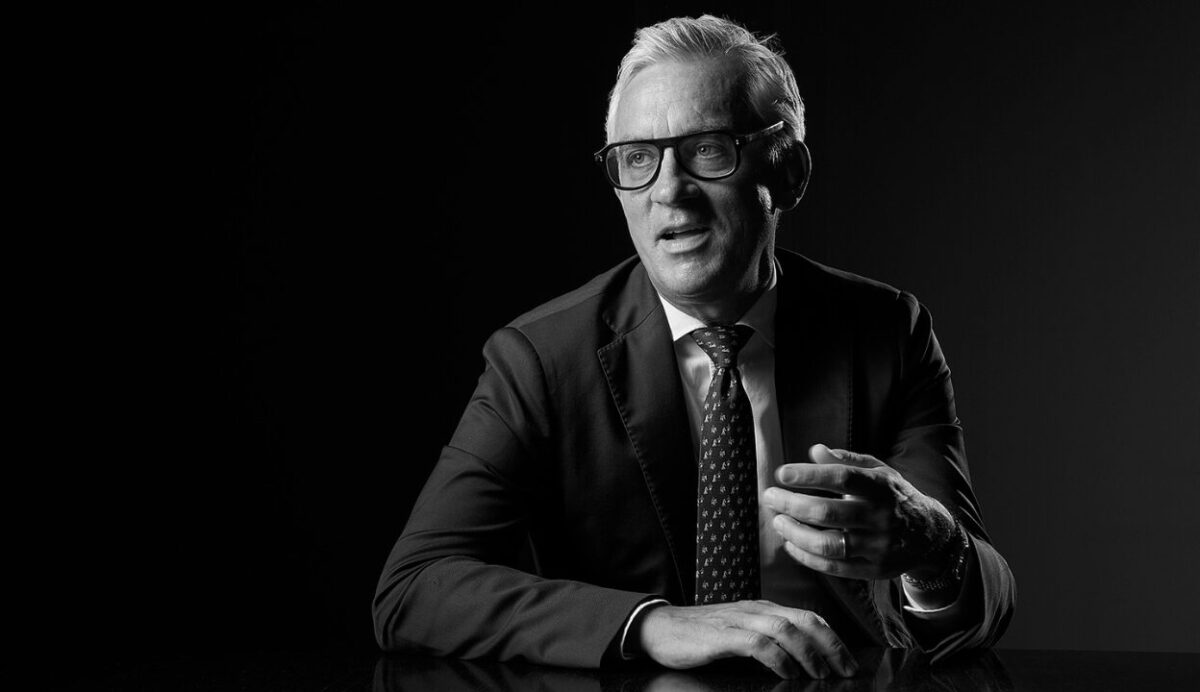
Bradley Budd, head of wealth at investment consultants bfinance, says the firm first observed the phenomenon in the US and subsequently has seen it sweeping across Europe and Asia, and he fully expects the same process to get underway in Australia, if it is not already happening.
“The first observation that we made of this was in the US market, where there’s a huge amount of aggregation going on and a lot of M&A happening between RIAs [Registered Investment Advisers] and wealth management groups that essentially, as you can imagine, ends up with, let’s say, a clash of investment menus as these firms come together,” Budd tells Professional Planner.
“What we’ve observed more broadly, as we start to then take this conversation to other parts of the globe, is that actually firms… that aren’t going through aggregation but rather are doing some form of, let’s say, health check and clean-up, are also attacking this topic in terms of understanding [whether] their investment menu is still fit for purpose, or [whether] some form of clean-up is required.
“And in more and more conversations that we have, this then starts to spread from Europe through into parts of Asia.”
Budd says that “given the recent regulation within Australia, which I won’t claim to be an expert on although I am familiar with, it’s just something that will spread that way as well”.
In Australia, reviews of investment product menus are also being influenced by the closer attention of professional indemnity (PI) insurers in the wake of high-profile product failures such as the Shield and First Guardian master funds, and by growing concerns over wholesale and retail private credit funds, as flagged by ASIC.
InFocus head of strategic relations, Matt Fogarty, said at the 2026 Finance Industry Awards, hosted by the Institute of Finance Professionals of Australia (IFPA) on 5 October, that that scrutiny is ramping up on product, both on platforms and on licensees’ APLs in the wake of Shield and First Guardian.
Wotton Kearney partner Dean Pinto said at the same awards that the collapses of Shield and First Guardian are not yet having a direct impact on premiums, but insurers are nevertheless “going to look more closely now at your APL. What’s on your APL? How have you tested what’s on those APLs?”, and approved product lists containing products that don’t measure up are likely to lead to higher PI insurance premiums for advisers using them.
Switching clients between products is contingent on more than lowering fees and enhancing investment conviction. The ultimate decisions must be made in line with clients’ goals and objectives, and careful consideration of tax implications and costs.
Budd says clean-up of an investment menu might be disruptive for clients’ portfolios, but the benefits commonly include greater investment conviction applied across portfolios, as well as the potential for lower fees as greater funds under management is aggregated in fewer products.
“The disruption to the client is actually positive disruption as a result of strong governance by the firms that are leading this,” he says.
“From the projects that we’ve seen around the globe, and this is speaking to some of the projects that we’ve done in the US and Europe, the amount of fee savings achieved through this type of work is significant.
“If I give you an example for one of the asset-class clusters that we looked at, by going through a consolidation exercise, the fees were reduced by 18 per cent, and through the same process the Sharpe ratio was also enhanced by 18 per cent.”
Budd says the product sets used by advisers and wealth managers “compared to five, six, seven years ago, are much more complex”.
“There is a lot more product in the market. There are a lot more asset classes available to private wealth investors, and so the thing that we see is new product earns its place, old product stays there by default, and so what you end up with is a growing menu, which is no longer serving your clients as well as it could.”
He says a client the firm worked with in the past year or so had clients invested in the same investment through seven different share classes.
Budd says cleaning up an investment menu starts well before anyone decides which products to keep and which to terminate, and the first task, particularly in a merger, is deciding on which party’s investment philosophy should prevail.
“There needs to be a determination that’s made at some point as to which of the philosophies or the ethos and the investment suite is the right one for the end client,” he says. And this sometimes creates friction from the get-go because each of the merging entities “will be protective of its own work”.
The organising principle is that “you have to manage your menu as a portfolio in its own right”, and cleaning up the list “comes much later, in our observation”.
The first step is that a firm must understand what its philosophy is and how it wants to be investing clients’ capital. Next is grouping the menu into clusters, which is “often the difficult part”, Budd says.
Firms must “take a candid look across the 1000, 2000, however many thousands or hundreds of investments that you currently have and bucket them into clusters”, he says.
Each might hold “anywhere between 70 to 100 line-items”, and the aim is not to whittle it down to just one. On the other hand, “the adviser doesn’t necessarily need 100 options doing the same thing to be able to serve their clients well”.
“Actually, having a level of conviction… is a lot more compelling,” Budd says.
Only then comes the assessment of one product versus another. The ideal result is “a much leaner but higher-conviction view on the market”.
“And the byproduct of that is that you end up paying less fees because you’re able to push your scale, which is something that the industry as a whole, and this is a global phenomenon, is struggling with a lot more.”















Leave a Comment
You must be logged in to post a comment.