

One of the biggest issues undermining the long-term financial sustainability of the Compensation Scheme of Last Resort is that it compensates investors not only for capital they may have lost due to poor advice, but also for investment returns they could have received if they’d invested somewhere else “but for” the advice they received.
These “counterfactual” claims can add significantly to the ultimate compensation paid to an investor and have been a significant bone of contention within the advice sector for a number of years.
Financial Advice Association Australia chief executive Sarah Abood flagged the issue in late 2024, when she told the association’s congress in Brisbane that “client losses are defined not as money lost, as you would expect, but they’re defined as the amount they would have earned had they been invested in, let’s say, the Vanguard balanced fund” instead.
And but-for determinations have led to some perplexing outcomes. One case in particular, against Dixon Advisory, raised the FAAA’s ire. An Australian Financial Complaints Authority determination in case 12-00-1008199 found the value of the client’s investment in Dixon products increased from $1.03 million in January 2013 to $1.06 million 10 years later.
However, under AFCA’s methodology it was ruled their financial position would have improved to $1.34 million if they’d invested somewhere else, and compensation was calculated at more than $272,000 – above the CSLR compensation cap of $150,000 and even though the investor didn’t lose any capital.
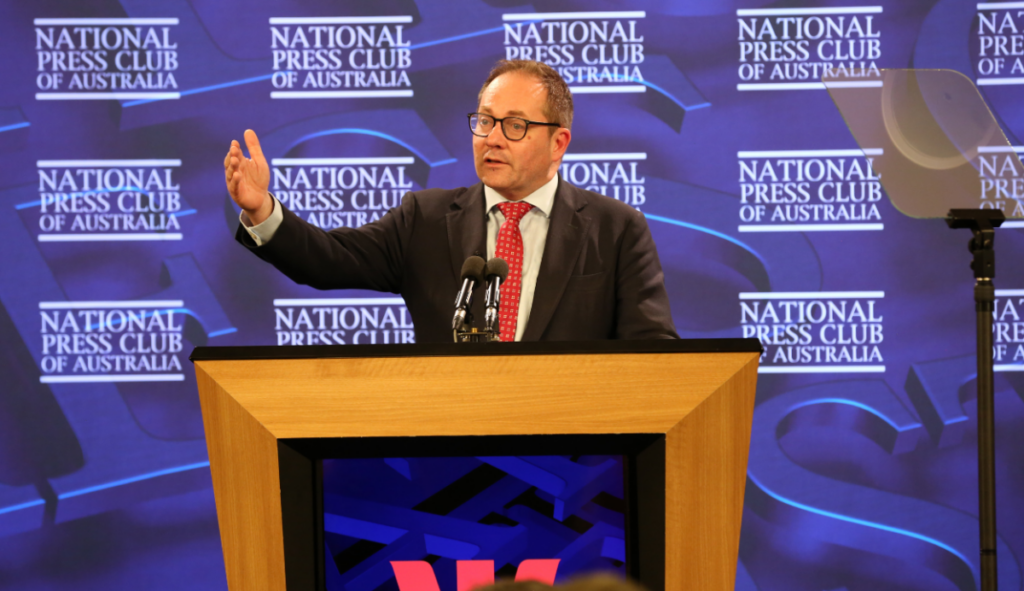
The Assistant Treasurer and Minister for Financial Services, Daniel Mulino, announced on August 19 in an address to the National Press Club that “compensation under the scheme will be limited to actual investment losses rather than hypothetical losses for applications made to AFCA after 30 June next year”, as part of a package of reforms which also includes how levies are calculated and allocated across the financial services sector, designed to put the CSLR on a sustainable footing
It was subsequently reported – including by this masthead – that AFCA would cease making but-for determinations on complaints lodged after 30 June next year. In fact, that’s not how it will work. AFCA will continue to make them, and – subject to the final legislation – a licensee will still be liable to pay them.
When a determination goes unpaid
It’s only claims that drop into the CSLR from which “but-for” amounts will be excluded, and that’s what the minister meant in his August 19 speech. The proposed change is about what happens when an AFCA determination goes unpaid and an investor subsequently seeks compensation from the CSLR.
AFCA has consistently defended its approach to determining compensation. In December 2024, AFCA lead ombudsman of investments and advice Shail Singh told Professional Planner that its methodology is consistent with existing law.
Singh said that “outside the context of the CSLR, if there’s a breach and [an investor] should have been in something else and that makes a difference of [$200,000], the law would say that’s what should be compensated”.
Singh said ultimately the compensation determination is about what the consumer would have been invested in, had the correct advice been provided.
“The terminology ‘but for’ can be used, but that’s shorthand,” Singh said. “What that says is, ‘but for’ the [advice] failing, where would the consumer have invested?”
That’s what the government is trying to address. AFCA can continue to determine the full amount of a consumer’s loss, including but-for compensation, but the CSLR will only compensate eligible capital losses up to its $150,000 cap.
A submission by the Association of Superannuation Funds of Australia to the Treasury CSLR consultation says that “AFCA would continue to apply its existing counterfactual approach, meaning the overwhelming majority of successful complainants will continue to receive compensation directly from their financial services provider – including, where appropriate, any counterfactual adjustment – without recourse to the CSLR”.
What it all means is that an industry-funded scheme will no longer compensate consumers for investment returns they might otherwise have earned, even where they hadn’t suffered an actual capital loss due to poor advice.
Two tiers of claimant
But it also appears to create two tiers of claimants: one tier, which receives defective advice, suffers a loss (or perhaps didn’t), and who misses out on better investment returns elsewhere, and will be compensated by a financial services provider for both; and a second tier, who may find themselves in exactly the same situation but the licensee involved is unable to meet its liabilities, and will be compensated only for loss of capital.
But a minister can please some of the people all of the time, and all of the people some of the time, but cannot please all the people all the time and, accordingly, the proposed carve-out of counterfactual losses from the CSLR has upset the consumer lobby.
In a statement in August, CHOICE head of policy Morgan Campbell said but-for determinations follow “a long-established legal principle for assessing compensation”.
The funding problems with the scheme have arisen for other reasons, Campbell said.
“The cost of the CSLR for the financial advice industry is so high because there is so much more misconduct in the sector than anyone thought when the scheme was set up. The financial advice industry should be focused on cleaning itself up, rather than pressing the Government to water down the compensation available to victims.”










Leave a Comment
You must be logged in to post a comment.