Mulino uncommitted to DBFO future as Shield, First Guardian policy response looms

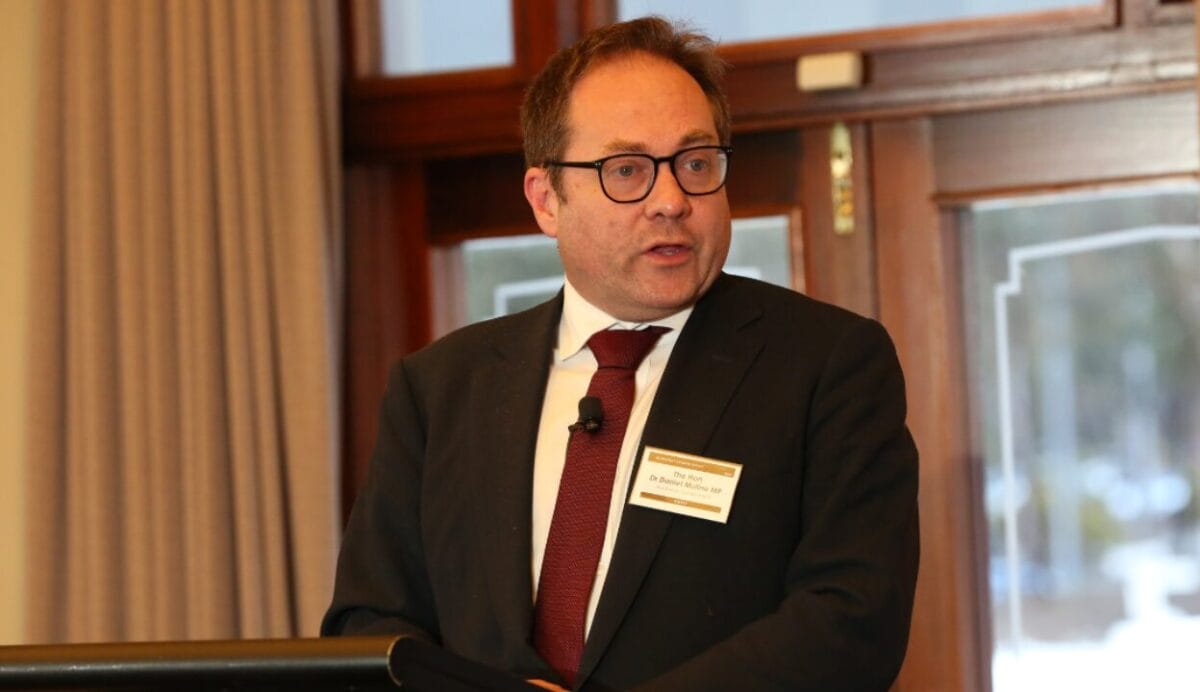
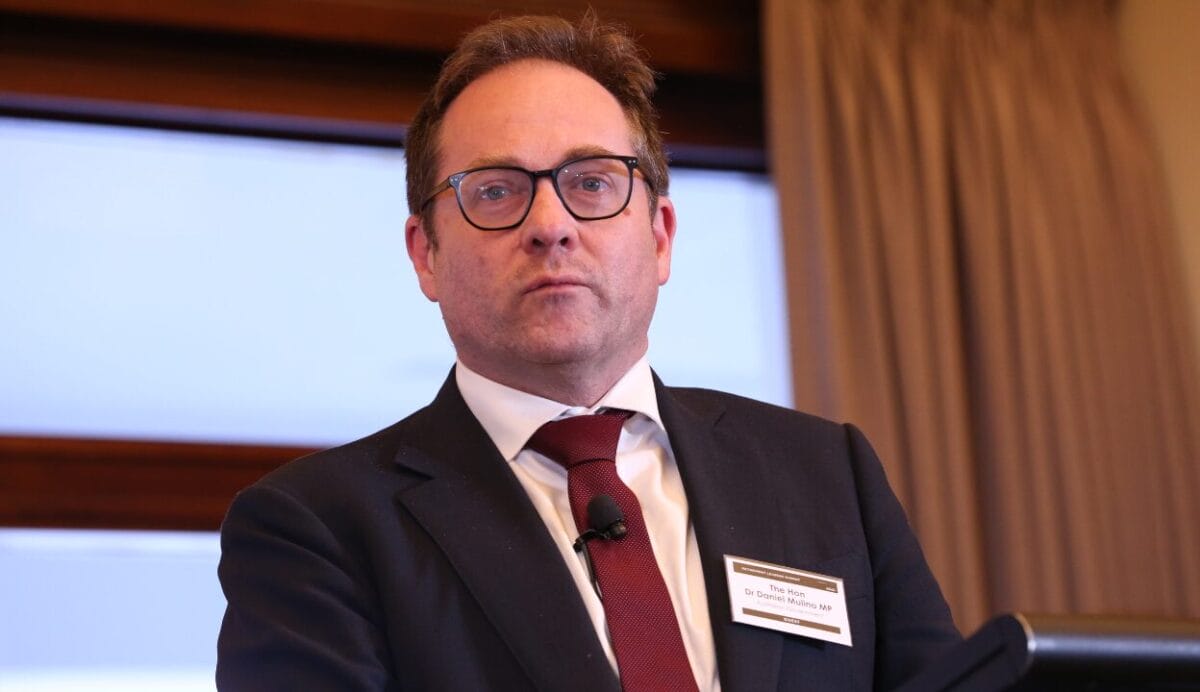
Daniel Mulino. Photo: Harvey McKay.

Minister for Financial Services Daniel Mulino has remained uncommitted to the rest of the Delivering Better Financial Outcomes reforms as the government’s policy response to Shield and First Guardian will be announced next month.

The minister had indicated previously that the $1 billion collapse had caused a re-think around how the government will complete the final DBFO tranches.

Asked at the Insurance in Superannuation Summit, hosted by Professional Planner sister publication Investment Magazine, whether he was still committed to the underlying principle of the legislation, Mulino held back on making a commitment towards the reforms.

“I’d just be careful with how much I commit to,” Mulino said about offering any endorsement to progressing DBFO reform.

“I’m not going to put it that bluntly, but we’re going to be announcing the broader response to First Guardian and Shield very soon.”

The government has launched multiple simultaneously run consultations for policy reform in the aftermath of the Shield and First Guardian collapse, and Mulino said the response to the consultation will be announced in mid-August at the National Press Club.

Additional funding for MISs has already been teased as one of those responses, the minister confirmed.

Mulino said the arrangement was an acknowledgement that the government and the regulators need to do a better job of understanding the MIS space, and that while ASIC and APRA are operating well, they need to think about how they better collect data.

“This isn’t to say we’re going to have real time analysis of every single asset in every MIS, but it’s more that if we look overseas, for example to the UK,” Mulino said.

“They have a better sense of where there are higher risk MISs and maybe where a regulator might want to prioritise their effort.”

DBFO woes

While Mulino was uncommitted to assuring any progress to DBFO, he said there was a set of issues “where people came from quite different perspectives”, and the sector has played a positive role in trying to find the “maximum possible overlap of consensus”.

“There was a great deal of progress that had been made and occurred early in my time in this role,” Mulino said.

“It didn’t include everything in DBFO, but it did include a material set of issues.

“In the aftermath of Shield and First Guardian, that required a re-think of some elements of DBFO in parallel with that. DBFO has remained under consideration and we are going to be announcing the broader response to Shield and First Guardian related matters imminently.”

Mulino also touted the expanded education pathway and said the government is still working through the specific details.

“We also need to make sure that we replenish the pipeline of people going into the profession,” Mulino said.

However, an expanded pipeline to the profession would also work in conjunction with super funds gaining the ability to offer more advice and guidance to members, and the minister hinted the new class of adviser might still be in play despite previously placing the future of the proposed second-tier of adviser in doubt.

“That rationale for the new class of adviser is partly about saying we need a very strong financial advice sector with full-fledged Statements of Advice in many contexts with the guardrails around that, that is important, but there are other contexts where people might want simpler questions answered,” Mulino said.

Insurance standards

The minister said the government will have minimum member service standards for insurance as part of its broader reform package for superannuation funds, which were still under development.

The government announced a consultation on a new set of member service standards for superannuation funds in January 2025 after the previous year was marked by numerous high-profile industry fund member service failings, particularly from AustralianSuper and Cbus.  

“We’re working on legislation that will more clearly define standards for certain aspects of the delivery of services in super, in light of some of the issues that we’ve seen in the press,” Mulino said.

But the minister stressed the introduction of service standards isn’t a failure of the industry’s ability to self-regulate.

“The way I characterise it – and the way it operates across the financial services sector – is that there are broad [regulatory] obligations… for example we can see some of those in AFSL licensees,” Mulino said. “Those are important – they set benchmarks and clear obligations.”

Mulino said he was also cognisant of the issue of rising mental health claims in insurance – $2.42 billion was paid out by insurers in 2024 and the life insurance sector has become increasingly concerned with the sustainability of paying out such claims – which he described as “of critical importance”.

“I see these issues as reflecting the intersection of what the government does and what healthy private insurance markets do, I think we’re going to be able to deal with these kinds of risks better if we can – as much as possible – think holistically,” Mulino said.

“We know there is a growth in mental-health related TPD [total and permanent disability] claims, and I have engaged with the sector on this. In a sense it’s a positive that the sector is able to provide people with support and coverage in these cases. But obviously whenever you see very strong growth rates in an area of coverage, that’s going to have consequences for premiums and the viability of certain products.”

Mulino also knocked back criticism of the government’s appointment of former Labor minister David Bradbury as APRA deputy chair.

“When you look at his CV, it’s very strong in a range of areas across regulators and other appointments, occasionally people with parliamentary background are part of the mix,” Mulino said. “David was an appointment which stacks up on its merits.”

, , , , , , , ,

2 responses to “Mulino uncommitted to DBFO future as Shield, First Guardian policy response looms”

  1. Jeremy Wright

    Well said SONJA. Your analysis is very good and you have articulated glaring inconsistencies with the Government Regulators who should act, though usually wait till the horse has bolted with Investors money, then make reactive decisions that do not deter bad behavior from bad actors.

    Then, the cavalry arrive late, AKA the Government, who then proceed to hold extensive, expensive, time consuming meetings and investigations, looking into the blindingly obvious and coming up with solutions that solve nothing, though it is much worse than that, they crack down on honest Advisers and Licensees for the sins of a small percentage of people who will always screw the system until they are stopped and having their personal assets frozen and their passports cancelled before they know they are being investigated, at least puts them on notice they are being looked at, then allow them to justify why they should be able to continue, or even leave the country.

    In other words, go on the attack before the bast__ds get wind and abscond.

    How many people are sitting in Lebanon, Dubai and other corrupt Countries, living the high life after stealing Investors money, with NIL recourse to get it back, yet in Australia we still follow the same path where the crooks get rich and innocent Investors lose their savings, then the Regulators, Administrators, Liquidators and the Government sit back and continue to play on this merry go round, getting paid huge salaries and fees for being incompetent.

    Singapore is a classic example of what can happen when you make it too hard and scary for criminals to operate in the Country, which is what they did when the British exited and the Singapore economy and citizens well being, took off.

    Some would say the family who controlled Singapore was a benevolent Dictatorship, though until you crack down HARD on crooks, they will always steal from you.

    Australia must be seen to be too hard, with too much risk for criminals to operate here, which means they will move to easier jurisdictions, with weak consumer protections like we have in Australia today.

    It is total irony that for honest providers of Advice, the road is a maze with red tape to stymie starting up, though the crooks will happily tick the boxes and take Australian citizens money with ease.

  2. SONJA

    Minister Mulino says Shield and First Guardian have caused the Government to rethink managed investment scheme regulation.
    Respectfully, the Government should not be “rethinking” anything. It should be explaining why the existing warnings were not acted upon.
    The Prime Trust Parliamentary Inquiry had already identified weaknesses in ASIC’s oversight of managed investment schemes. Investors had already lodged detailed misconduct reports. ASIC already possessed intelligence. Lion Property Group has since been found by the Supreme Court to have operated an unregistered managed investment scheme.
    None of these events occurred after Shield and First Guardian. They occurred before.
    So the question is not whether the Government now has enough data.
    The question is why the data, warnings and evidence it already had failed to translate into effective consumer protection. Minister Mulino says regulators need better information about higher-risk MISs.
    But consumer protection is not failing because ASIC lacks information. It is failing because the regulator is not transparent with the information it already receives.
    Australians are constantly told by ASIC Chair Joe Longo to “do your own due diligence”. Yet ASIC operates a misconduct reporting system where serious reports disappear behind closed doors. Complainants are told not to expect updates. Investors are given no visibility of emerging risks. The market is denied information that could assist consumers in making informed decisions.
    You cannot tell Australians to perform due diligence while withholding the very information that makes due diligence possible. Finally, while announcing new protections for future investors, the Government continues to deny existing victims access to the Commonwealth’s own defective administration compensation framework—a failure identified during the Prime Trust Inquiry and still unresolved.
    Protecting future investors is important. But consumer protection also means accountability when the system fails those already harmed. One final point.

    If Minister Mulino is serious about rebuilding confidence in Australia’s financial regulatory framework, then accountability cannot stop at announcing reforms for future collapses.

    It must also extend to examining how known regulatory failures were allowed to occur, why warnings were not acted upon, and why existing victims continue to face barriers when seeking accountability from government.

    That includes explaining why the recommendation arising from the Prime Trust Parliamentary Inquiry to resolve access to the Commonwealth’s Compensation for Detriment caused by Defective Administration (CDDA) Scheme remains unresolved, and why Treasury and Finance continue to maintain administrative arrangements that victims say prevent independent assessment of claims concerning ASIC’s administration.

    Consumer protection does not end when an investment collapses.

    It also requires government agencies—and the ministers responsible for them—to be accountable when questions are raised about the performance of the regulator itself.

    If reform is only directed at future misconduct while accountability for past regulatory failures remains out of reach, Australians must ask whether the system is being reformed—or whether the institutions within it are simply being protected.

Leave a Comment

Why responsible AI belongs inside every compliance framework

Why responsible AI belongs inside every compliance framework

Years of advice file reviews show most adverse findings are process gaps, not misconduct, writes 3Lines director Julia Vojkovic. AI is best placed to catch them, provided it strengthens professional judgement rather than replaces it.

Sort content by