

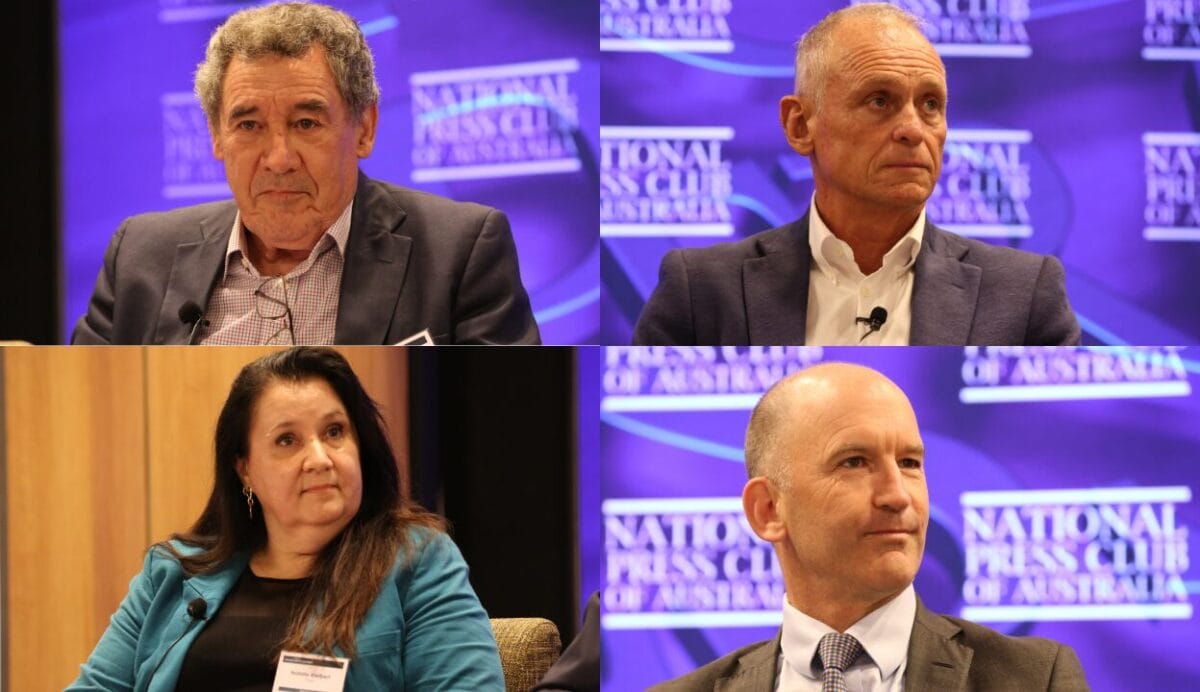

While there is merit in advice reform, the advice profession and financial services industry can’t expect policymakers to work on the assumption that all the industry will do the right thing and a stringent regulatory floor will always need to be in place.
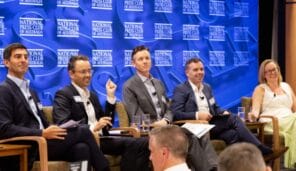
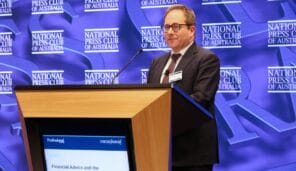
Koda Capital CEO Paul Heath told the Professional Planner Advice Policy Summit, held at the National Press Club in Canberra, that this will be the case until conflicts of interests are removed.
“Whenever these financial scandals [happen] – and we’re dealing with one now – inevitably at the heart of it is a breach of trust because someone thought they were dealing with a fiduciary and they were not,” Heath said.
“That’s at the heart of every scandal. You can’t say ‘trust me I’ll do the right thing by you’ if sitting behind me is stacked a whole bunch of financial incentives to do otherwise.”
Heath said that until the advice profession can restructure itself so it can genuinely say it “sits on the same side of the table as the client” it will be impossible to sustainably build trust.
“We can’t expect policy makers to set policy on the assumption we will do the right thing,” Heath said.
“That’s a confronting thing for the industry to face into, it’s an uncomfortable thing, but in my view, if you actually genuinely want to build a trusted relationship with the community, advisers can’t have conflicts of interest. Over time, we know if there is a conflict of interest, it’s the consumer who ends up being at the worst end of that.”
Additionally, Standard 3 of the financial adviser Code of Ethics says, “you must not advise, refer or act in any other manner where you have a conflict of interest or duty”.
Education expansion
Former Minister for Financial Services Stephen Jones revealed plans for expanded education standards at the Professional Planner Advice Policy Summit last year, which have gained support from his successor Daniel Mulino, although there has been no further movement on the policy.
The policy has the support of multiple associations, including the Financial Advice Association Australia and the Stockbrokers and Investment Advisers Association.
Hamish Dee, chair of Morgans and the SIAA, said the profession must continue advocating for this policy.
“You’ve got 13 institutions in Australia that are recognising the undergraduate degree to come through into the industry,” Dee said.
However, he said more support was needed for career-changers who may no longer find it financially viable to switch careers into financial advice.
“I have seen the most successful advisers be career-changers, and I’m talking [people] who have been a vet, a lawyer, they might have come from an accounting firm… wherever they’ve been they’ve got incredible business knowledge,” Dee said.
“You can understand when someone’s coming out of uni and they’re just moving their progression financially up, but for those career-changers, you’re asking them to literally drop a very high salary and then come back down, do their professional year and start from scratch again. It’s a massive call.”
Dee said a solution is needed to help faster progression of career-changes who already have more soft skills, as opposed to younger graduates who are building that experience.
“If you’re getting someone starting out fresh who’s immature, they don’t have the soft skills, they don’t know how to talk to people, they don’t understand running a business, so there’s a huge amount of knowledge that’s going unrecognised, that’s the big issue there,” Dee said.
Community and trust
A reduction in the number of advisers also has implications for the provision of pro-bono advice.
“We’ve talked about the profession being reactive to bad actors… let’s lead with the good advisers and what they’re doing,” Pro Bono Financial Advice Network deputy chair Natalie Kleibert told the summit.
“With the clients that our pro bono advisers are advising, they then become advocates in the community to increase trust in advice and to increase more people to come into the profession.
“When we are at conferences, we have at least 30 per cent to 40 per cent of the delegates that come up and show interest in providing pro bono advice and giving back to the community.”
Robin Bowerman, a director of Vanguard Super, said the profession needs to do a better job helping clients and the community understand the value of advice to help build trust.
“To be frank, the industry doesn’t do a terrific job of explaining to investors or fund members what the value of getting professional financial advice is,” Bowerman said.
“Vanguard’s been running a global multi-year program about adviser alpha – what it’s trying to do is quantify the value of advice, so clients would actually know when they come to see an adviser what the adviser can offer, what’s real, what’s advice and what’s illusionary.”







The de-regulation part of this article is pretty disturbing and demonstrates a serious lack of understanding of the real issues.
Conflicts of interest are a fact of life, and they exist in every profession. Our office charges clients by a number of means including hourly rates – which is a conflicted form of remuneration, widely used by the established professions. The more inept and inefficient a practitioner is, the more it costs the client. The conflict itself is not a deal-breaker. How we as professionals manage it is the key point.
Those arguing that there cannot be regulatory change are arguing for the status quo. It’s as if they didn’t notice that First Guardian and Shield occurred under the existing regime.
Standard 3 of the financial adviser Code of Ethics is a joke and should be removed. It is seriously problematic and is rendered utterly redundant by Standard 2:-
“You must act with integrity and in the best interests of each of your clients.”
Standard 2 nails it. It is principles-based – as is befitting of a profession.
Standard 3 misses the point. It is prescriptive and removes professional discretion.
What do we do in our practice? We just comply with Standard 2. Nothing else matters.
When we collectively understand conflicts of interest, we can move forward and have an informed debate about regulatory change that benefits consumers.
Who is going to regulate the Regulator who does not supervise before “the horse has bolted”? I reported 2 Government wrongs earlier: (1) in 1998, Treasury Legislation removed Dual Structure: Trustee-manager, where Trustee held the assets, paid find expenses and monitored the manager’s investment mandate. (2) The trustee’s fiduciary function in the best interests of investors was removed, but the Government did not fund ASIC to do supervision to replace the Trustees fiduciary function. Consequently now, the single Responsible Entity regime has “put an alcoholic in charge of the bottle shop”, Shield First Guardian (without active ASIC supervision) caused a fraud of $1 billion and ‘after the horse has bolted’ plays the blame game on 3rd party advisers and Macquarie/Netwealth (ASIC – you aught to have known before the robbers came in). So that’s great, Jurnos and industry greats join the hollers in the blame game. Thanks, the Government welcomes your contributions. Continual revolution in the Government’s blame game will get you relected forever.
If we’re waiting for the absence of “bad actors” in the industry before we de-regulate, we’ll be waiting a long time. In the history of the human race, there has NEVER been any group of people that were honest to the last person. That’s against human nature. The ONLY solution is to vet the entrants to control quality as best you can and bring out the big stick to use on any transgressors.
The only way Australia is going to get rid of rogues and the loss of Billions of dollars that is stolen from Australians every year, is for the current RE-ACTIVE, “close the gate after the horse has bolted” strategy that lets crooks steal the money with ease, then use neanderthal legal recourse that only feathers the Lawyers and Liquidators pockets and NEVER works in the clients interest, needs to be replaced.
AI is revolutionising the legal framework whereby you can pay a tiny subscription fee and get fantastic legal advice, contract set up and PLAIN ENGLISH interpretation of the miasma that IS the current maze of regulation.
The Legal eagles will attack this intrusion into their thiefdoms as their cushy self-interest world MUST be pulled apart due to their absolute destruction of Western world economies abilities to operate efficiently.
AI could build in safeguards and preventative measures so people do not lose their life savings and to teach the Regulators how to start being Pro-active, rather than the current, “wait till the money has been stolen,” then hope to recover cents in the dollars.