
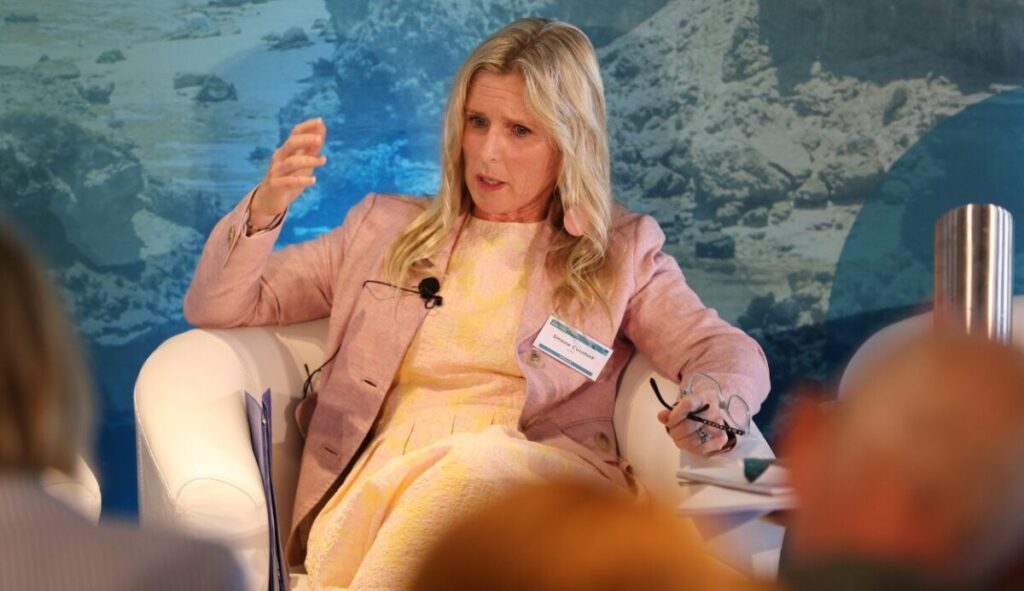

The corporate regulator will re-visit its work on trustee oversight of advice fee deductions work with a “high-risk” super switching slant.
ASIC Commissioner Simone Constant told a room full of the chairs of the country’s largest super funds that the aim of the review was to make sure the public had confidence in how trustees see their responsibilities.
“We’ll be coming back to our trustee oversight of advice fee deductions work and actually putting a high risk super switching slant on some of the surveillance we do there,” Constant told the Chair Forum, hosted by Professional Planner sister publication Investment Magazine.
ASIC released a report in May 2024 calling out trustees for having insufficient oversight of fee deductions and to do more to protect members from “unscrupulous operators”.
“We have an important part to play in not just identifying the issues but doing the surveillance and reporting work on what good looks like, where there’s harm, where we focus our enforcement and then hopefully that will bring more confidence in advice,” Constant said.
“We’ll be coming back to how you meet those responsibilities in our work this year in your oversight of deductions of advice fees.”
The review comes after platforms received scrutiny for a lack of oversight and failing to fulfill their role as gatekeepers in the aftermath of the $1 billion Shield and First Guardian collapse.
The role of regulators in the collapse has also come under scrutiny, but APRA deputy chair Margaret Cole told the same conference that she “doesn’t really understand” suggestions that regulations weren’t fit for purpose when applied to platforms.
“The place where we put the responsibilities and the obligations is on the trustee,” Cole said. That’s all we can do because it’s the trustees that we regulate under the obligations under the SIS Act and our own standards.”
Cole credited the work that has been done to compensate members via the deals Macquarie and Netwealth have made. Equity Trustees and Diversa Trustees have chosen to fight allegations of wrongdoing in court.
“We’re doing a lot of work to try and do our best to ensure that members are compensated,” Cole said.
“ASIC as the primary enforcement regulator is taking the lead on that. Those who are in a defensive posture, that is their entitlement. Everyone is entitled to defend the position brought by the regulator of any litigation.
“A court will decide whether those obligations were fulfilled. It’s not for me step in and make that judgement beforehand. Those who have come forward with agreed settlements… is to be applauded and ASIC has done a lot of work to get to that position.”
Minister for Financial Services Daniel Mulino told the forum earlier that he had concerns about advancing advice reform in a post-Shield and First Guardian environment and Cole acknowledged this would impact super funds trying to deliver more advice to fulfill their Retirement Income Covenant obligations.
“I do see that issues that have come up in Shield and First Guardian have caused additional complexity to those reforms,” Cole said.
While Shield and First Guardian have taken up extensive time and resourcing for the regulator, Constant said that ongoing oversight of trustee obligations will continue.
“It doesn’t matter what the services being provided are, whether we’re talking about picking up the phones to people who are wanting to claim on death benefits or whether it’s investment services, ASIC will hold you to account as trustee for what happens to your end member,” Constant said. Super funds were eviscerated by the regulator last year for member service failings including insufficiently handling claims for death benefits.
The panel discussion comes as the corporate regulator used the forum to launch the findings of a review which found gaps in super fund’s scam and fraud protections and cybersecurity practices when benchmarked against the big four banks.
And while ASIC will be reviewing adviser distribution of private credit funds this year off the back of its broader private markets work in 2025, Constant said super fund chief investment officers and investment committee members should be digesting the material in ASIC’s report as much as the retail sector.
She added that’s its “fantastic” if CIOs are comfortable that their governance standards align with the principles ASIC set out in the private markets report.
“We’ve drawn attention to pretty stark harm and stark failings,” Constant said. “We worried about everyone.”















Leave a Comment
You must be logged in to post a comment.