


The nation’s financial services dispute resolution service has made clear that justifying the establishment of an SMSF requires more than just vague indications from clients that they want more control of their super.
Australian Financial Complaints Authority senior ombudsman for investments and advice Alexandra Sidoti told the AFCA Member Forum online that there are a range of investment options with varying degrees of investor control and SMSFs are at the far end of the scale.
“Justification for an SMSF needs to extend beyond generic statements such as ‘the client wants more control over their super’. That’s a big one that we see,” Sidoti said.
“It’s really worthwhile exploring what other means might be available to take more control or to have a bit more control over your investment decisions within super without moving all the way to an SMSF structure, which is really at that far end.”
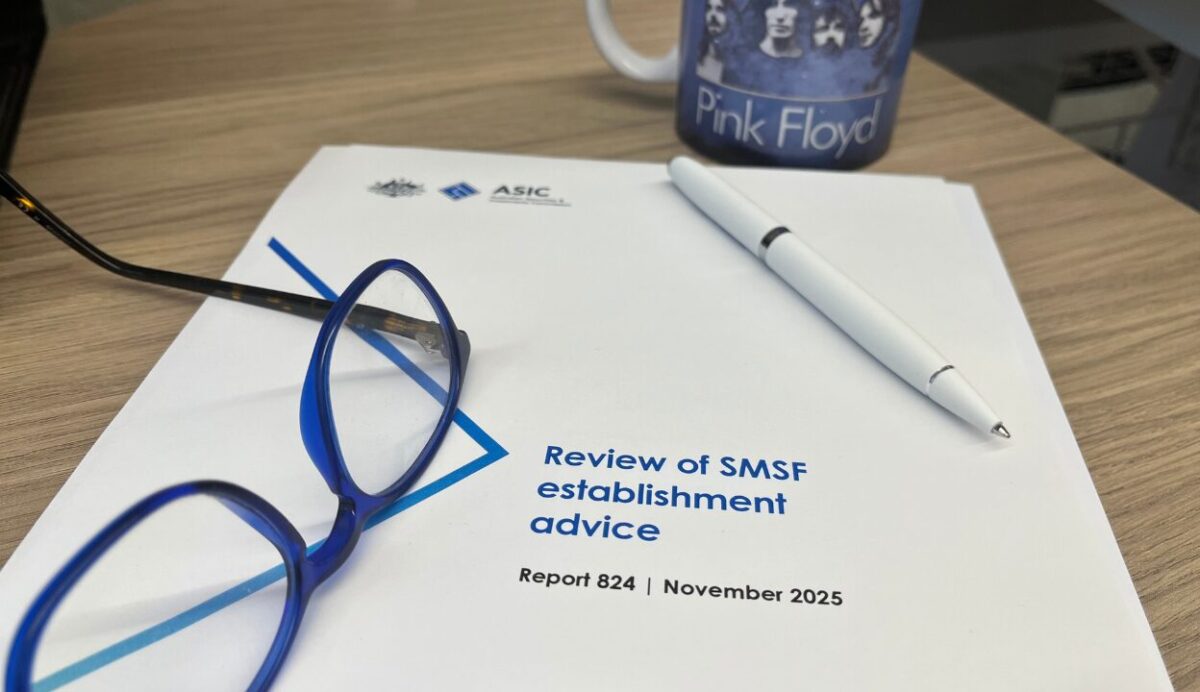
Last November, the regulator released the findings of its review of SMSF establishment advice which highlighted concerns that best interests duty was not being sufficiently considered when opening an SMSF for clients.
Sidoti pointed to ASIC Info Sheet 274 to guide best practice on SMSF establishments and said that while clients may be able to outsource some of the responsibilities of running an SMSF to an adviser, they are still the trustee.
“Clients really need to understand how much is involved for them and to check that they really do have the time and the interest to give to running an SMSF,” Sidoti said.
The complaints authority has received criticism over its counterfactual methodology for remediation – colloquially referred to as ‘but for’ – which meant investors were remediated for what critics described as “hypothetical losses”.
While this has been used for years by the ombudsman, it’s come under scrutiny with the introduction of the Compensation Scheme of Last Resort, which has meant remediation is now being underwritten by the wider advice community.
The government is consulting on changes that could see “but for” claims exempted from the CSLR.
However, AFCA has maintained this calculation is based on the position the client would have been in if they didn’t receive the advice, as they were often in retail or industry funds with solid performance.
“Certainly, the Shield and First Guardian matters most commonly we’re adopting what you call a ‘no transaction’ approach where a client has been in a fund already that is perfectly appropriate for them,” Sidoti said.
“They’ve been advised to leave that fund and invest in something else that was inappropriate, so we’re calculating loss on the basis of no transaction, so assuming they stayed exactly where they were and nothing had happened.”
Sidoti added that the issue with adopting a capital loss approach in those circumstances is it really ignores one side of the advice that has been provided and found to have been inappropriate which is the advice to exit that initial superannuation product that they were in.
“The current approach makes sure we are capturing the full loss which includes that component of the advice,” Sidoti said.
“Adopting a counterfactual approach rather than a capital loss approach ensures that we’re not asking advisers to underwrite the market. There’s a bit of a misconception out there that capital loss will always be lower. It’s not actually the case.”
Sidoti pointed to examples from the failed Dixon Advisory where the capital loss was higher than the counterfactual loss. “It can be swings and roundabouts,” she said.
“If you have a lot of complaints coming in at a time that we’ve got a falling market, a counterfactual approach is likely to be lower than a capital loss approach.”
Dixon Advisory was the first major managed investment scheme (MIS) failure that fell under the new CSLR regime, which has led to calls for MISs to be included in the scheme’s levy and criticisms of the complaints regime that believe advisers are being unfairly punished for product failures.
The regulator has previously argued that product diversification and client best interests would prevent advisers from being on the losing side of a complaint adjudication.
Furthermore, Sidoti said the complaints authority assesses the information the adviser has available at the time of the advice.
“The important thing to emphasize because I know this is something that worries financial advice firms, that they can really feel that if a MIS goes insolvent, they’re really left carrying the can,” Sidoti said.
“That’s critical… we don’t expect advisers to have a crystal ball to see what the fund manager might do one, two, three years down the track that might result in something going off the rails.
“We’re really looking at information available to the adviser at the time the advice was provided and whether or not that was appropriate.”



















Leave a Comment
You must be logged in to post a comment.