

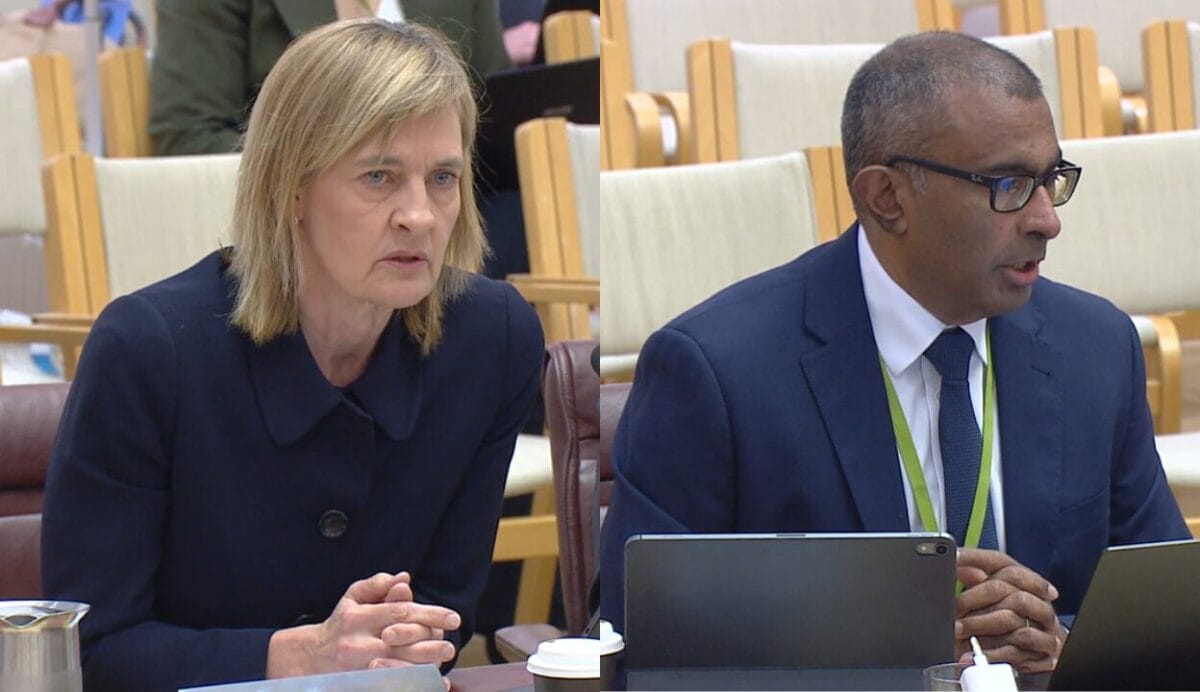

There were enough red flags on the Shield and First Guardian master funds that platforms should have passed on hosting them even without factoring in fraudulent activity, ASIC has told a Parliamentary committee.
Chris Savundra, ASIC’s executive director for enforcement, said platforms should’ve declined to host the funds because there was no track record for the fund’s performance or the individuals responsible for the fund, and because the products were high risk and illiquid despite not being labelled as such.
“Looking at it through that risk lens, the assessment should’ve been done,” Savundra told a Parliamentary Joint Committee on Thursday.
“I don’t believe trustees were not putting Shield or First Guardian on their platforms because they were aware investor funds were being misused or misappropriated. To my knowledge no trustee raised those concerns with us. Those were ascertained through our investigative work.”
The regulator has already commenced legal proceedings against Equity Trustees, which hosted Shield, with mainstream media reporting that proceedings could also be brought against Macquarie soon.
Savundra said Equity Trustees had raised concerns with ASIC about advice firm Venture Egg and its licensee InterPrac. Venture Egg and its lead adviser Ferras Merhi have been treated by ASIC as a central piece to the investigation.
Alluding to a Professional Planner report about platforms that declined to host Shield and First Guardian, Senator Jane Hume asked if any platforms made any reports to the regulator, even though they’re not required to.
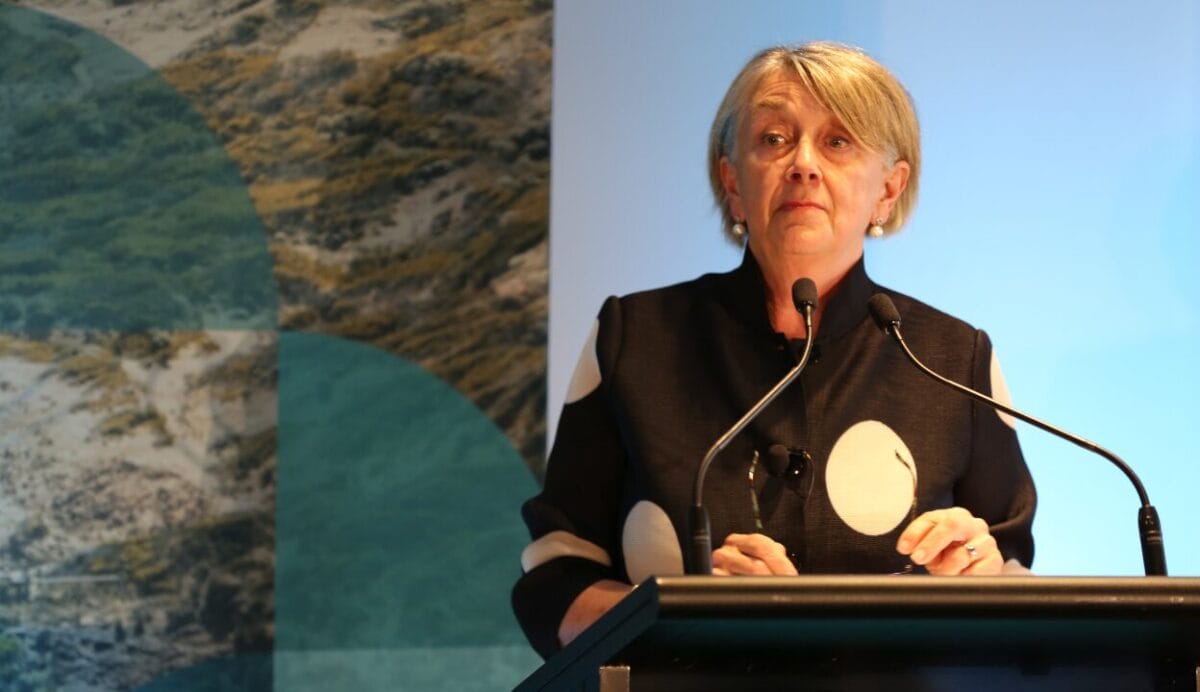
ASIC deputy chair Sarah Court said she was unaware of any platforms that raised concerns about the fund.
“I’ve seen some of the media reports as well – one of those platforms said we did not notify ASIC of our concerns,” Court said.
“Certainly not that I’m aware, that any platform that had refused to put on either of these funds onto their platforms notified ASIC of their concerns.”
Court said the most common path to access Shield or First Guardian was via a platform as opposed to an SMSF.
“We are of the view that trustees have an obligation to protect the members funds and act in the members best interest,” Court said.
The blame on trustees comes as InterPrac owner Sequoia has suggested using the operational risk reserve, a reserve to remediate fund members due to operational issues, which is currently legally untested over whether it could be used in the current circumstance.
Growing priority
The collapse of the funds has become one of the corporate watchdog’s highest priorities, with $1.2 billion of retirement savings across 11,000 investors at risk.
The regulator has alleged that advice firms received payments from the Shield and First Guardian funds which in turn used lead generation services to funnel customers into the funds without factoring in their best interests.
The committee heard that First Guardian was registered 23 August 2019, while Shield was registered 24 May 2021.
Court said ASIC first heard references to First Guardian in 2020, but this was only in relation to concerns about the model used to sell the product.
The regulator had received a couple of reports about cold calling/lead generators being, as well as concerns over cookie cutter advice being provided.
ASIC said it hadn’t heard any specifics complaints about the governance of the fund at the time and the regulator wasn’t aware of misappropriation of the funds until much later.
Court didn’t mention evidence presented by Channel 7 News’ Spotlight weeks ago, which showed emails from 24 March 2022 from property developer Paul Chiodo who had raised concerns about the funds.
Chiodo, who is part of the regulator’s investigation, was the director of Keystone Asset Management, the responsible entity for Shield. It is alleged that companies run by Chiodo received funding via the master funds.
The committee heard that in 2023, the regulator received reports of misconduct into the running of the fund and commenced its investigation in April that year into Shield, with First Guardian’s investigation commencing in early 2024.
“What we ascertained was that there were significant flows of money going into the Shield Master Fund and we become aware as a result of that investigation that there were significant flows of money going into another fund called First Guardian,” Court said.
The regulator had issued notices to Macquarie in May 2023 to ask for more details on the fund, which led to the platform offboarding Shield the following month.
ASIC had placed interim stop orders on Shield in February 2024, while the regulator received interim freezing orders on First Guardian in February 2025.
While the number of people impacted by Shield and First Guardian has been reported by the regulator as being 11,000, ASIC chair Joe Longo revealed the total number of investors impacted by similar schemes could be 25,000 to 30,000.
More oversight of advisers, MISs
At the same time the Parliamentary inquiry was ongoing, APRA published the findings of a roundtable it jointly held with ASIC that co-hosted leaders from the major trustees, which told trustees the involvement of a financial adviser in recommending products on a platform doesn’t absolve them from their legal obligations.
Furthermore, ASIC reaffirmed to attendees that it would continue to monitor trustee oversight of advice fee deductions and challenge participants over what recent actions they had done to improve their own monitoring of this.
Those in attendance included the heads of trustees that held the two funds: Netwealth CEO Matt Heine, Diversa Trustees CEO Andrew Peterson, Equity Trustees Superannuation CEO Mick O’Brien and Macquarie Investment Management head of wealth product and technology Michelle Weber.
The other heads in attendance were CFS Superannuation CEO Kelly Power, AMP CEO Alexis George, BT CEO Matthew Rady, MLC Expand CEO Liz McCarthy, Mercer Superannuation CEO Claire Ross and Fiducian Group general manager superannuation Jonathan Green.
The report said the trustee CEOs and executives are taking steps to strengthen trustee oversight to identify risks including implementing due diligence processes for reviewing managed investment scheme (MIS) board composition, related entities and performance history.
Furthermore, the report said trustees are considering expanding adviser monitoring frameworks and uplifting governance models to enable more sophisticated early detection and risk mitigation.
The report said trustees’ representatives supported “enhanced line-of-sight and the real-time availability of information” about MISs, including the role of related entities, portfolio investments, standardised due diligence documentation and improved data sharing which could support earlier risk detection and more sophisticated monitoring across the sector.
Some of the trustees told the regulators they were relying on data and analytics – including geographic mapping – to pick out anomalies including mismatched adviser-member locations and disproportionate revenue growth.
That monitoring will include referral patterns, account openings and “unusual behaviours” relating to flows at the investment option level, with some platforms conducting file reviews.
APRA raised concerns that the collapse of Shield and First Guardian funds being available on platforms could weaken confidence in the superannuation system and that all trustees must “work collaboratively as far as possible and appropriate” when considering how to lift practices to prevent future harm to investors and consumers, and ASIC urged trustees to “disrupt” business models that could compromise member outcomes.
Furthermore, APRA was concerned about the proliferation of platform products.






Had cold calling, in any form, been totally banned this problem would never have risen or would never has got so big before detection. That said, there is an accountability required by everyone in the food chain, adviser, licensee, rating agency, platform and regulator. It was a systemic failure.