

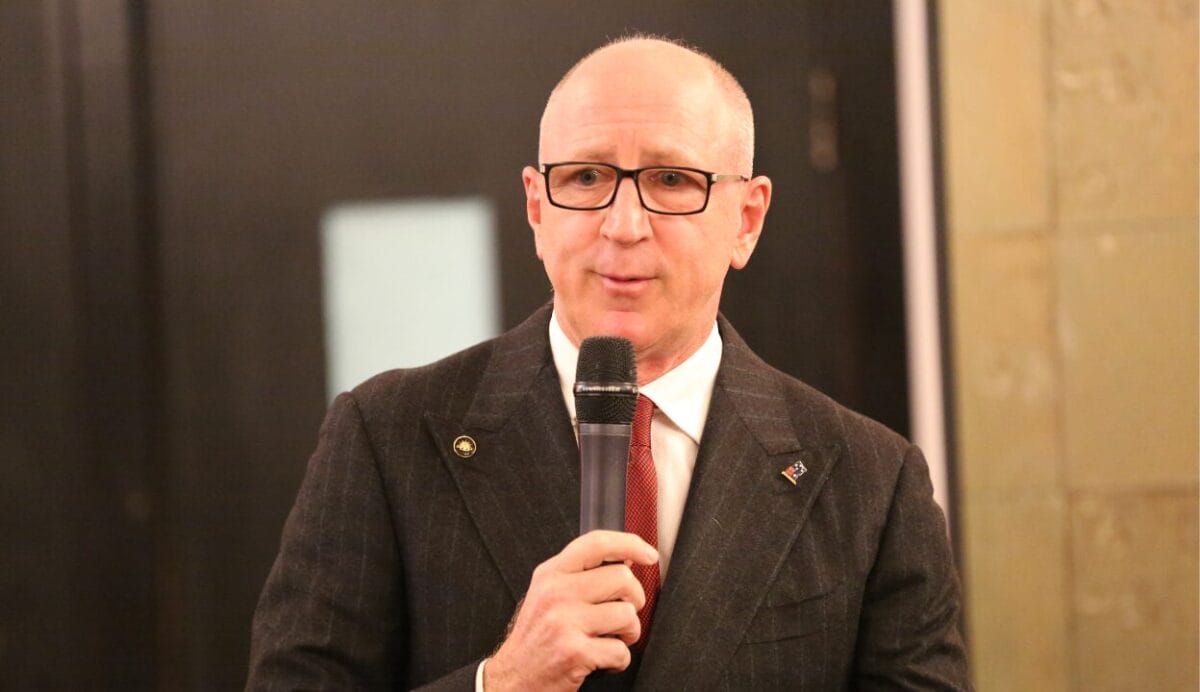

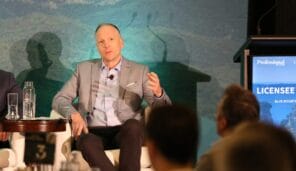
Shadow Minister for Financial Services Luke Howarth apologised to the financial advice profession for the Coalition’s own mistakes in the past regarding the regulatory burdens placed on the shoulders of the industry.
At the Professional Planner Advice Policy Summit in Canberra on Monday, Howarth said he recognised the pressure on the industry as a consequence of government regulation and inaction and the Coalition would accept partial responsibility.
While the shadow minister was critical of the way Minister for Financial Services Stephen Jones has handled regulatory reform, he conceded the Coalition doesn’t have an unblemished history.
“Some of this has come from our own side,” Howarth said.
“I acknowledge that and I’m sorry for putting you in a difficult position because, at the end of the day, I look back and wonder how we let some of this happen.”
The former Coalition government had been criticised for its handling of advice reform, including education standards via the Financial Adviser Standards and Ethics Authority, as well as the Life Insurance Framework that capped the commissions risk advisers could receive, and further regulations added in response to the Hayne royal commission.
While Jones had campaigned on fixing the “hot mess” left by the Coalition government, he had ultimately delivered few reforms with only the experience pathway and some of the Quality of Advice Review legislated being among his key achievements in the advice space.
Howarth criticised the government’s lack of action in implementing the proposed reforms – “after big promises, barely any reforms have progressed in three years”.
“[Labor] did say they would fix the hot mess around financial advice and get costs down. And instead, what we’ve seen is costs skyline.”
Despite Howarth criticism of Jones, he said he was “pleased to hear” about Jones’ proposed reforms for education pathways for future advisers, which Jones unveiled at the summit on Monday morning.
“[The] bipartisan support is for recruiting the pathways to new advisors and making it easier for them to enter the market,” Howarth said.
While Howarth supported Jones’ reforms for education pathways, he said there was “no hope” of the legislation being implemented before the election but a Dutton Coalition government would be committed to reforming education requirements.
“While I would have to see the detail, I am supportive of making the degree requirements more flexible and getting more advisers into the market,” Howarth said.
The shadow minister would also “look at” lifting the caps on life insurance commissions.
‘Too little, too late’
Howarth had much to say about the flawed Compensation Scheme of Last Resort, calling it “a disaster [that] is blowing out the costs of advice”.
The CSLR released an initial levy estimate of $70.11 million for the financial advice profession for FY26 at the end of January, a figure that obliterated the $20 million subsector cap.
This estimate prompted the announcement of an immediate Treasury review, which will likely not lead to any changes to the CSLR before the upcoming election.
“The announcement of a review is too little, too late,” Howarth said.
Howarth expressed great frustration regarding the ‘but for’ methodology the Australian Financial Complaints Authority uses to make its determinations and how it places significant fiscal burden on the CSLR and consequently the financial advisers who are paying the cost of the levy.
“It has been revealed that as much as 80 per cent of claims are for ‘but for’ compensation,” Howarth said.
“These are people claiming constant compensation who didn’t actually make a capital loss.”
AFCA has defended the ‘but for’ determination process despite heavy criticism from associations and politicians alike.
“This issue sits squarely with how AFCA makes its assessments,” he said.
“I met with AFCA recently to raise this issue, and the government will need to intervene to limit, filter out these claims when there’s a CSLR footing the bill.”
In his address to the summit on Monday morning, Jones said the scheme was not about guaranteeing investment returns, implying the ‘but for’ determination process will be addressed in the review.
Howarth pledged to investigate the ‘but for’ process and said a Coalition government would be looking at how to stop it.
Howarth also said the CSLR’s implementation under the Labor government was flawed and Jones must shoulder some of the responsibility.
“The scheme is supposed to be capped at $10 million a year and they raised it to $20 million and the minister didn’t even know how to avoid that,” Howarth said.
He said a Dutton Coalition government, if elected, would halve the subsector cap to $10 million – an intention previously flagged by the shadow minister.
Additionally, the government only paid three months of the year it promised to cover, passing the burden onto the advice industry at the end of FY24.
“We might look at reducing it back to $10 mil to make sure that [it’s] spread out over a period of time,” Howarth said.
Don’t call them advisers
Minister Jones unveiled more details about the “new class of advisers”, otherwise known qualified advisers, late last year. Howarth said he was not against the implementation of the new class of adviser, but he wanted a different title chosen, stating that “they shouldn’t be called advisers”.
“We still don’t have all the details on the government’s new class of adviser, but it is headed in a better direction,” he said.
“It seems that the government have listened to some of the concerns raised about competitive neutrality and the model being available to other firms and being able to charge for it.”
However, Howarth criticised the Labor government and Jones for the lack of action around regulatory reforms, citing almost 800 days since Allens partner Michelle Levy produced the Quality of Advice final report.
He said the industry had been “waiting patiently” as much of the QAR reforms were discussed in secret and as a result, many reforms will not be legislated before the next election, where they could take a long time to be implemented.
Howarth further warned the election of a minority government won’t be committed to removing red tape for the advice profession.
“You could end up with a very Labor teal [minority] government,” he said. “And how will that help you? How will that help Australians? It certainly won’t be on the agenda.”
Jones’ pending retirement has yet to have a potential successor named and while Jones has said Labor will continue its commitment to legislating advice reform, the new minister may not consider it a first priority.
“We don’t know who the new minister would be and so we don’t know what they’d commit to,” Howarth said.
Howarth said the Coalition is committed to maintaining the Superannuation Guarantee at 12 per cent and has dismissed commentary that if elected the Coalition will slash the rate of super contributions to 9 per cent.
“We’re at 11.5 per cent, so it’s not going to be 9 per cent,” Howarth said.
“It’s 11.5 per cent, going to 12 per cent [and] we don’t have an issue with it.”











Big plus for Luke Howarth in acknowledging that the current mess was the fault of the Liberal Party. Hopefully, this is enough incentive for thhem to fix the issues if they get in.
Unfortunately for Luke Howarth, we all experienced what the Liberal Party did, and won’t forget it.