
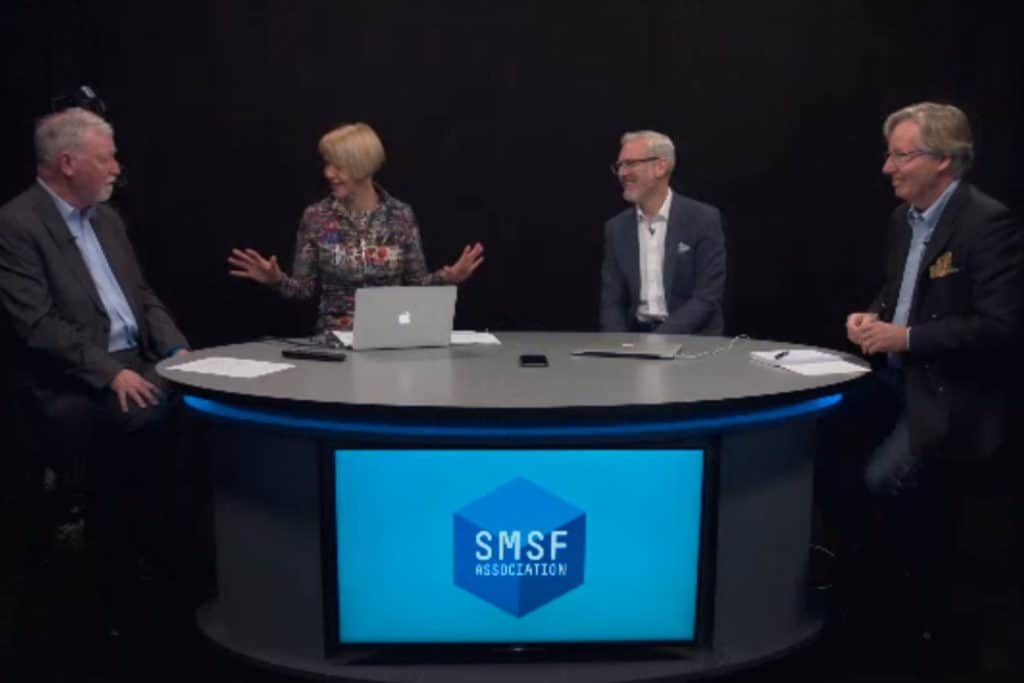

Participants on a thought leadership panel to open the 2020 SMSF Association technical day have questioned the financial advice industry’s response to the Hayne royal commission and suggested that the current regulatory hiatus may be a good time to stop and reassess whether the industry is being rebuilt with the right foundations.
According to Jeremy Cooper, chairman of retirement income at Challenger, changes are being bolted on without due consideration for the industry’s inherent structure.
“Half of the things that Hayne recommended haven’t even arrived yet,” said Cooper, who spent five years as deputy chair at ASIC and chaired the 2009 super system review. “You’ve [still] got things like individual licensing, a new disciplinary body, a full-blown opt-in regime, fiddling around with fees… on a system where you might ask, well hang on, are the foundations actually sound?”
It’s not just about blaming regulators and policymakers, Cooper said. The industry itself has “potentially over-reacted” to the dust-storm of the royal commission, he reckons, by making compliance documents more bloated.
“I didn’t hear Hayne say we need to keep longer SoAs and more detailed compliance, I heard Hayne say ‘don’t rip your customers off and don’t charge them for services you didn’t give them’,” he said.
Jane Hume, the assistant minister for financial services, superannuation and fintech, recently called 80-page SoAs “crazy”, and while ASIC have joined the chorus in telling advisers to trim compliance documents, advisers are reluctant to shorten them with the royal commission and the regulator’s ongoing ‘lookback’ programs front of mind.
Also on the panel, CEO of researcher Investment Trends Michael Blomfield pointed to the dismantling of vertical integration – largely by the institutional advice sector – as another example of a possibly wayward reaction to the royal commission.
“My reading of almost the entire finding of Hayne was – ‘would you follow the law please?’” Blomfield said. “He didn’t say anywhere that vertical integration is evil and must be torn down. But the industry just decided it was going to happen and we tore it down.”
The advice industry is “confused”, Blomfield said, and that uncertainty is cutting into the confidence of advisers.
“The vast majority of advice that’s been given is good advice,” he said. “We had a royal commission into misconduct that ‘miraculously’ found misconduct, and we shouldn’t let that destroy the confidence of those people who weren’t behaving poorly.”
The non-ubiquity of advice
The observations made by the panel weren’t presented as criticisms, but rather as examples to demonstrate that whilst the government’s reform implementation has been stalled due to the pandemic, it may be a good time to reassess whether the collective reaction is taking us down the right path.
“We might need to go back to square one and ask ourselves what we’re trying to do here,” Cooper said, while acknowledging that the financial industry has other significant concerns right now. “But I do think it may be time to pause and maybe have a reset,” he said.
The conditions for reassessing the industry’s path are “ripe”, Blomfield ventured, but only if there is the requisite appetite. That desire may not be a given when advisers are coping with numerous other headwinds, he noted, but it doesn’t detract from the importance of getting it right.
The government’s recent early release of super policy was “the default answer to the non-ubiquity of financial advice”, he said, and the advice industry will be called upon to fix the damage.
“Of course, there’s the supply problem there as well, because if everybody suddenly has access to advice we won’t have the advice to give,” he said, alluding to the 20 per cent of advisers that have left the industry in the last 18 months. “We’ve got to start by at least increasing its availability.”
BT’s general manager of superannuation, Melinda Howes – who chaired the session – agreed.
“Its clear the system needs to change dramatically to support consumer needs,” she said.
The advice environment may be “uniquely challenging”, Blomfield added, and there are countless issues to address. But now may be the time to do it.
“Is this not the moment to really think hard about that blank sheet of paper?” he said.




















Leave a Comment
You must be logged in to post a comment.