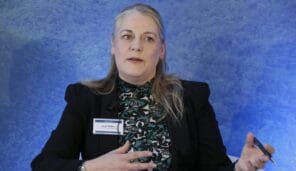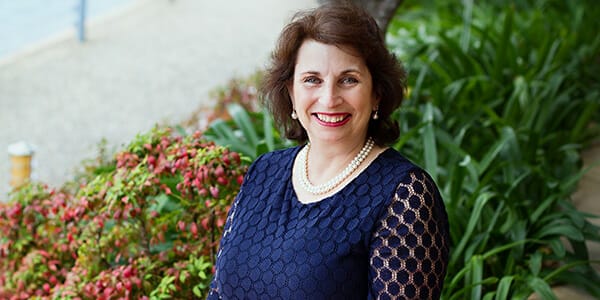

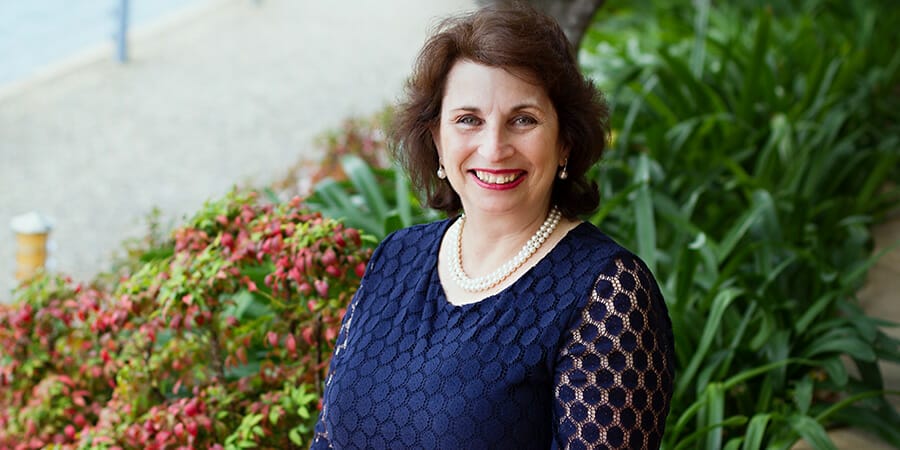
Early hardships can make or break a person and in Carol Roberts’ case it was most certainly the former.
The 60-year-old planner and accountant from Perth was homeless from the age of 16 after her mother left the family and her father re-married and there was no place for her in the new family.
“I left school at 16 and spent time sleeping on people’s couches, sometimes friends’, but often people I had met at a party whom I hoped would let me sleep on their couch,” Roberts says.
A social worker told Roberts the Army would help her finish school if she joined, which is exactly what she did, spending many years as a dental technician with the Army while studying at night.
“I also started the first third of my accountancy degree in the Army,” she says.
“After 11 years, I left to start a family but I finished my degree later on and I also got my Masters in Professional Accounting.”
Roberts, who calls herself The Finance Boomer, offers financial strategy planning, superannuation and aged care costing advice for “baby boomers and beyond” out of her Brisbane office.
She says her experience of homelessness has had a big impact on how she approaches her career.
“It was so long ago, but it taught me that there is always hope,” she says.
“I have some baby boomers coming in who don’t own their own home, they don’t have much in the way of super and they need a plan.
“And I am able to say to them that it will be OK, that we will work something out.”
GFC a catalyst for change
For many years, Roberts was content in her role as an accountant. She ran a healthy accountancy business that taught clients how to manage cash flow, how to budget and how to develop their business. Then the global financial crisis hit.
“I saw a lot of clients lose money because they were sold financial products from advisers that weren’t right for them,” she says.
“These were people approaching retirement and they had money in areas they should not have, such as high-risk ventures.
“They trusted what the advisers told them and it was hard for me as the accountant to not say anything.”
Once the GFC dust settled, Roberts decided she would become a financial planner — but with a difference.
She didn’t want to sell products so she obtained a Strategic License for Accountants and operates in a purely advisory fashion.
“I don’t set up SMSF,” she notes.
“I am basically interested in talking to the clients who the other commission-based planners don’t want to talk to because there are no assets under management and they need one-off advice only.”
Aged care sector ‘confusing’
Roberts charges a flat fee and focuses on helping her clients’ transition to retirement and deal with aged care decisions.
“Sometimes these two factors are at play at the one time,” she says.
“I will have people come in who need to work out how to retire on the money they have now, while at the same time they are trying to find an aged care facility for [their] parents and how to pay for it.
“The aged care sector is a very confusing space for a lot of people and they are not sure how to go about costing it and paying for it, which is where I come in.”
She feels a special sympathy for aging baby boomers as often their superannuation contributions are low.
“Most people have between $80,000 and $200,000 that we can work with,” she says.
“Generally, however, baby boomers are good budgeters and they have paid off the house and we look at downsizing to release the equity in their home.
“But people get unnecessarily scared by these reports that we will all need $1 million to retire.”
Roberts also offers seminars on the basics of retirement to her clients but can’t imagine hanging up her own hat just yet.
“What I do is more of a passion, a lifestyle choice, than a business,” she says.
“I am fortunate that I don’t need to chase the money so I can focus on my clients’ retirement.
“They are all getting older and maybe we will just all age together.”