
The Financial Planning Association (FPA) has lodged its alternative opt-in code of conduct with the Australian Securities and Investments Commission (ASIC), despite promises from the Coalition before it won the election that it will remove opt-in from the Future of Financial Advice reforms.
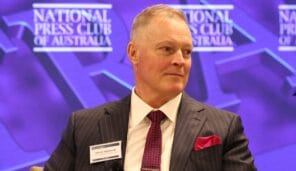
FPA chief Mark Rantall said the group was awaiting approval from the regulator, adding that there was no guarantee or indication from the Coalition as to when it would unwind opt-in.
“Before the election, the Coalition indicated that it would remove opt-in if it came to power, but we decided to do the work and go through the process anyway, and we believe our code outlines best practice in terms of engagement between financial planners and their clients,” he said.
Under FoFA, advisers are required to have clients opt in, or renew, ongoing advice agreements in writing every two years. Opt-in was introduced to ensure advisers are in regular contact with clients, and prove clients understand the value of the services they receive.
As an alternative, the regulator has the power to exempt advisers from opt-in where they are bound by a code of conduct, approved by ASIC, which achieves same outcome as opt-in.
Rantall said achieving certainty for members around opt-in was one of three key priorities for the FPA as it approached its Professional Congress, to be held in Sydney on October 17 and 18.
The other two priorities are boosting the number of advisers who hold the Certified Financial Planner designation and educating the market about the new requirement for associate financial planners to be degree-qualified.
Rantall acknowledged that FoFA was forcing many advisers to “re-engineer” their businesses in order to meet the new rules, and would ultimately push advisers into an early retirement.
“There certainly is a bell curve of financial planners in older age brackets and there’s no doubt they’re considering the option of leaving the industry,” he said. “That would’ve eventually happened anyway, but FoFA has provided a trigger point to go.”
His comments followed the conclusion of Financial Planning Week on Friday. Over 10,000 people visited the FPA’s website last week, with the most popular areas being Ask an Expert and Find a Planner. Approximately 50 per cent of FPA members had their profile pages viewed during the week.
“Financial Planning Week benefitted not only consumers but our members as well, with a 200-per-cent increase to the FPA’s Find a Planner page as compared to the weekly average,” Rantall said.