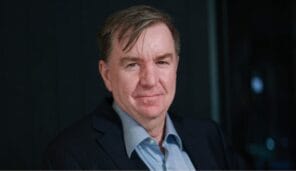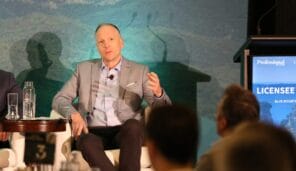

AMP chief executive Blair Vernon says lead generators and “introducers” present a sleeper risk in the financial system beyond the collapse of Shield and First Guardian.
In one of his first interviews since taking the reins of the 177-year-old wealth manager in March, Blair Vernon tells Professional Planner he was proud that AMP’s North platform did not house the now defunct and allegedly fraudulent Shield or First Guardian master funds, but said he was alert to further potential failures in the investment ecosystem.
“You’ve only got to look at the Shield, First Guardian example to say there are pretty reasonable red flags across those dimensions that probably should have been concerning to those who were offering them on their platforms,” he says.
“The important thing right now is to make sure that we can address the real drivers where customer harm is emerging … Introducers [and] lead generators are real risks.”
The comments come as the Albanese government consults on measures to crack down on super-switching lead generation by bringing those activities into the licensing regime.
Vernon, who served as chief financial officer under former AMP CEO Alexis George, says he’s “not a CFO” but happened to be one for a short period of time.
“I’m a sales and marketing guy, and dealing with clients and growing businesses is what drives me,” Vernon says.
“I took on the role as CFO when Lex asked me to come and do that here, because I deeply believe in what AMP can do, should be doing and has done. But… there’s been some turbulence in the past few years.”
What “excites” Vernon and where he feels privileged is the opportunity to lead the storied business and drive growth.
“That’s the strategy presented to the board, and that they clearly have some comfort with. I guess they’ve selected me to carry that forward. Organic growth in our business is the number one priority.”
After a period of divestment under his predecessor that saw the divestment of AMP Capital and the licensee business, Vernon says there’s no “aspirations to change our portfolio” and no plans to sell the platform or bank.
“The reality is we’ve got tremendous prospects as an organisation,” Vernon says.
“My focus is not M&A, my focus is organic growth of the business and addressing performance gaps where there might be. We want to work on the performance lift of the bank and there’s a range of ways to do that.”
Vernon replaced George’s seat on the Financial Services Council board, which just released its best practice standard for platform trustee oversight.
The new standards may work as a self-regulatory mechanism to get ahead of impending legislative reform pursued by the government, and Vernon talks up the platform’s existing standards which never onboarded Shield or First Guardian.
“We never had those products on platform; that, I think, talks to the calibre of the due diligence and review that we have on our platform,” Vernon says.
“We feel confident that our processes continue to serve us well in terms of making sure we’ve got the appropriate offerings on our platform, and continuing to make sure that our partnerships with advisors are based on quality.”
But Vernon is adamant that if any changes are required to meet any new industry standard, AMP would meet those obligations.
As North has centred on retirement as a strategic priority, Vernon says this means the platform doesn’t hold “exotic offerings”.
“We have always obviously had a very clear view via our trustee board, which has got a very different view operating across the superannuation offering, and so that I don’t see that as being in jeopardy through these changes,” Vernon says.
“If we were pursuing other parts of the market or were into really diverse offerings, I think that would be different. Our platform offer via North and our clear strategy is a much more sustainable offer in an environment where maybe there’s a pursuit of carving out things at the fringe.”
When it comes to what catches his attention as a higher-risk product, Vernon nominates offerings with high levels of illiquidity.
“Liquidity is a critical issue… and then the question is in products and offers, where there’s substantial evidence of related parties,” Vernon says.