

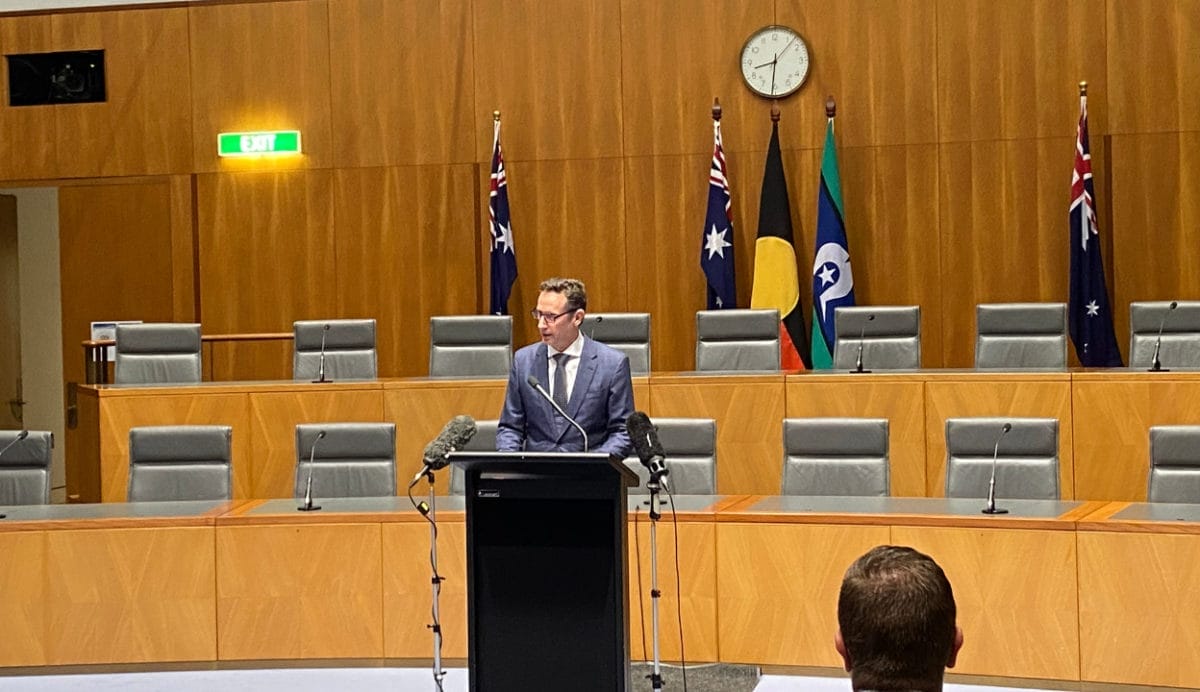

Minister for Financial Services Stephen Jones said his unexpectedly bold plan to boost access to financial advice by introducing a two-tiered advice model and welcoming banks and insurers back to the market is “absolutely consistent” with landmark consumer protection of the past.
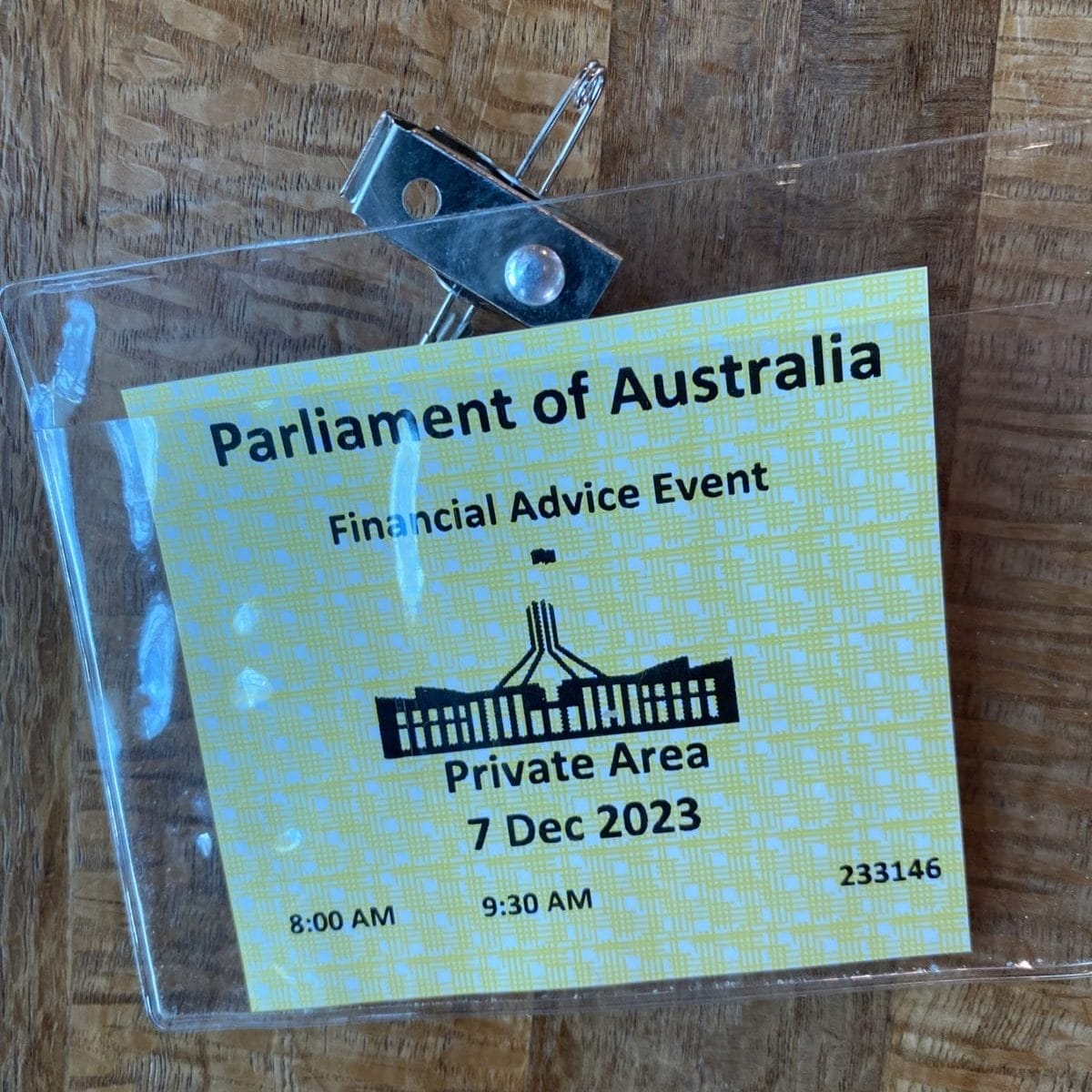
At an invitation-only ceremony at Parliament House on Thursday attended by Professional Planner, Jones unveiled the government’s full response to legislating Streams Two and Three of the Quality of Advice Review led by Michelle Levy, just weeks after releasing draft legislation acting on but a few of the least contentious QAR proposals.
“There will be no rollback,” Jones said, referring to the work done to lift professional standards over the past decade, which saw implementation of the seminal Future of Financial Advice reforms and recommendations of the Hayne royal commission.
Almost 12 months after Levy’s final report was delivered, the government’s bold plan to legislate advice reform has shocked stakeholders for more closely resembling Levy’s contentious recommendations than many expected, albeit with several additional “guardrails”.
The government will introduce a new “class” of adviser to be known – controversially – as “qualified adviser” even though they will likely be educated only to diploma level. This new tier of adviser will be prohibited for charging a fee for service or receiving a commission and will most likely be employees of major financial institutions, as well as financial advice firms.
In response to a question from Professional Planner, Jones defended the decision to introduce a two-tiered system as recommended by the QAR and said the government’s proposal differed from Levy’s conception of “non-relevant” providers.
Jones said this was about “cracking the nut” over how millions of Australians with simple questions receive answers. “The framework we’ve set out will just do that,” he said. “We’ll ensure the qualifications that are associated with the new class of provider are relevant… that the person providing the advice has all the necessary training and experience they need to competently answer the consumer’s questions.”
‘Hard no’
While Jones made clear that “qualified” advisers will not be able to charge a fee for service, it was not immediately clear by what mechanism non-super entities such as banks and insurers will be able to charge for advice provided by their non-professional level employees.
Asked to clarify, Jones seemingly dodged the question, saying the reforms follow on from the learnings of the royal commission and are far from a return to the “bad old days” of sales-driven commission-rewarded advice models.
“We’re just not going to do it,” Jones said, describing the government’s position on any advice model that re-introduces harmful conflicts of interest as a “hard no”.
“What we are going to do is ensure that we have an advice model which is not based on commissions. It creates a business model that enables funds and businesses to implement with safe guardrails around it.”
Jones said the scope of this advice will be appropriately focused on common questions and needs that consumers are approaching institutions with, with a clear triage process to refer clients to professional advisers where necessary.
“When it tips the balance and goes over something more comprehensive, more bespoke, there will be a requirement the qualified adviser says ‘I’m sorry, I can’t provide that advice. You’ll have to go to a qualified professional planner to receive that more comprehensive advice’.”
Jones confirmed that the new regime would apply to “all financial institutions” equally, despite indicating during the Conexus Financial QAR roadshow earlier this year that he was sceptical about the return of banks and insurers to advice and considered advice by super funds a higher priority.
‘Conflicts remain real’
The Financial Services Council, whose 2019 financial advice white paper is believed to have been influential over Levy’s recommendations, issued a statement warmly welcoming the package and arguing it would reduce costs to consumers. Life insurer Zurich and wealth giant Insignia were among the individual companies who issued statements of support, as did the nation’s largest pension fund, AustralianSuper.
Despite having few attendees at the unveiling ceremony – and strident comments from Choice spokesperson Rosie Thomas on advice reform last week – consumer groups including Choice and Super Consumers Australia also endorsed the plan.
In a statement, they said the government’s decision to retain the Best Interests Duty for all forms of advice, including digital – as opposed to Levy’s proposal of a lesser duty to give “good advice” – was a win and reiterated they were comfortable with removal of excessive paperwork and disclosure for professional advisers
However, they also expressed some caution about the proposal to allow institutions to give more forms of advice.
“Conflicts of interest remain real in any financial advice model which is provided by banks, super funds or insurers,” SCA acting director Gerard Brody said in a media statement. “What we don’t want is product sales dressed up as ‘advice’. We look forward to participating in future consultations to make sure the standards are sufficient.”
Clock wound back
But while the minister claimed the package had earned broad support from consumer and industry groups, the response from the financial advice profession was more nuanced.
In a comment from the floor at the event, FAAA head of policy Phil Anderson said the association’s membership was “split” on the QAR recommendations and would likely have a range of views about the government’s newly unveiled plan.
Anderson said the association would “encourage” members to support the underlying objective of boosting access to advice but added that there would almost certainly be “feedback” from members about the choice of the term “qualified” for the second-class and undisputedly less qualified new tier.
This apprehension was further voiced in a subsequent media statement released on behalf of FAAA chief executive Sarah Abood, which said the association’s members feared this could “winding the clock back five years on our profession”.
“Specifically, the minister has announced that any financial institution will be able to provide personal financial advice to consumers, using people who are not financial advisers – yet who would be called ‘qualified advisers’,” she said, noting the lack of specific detail over qualification level.
“Thus, the proposed term is self-contradictory and extremely likely to confuse consumers.”
Attending the ceremony, practising adviser and FAAA director Katherine Hayes asked the minister whether “qualified” advisers would be subject to the ASIC adviser levy. In response, the minister joked he had been wondering “how long it would be before he was asked that”, but declined to answer, saying he wanted to legislate the QAR package before turning to that issue.
Nudge and wink
The government intends for the institutional advice model to be neutral but doesn’t expect every part of the sector to respond the same way. For super funds, charging members for retirement income advice from their superannuation will satisfy the sole purpose test.
Additionally, there will be specific permission created within the general advice framework to allow funds to prompt or nudge members to help encourage them think about their financial situation and potentially seek advice. Multiple sources suggested this carve-out from the general advice laws may also anger some within the profession.
The announcement pointed to certain life stages like a pre-retiree at 55 who needs a strategy re-adjustment or a person a preservation age who would be better off switching to the tax-free pension phase – an issue that affects half of APRA-members.
Jones said these changes will help with other initiatives to improve member retirement incomes (under the Retirement Income Covenant) and member engagement, which has been an area of concern flagged by the minister this year.
RIP safe harbour
Following on from draft legislation issued last month, Jones also clarified the remaining parts of the government’s plan to ease red tape burdens on professional advisers.
The safe harbour steps will be removed from the BID, while SOAs will be replaced with an “advice record” that “provide clients with helpful information in plain English”.
In record will be required to be “clear, concise and effective” and “actually help the client make an informed decision about the advice they have received”.
It will be required to cover the subject matter, product recommendations and strategies, the reasons for the advice, the cost of the advice to client, and the benefits received by the adviser.
Advice will only be required to cover a minimum of “one or a few topics” if it meets client needs and objectives, and can based on relevant information without the need to complete a full fact find.
It is understood the government will opt to produce draft legislation, with an opportunity for stakeholders to then respond, rather than hold another pre-drafting round of consultation. Jones said he hoped to legislate the plan during the 2024 calendar year, but managed expectations that there may be delays.
“There’s a busy legislative agenda [ahead for the government],” he said. “And nowhere busier than in the Treasury portfolio.”


















Not knowing the intent of all these changes, though noting that it appears nearly all conversation seems to be based on Investment / Retirement Planning, it amazes me how Wealth Protection / Insurance advice always gets swept under the carpet and forgotten, while thousands of Australians each month lose their ability to earn their incomes, with the end result being financial ruin for them and multi-Billions of dollars of Tax payers money required to fund long term support packages that would not have been necessary, had they had good advice and appropriate Insurances to meet their needs.
To come up with a new category of Adviser whose Employer must pay them Salaries and all the associated on-costs of employing them, with no ability to recoup the costs via fees or commissions in the Insurance space, is killing off any incentive to go down that path for Private Businesses who in the past, provided the majority of Business.
Instead, it appears that the current FAILED option of forcing new people to go through the time consuming and expensive University degree pathway where virtually NIL new Advisers have come into the Life Insurance Advice Industry directly from University, with the end result being many Australians now paying double for their Insurances and holistic Advisers retreating from risk advice, is a model designed for failure.
The answer a decade ago when this disaster appeared on the horizon, was back then and still is the correct path today, to simply separate risk advice from Investment advice, have relevant Education mandates that are fit for purpose and encourage people to come into the risk advice Industry, rather than the current pathway of 4 years of starvation and building up substantial debts, studying for the most part, irrelevant courses that have NIL to do with the work that will be performed.
When there are bills to pay and food to put on the table, then the current pathway is nothing more than a road to perdition and people wonder why no-one is interested in studying to be a specialist risk adviser?