
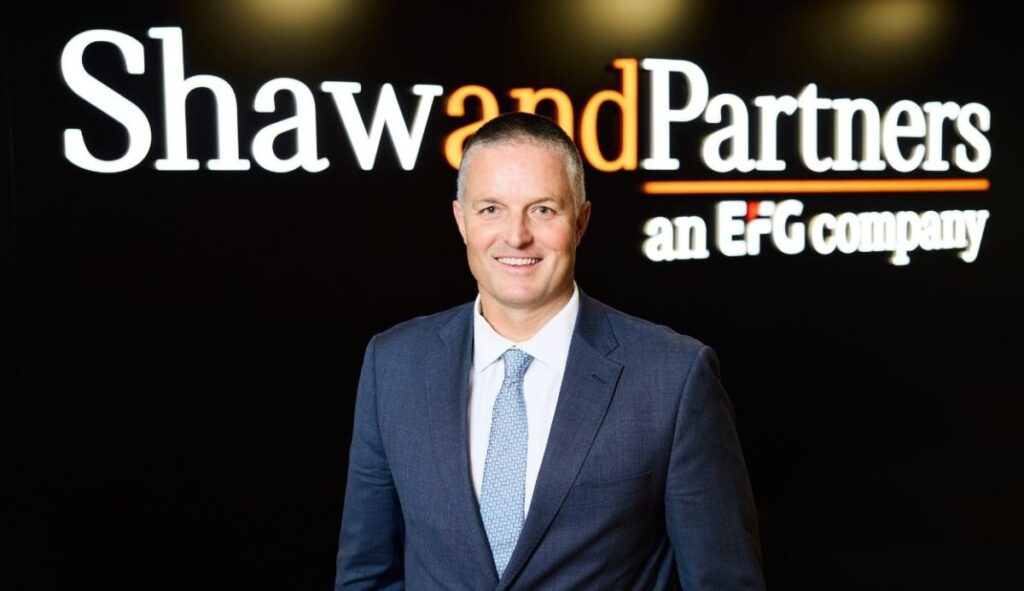

For more than 30 years, Shaw Stockbroking existed as a stockbroking firm until 2015, when Earl Evans joined as CEO, the business rebranded to Shaw and Partners and it moved into wealth management services.
The business went from 100 advisers and $4 billion under management in 2015 to having offices all around Australia, more than 200 advisers and more than $50 billion in assets under management.
On Tuesday, the group announced the launch of a dedicated asset management business, Shaw and Partners Asset Management, which brings together the firm’s growing portfolio management capabilities under a single arm.
The business’ evolution reflects how the Australian landscape has changed and how clients are looking for comprehensive services from their investment advisers, rather than just stockbroking, says Chris Smith, Shaw and Partners head of private wealth.
The private wealth business is the engine of the firm, according to Smith. It has the most staff and is the biggest revenue generator. The firm also includes corporate markets, institutional trading, and research groups, which all support the wealth business.
Opportunities and growth
Smith says clients needs have shifted. Whereas they would go to advisers for pure investment advice, now they are also after superannuation advice. And changes to tax rules add complexity to ensuring that clients have the right sort of advice “not just for their investments, but also for their structuring”.
The looming intergenerational transfer of wealth presents another opportunity. With people living longer, funds that used to be transferred at an earlier stage of life, and which would go to paying down debt, are now coming to people later in life.
“They may have paid down that debt, so it continues to go into the investment landscape,” Smith says.
“I think that plays into the hands of wealth management. So that’s probably the biggest driver; and then the second one is: We don’t have enough advisers in this country for service – not just our growing population, but really our growing wealth that comes with the existing population.
“We will continue to add assets, and we’ll continue to add advisers, and as I said, we’ll see some advisers leave the industry, but [our] number is probably not going to get any bigger than sort of 220, 230.”
He also sees the firm’s assets grow as the market grows. “We’re seeing the wealth of Australians and the sort of typical client that we look after grow. So those assets will continue to grow, and I think those clients’ numbers will grow slightly more slowly, but they’ll still grow as well,” Smith says.
“There’s a huge opportunity and there’s an under-advised population within the Australian marketplace. So, there are not enough advisers to support.”
He mentions recent research from Core Data that suggested that if you are advised you are going to get a much better outcome than if you’re not advised. “I think the future is still bright for advice within the Australian landscape, albeit it will change with the way in which technology will help support those advisers moving forward.”
Attracting advisers from bigger firms
Smith says Shaw and Partners has about 213 advisers and the firm has continued to attract advisers from bigger firms, including its latest senior appointments: Mark Harris in Brisbane, joined from Macquarie; James Fyfe in Melbourne from Morgan Stanley; and Andrew Nagel in Sydney from Canaccord Genuity.
The reasons they moved vary but, according to Smith, it is primarily because “they feel they can offer a broader range of services to their clients, and that’s what their clients are demanding”.
Smith says Shaw and Partners has a relatively flat structure, which makes the firm big enough to provide the services advisers need, but also small enough that everyone knows who’s who and can get the job done.
Being Australian-based, not answering to overseas heads that “force their will in a different way”, and having the support and resources to help advisers and clients are all positive points for Shaw and Partners to grow its adviser numbers.
He says advisers want to know their firm has the financial resources to support them in running events, to access good quality research and at the same time have access to management if they need it.
“We’re not trying to be a private bank. We’re not trying to be something we are not. We look after clients as best we can.
“I don’t think we want to get so big that we lose sight of that and we become too bureaucratic in the way in which we operate because I think what that does is it leads to outcomes that people are managing a business via spreadsheets as opposed to the people, and therefore you’re probably not really looking at what you’re doing for clients.”
Smith worked for Macquarie for 23 years and says he has great respect for the organisation but adds that it is good to be at a place where wealth management is the focus.
“I did see it grow to a point where it did get challenged by what it was trying to deliver,” he says.
“The wealth management/private bank part of that business is a very small component of it”.








Leave a Comment
You must be logged in to post a comment.